Summary
Ground and pound is one of the most effective strategies in mixed martial arts, combining grappling control with powerful strikes to dominate and finish opponents on the ground. It involves taking an opponent down, securing a dominant position, and delivering controlled punches, elbows, or hammer fists to accumulate damage or force a stoppage.
This guide breaks down how to execute ground and pound effectively from different positions such as guard, half guard, and top control, while maintaining balance, posture, and safety. It also emphasizes the importance of positioning, patience, and striking efficiency, showing that successful ground and pound is not just about aggression, but about control and precision.
Key Takeaways
- Control comes before damage
Effective ground and pound starts with securing a dominant position—without control, you risk sweeps or submissions. - Positioning determines striking power
Proper posture and distance allow you to generate force while staying safe from counters. - Striking on the ground is about efficiency, not volume
Short, precise strikes like elbows and hammer fists are often more effective than wild punches. - Each position carries its own risks and opportunities
For example, striking from guard allows offense but exposes you to submissions if you lose posture. - Ground and pound is a blend of grappling and striking
It’s not just about hitting—it’s about controlling, breaking down, and overwhelming your opponent strategically.
Ground And Pound From Standing
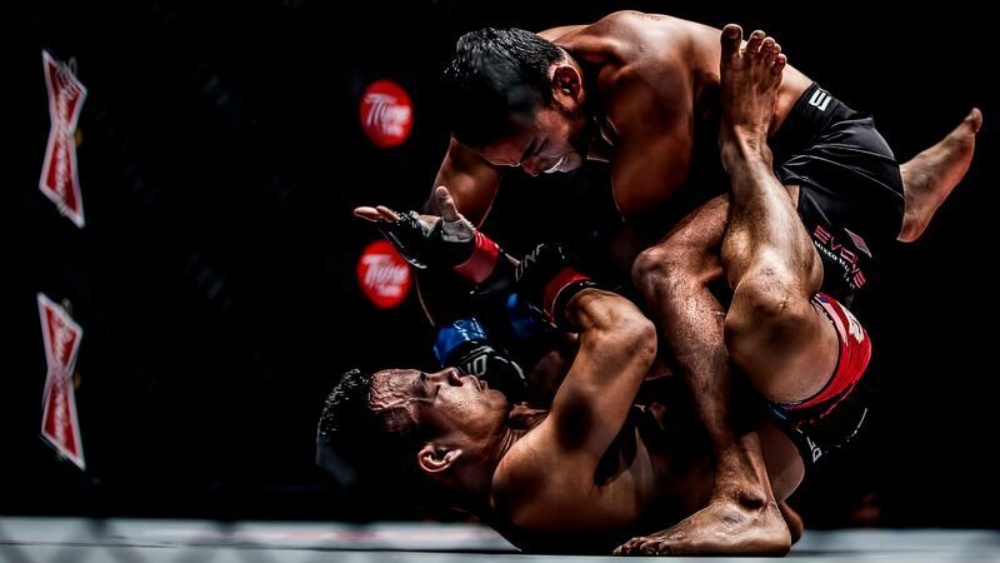
Throwing punches from a standing position might be the most destructive variety of ground and pound.
Though you don’t have the option of throwing elbows because you’re so far away from your opponent, you can generate some serious power with your hands.
The unique aspect of ground and pound from this position is that your opponent poses a serious threat with up-kicks.
However, if you defend against those, you could be in a great place to finish or set up a flurry that will earn you a TKO
- Approach your opponent with one leg forward, and keep that knee bent – this will prevent your opponent from jarring your leg if they kick it.
- Step in with your other leg so that your hips are square to your opponent, and over their hips. You’ll now be standing over them, and your hip pressure can control their posture.
- At this point, your rival may try to push you away with the soles of their feet. If so, push one to the side to clear it and give you the room to strike.
- You can also simply rotate your hips to help one foot slide off your thigh. Rotate back in the other direction and throw your punch to generate maximum power.
As previously mentioned, you are not totally safe during this kind of attack, so keep the following in mind.
From this point on, the defending fighter’s best offense is to kick upward, and that could end in a KO. The best way to avoid this throughout this attack is to lean back while you keep your hips forward.
Also, watch out for them grabbing your foot to set up a leg sweep. If you feel a hand on your heel or ankle, immediately clear your foot and go back to punching.
As long as you stay safe, you have several options once you have landed that first punch.
- You can continue to stack your opponent’s hips and fire away with punches from a standing position.
- You can jump into guard and get close enough to elbow. However, make sure your opponent is all but finished, otherwise, they will get the chance to close guard and defend.
- Clear both of your opponent’s legs and move to a dominant position.
Ground And Pound From Guard
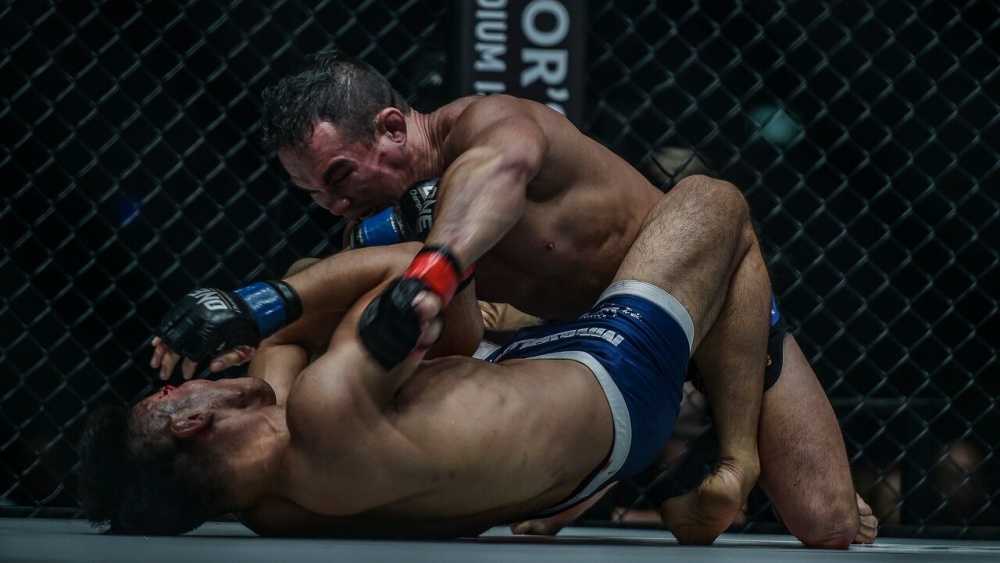
This might be the most common position that a fighter will be able to strike from on the ground – on your knees, between your opposition’s legs.
In one aspect, it’s a risky situation. If you’re not careful, an opponent with an active guard can threaten you with submissions, sweeps, and even strikes from the bottom.
However, it can still be a great place to land offense, and even work toward a finish.
Just like before, it’s important to make sure you’re safe while you try to land significant strikes.
- Establish a firm base, but not too static. Try to be up on your toes a little so you can rise if you need to.
- Keep your hips close to your opponent and drive them forward. You might even raise their hips off the mat a little so they’re almost in your lap.
- Go face-to-face with your opponent and control their posture with your forearms between their shoulders and armpits, with your elbow tucked in.
- You can also drive your head into your opponent (but not as a headbutt) to make them very uncomfortable. From this position, they will find it hard to get wrist or head control.
- From here you can push your forearm across their face and punch, or roll your elbow over and strike that way. Unless you cause a lot of damage, try to recover your position, conserve your energy, and then explode with strike again.
This approach is based on the idea that you’re not really in a position to land fight-finishing shots because of your lack of hip rotation.
If you can get enough power, that’s great, but it’s more likely that these strikes will accumulate damage.
It’s only natural that an opponent will eventually stop your offense in some way. If they grab your wrist, you can roll it over to land elbows. The motion is almost like an overhand punch in a downward arcing motion.
If you’re locked down, you’ll have to break free before you can mount any more effective attacks. Former UFC champion Tyron Woodley demonstrates here.
There are also a few things to avoid with ground and pound from the guard.
- Do not put your hands on the mat. You will be asking to have your arms overhooked, and that can lead to all kinds of trouble.
- Similarly, don’t have your hands flat on your opponent’s torso. They will appreciate the opportunity to take wrist control.
- Keep your head as central as possible. If your opponent can take an angle on you, they can throw their legs up and threaten with triangles, armbars, sweeps – the works.
- Don’t raise your hips and have your butt in the air as you drive your head forward. That creates a ton of space for your opposing number to move their hips and attack or escape.
- Try not to hold on to your opponent – maybe with an underhook, and your other arm around the head. You’ll be too close to land any punches.
Note: for the next two positions, instructions are based on you moving clockwise around your opponent, onto their right side.
Ground And Pound From Half Guard
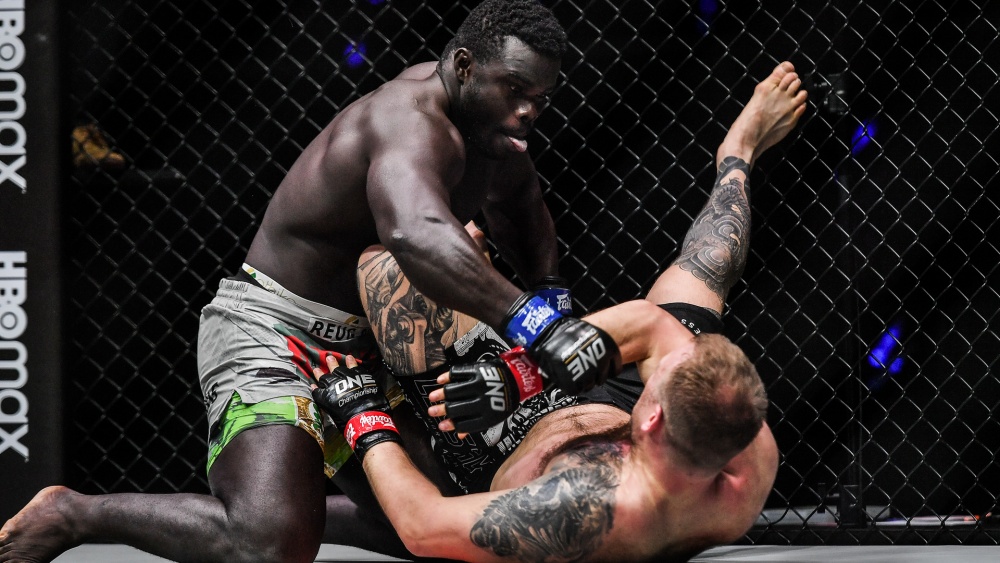
It can be difficult to land good ground and pound from half guard, but it is possible. In fact, this has become a favorite position for many MMA pros to stay in and strike.
Just like before, the key is creating enough space to strike, while keeping enough control so your opponent cannot escape or attack effectively.
- Keeping a stable base as you did in full guard, drive your left forearm/elbow across their face.
- Pull your right elbow into their left hip to pin them in place.
- Now your opponent’s back is on the mat and their hips are locked in place, so you can work with left elbows while keeping the position.
Of course, there will be scenarios where your opponent frames up on you to create distance and make sure you can’t stay tight to them. In this scenario, they will post on their right arm and create a barrier with their left forearm.
However, if you act fast, you can put them in trouble without too much effort.
- Arc your left arm around – almost like you’re throwing an overhand punch – to push your opponent’s head down with your forearm. Extend your left leg as you do this.
- With your opponent’s posture broken, you can pull your knee in and drive your head up into their chin.
- Now you can push down on your opponent’s face with your hand or forearm to create space, then smash your elbow down to strike.
Ground And Pound From Side Control
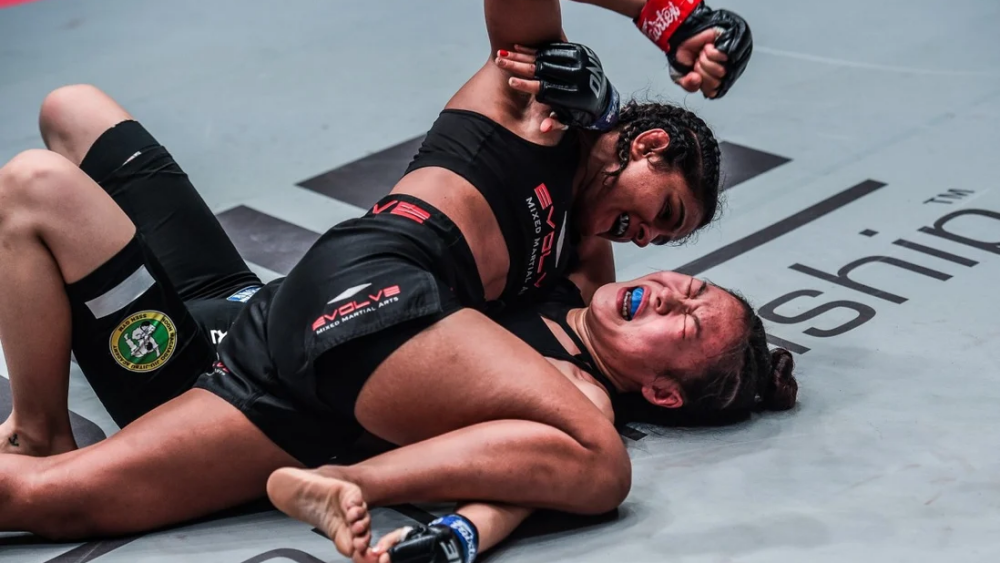
Once again, you’ll have to create room to maneuver and generate force with your striking arms.
But, first, before you even think about striking from this position, make sure you keep it. You’ve probably worked hard to side mount, so don’t allow your opponent to escape by rushing to attack and giving your opponent a chance to recover position.
Get tight to them and secure an underhook with your right arm as quickly as possible. Wait for them to expend energy as they explosively try to escape, and then get to work.
The fighter on the bottom will try to block any strikes from your left arm by using their right hand to control the bicep.
To solve this problem, a great option is the crucifix. This is a dominant position made famous by UFC champions Matt Hughes, Jon Jones, and Khabib Nurmagomedov as they rained huge damage down on their challengers.
- Control the right arm with your left hand, and slide your left knee over their right bicep.
- Maintain a tight underhook with your right arm
- Squeeze their left arm between your head and left shoulder.
- With both arms isolated, the head is exposed for you to punch or elbow.
The crucifix is not the easiest position to achieve because any fighter with a decent defense on the ground will know to do everything in their power to avoid it.
If so, you can trap an arm instead and score with significant offense with knees to the body.
- Drive right knees into your opponent’s ribs.
- If they try to use their right arm to block, you can trap their arm between your knee and elbow.
- That leaves their entire left side open, so you’re free to strike with your left arm.
- If your opponent tries to block your left-arm punches and elbows with their right, take control of it, and then attack with your right instead.
- If you’re in an organization like ONE Championship that allows knees to the head of a grounded opponent, you can fire away with your left knee.
Ground And Pound From Mount
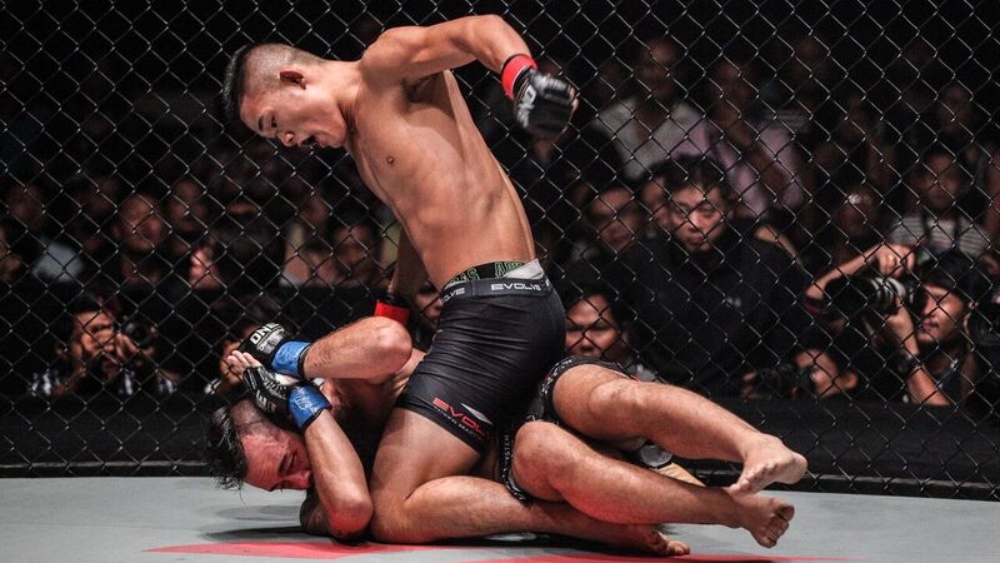
You might think that it’s game over if you pass to the mount position, but like side control, your opponent is going to explode with every ounce of energy they have to try and escape.
Once again, you’ll have to consolidate your position first, and then you’ll be in a spot that could lead to a very quick finish.
- Establish a low mount first with your hips sitting just above your opponent’s hips.
- Pinch your knees in tight, hide your heels underneath his backside, and keep the tops of your feet pressed into the mat.
- Post your hands slightly above and to the side of his head.
- With your position secure, move your hands forward and knees up into your rival’s armpit to establish a high mount.
- Your opponent is trapped in a terrible position now, so attack.
- Post on one arm and bring down powerful punches and elbow strikes off the other.
- You can also combine punches off both hands by sitting up. Even if your rival bridges to escape, you’re in a good position to maintain position by leaning back a little.
- If you need to stabilize, post on one arm again and fire away with one arm.
FAQs
1. What is ground and pound in MMA?
Ground and pound is a strategy where a fighter takes an opponent to the ground, secures a dominant position, and delivers strikes to damage or finish the fight.
2. What is the best position for ground and pound?
Positions like mount, side control, and top half guard are ideal because they offer control and the ability to strike with reduced risk.
3. Is ground and pound more effective than submissions?
Both are effective. Ground and pound can lead to a TKO, while submissions force a tap. Many fighters use strikes to set up submissions.
4. Why is posture important in ground and pound?
Good posture allows you to generate power while staying safe from submissions like armbars or triangles.
5. Can beginners learn ground and pound safely?
Yes. Under proper supervision, beginners can learn positional control and controlled striking in a safe, structured environment.
Final Thoughts
Ground and pound is one of the clearest examples of how modern martial arts blend disciplines into a complete system. It’s not just about taking someone down or throwing strikes, it’s about controlling every aspect of the fight, from position to timing to damage.
“Ground and pound is about control first, then damage. If you can control your opponent properly, the strikes will come naturally and that’s when you can truly dominate a fight.”
— Thales Nakassu, BJJ Blackbelt, ONE Superstar and Instructor at Evolve MMA.
For beginners, the biggest lesson is to stay patient. Rushing to strike without securing your position often leads to mistakes. But when you learn to balance control with calculated aggression, ground and pound becomes one of the most effective tools in your arsenal.
Whether your goal is self-defense, fitness, or competition, understanding ground and pound will elevate your overall skill set, teaching you how to stay composed, think strategically, and apply pressure when it matters most.
If you enjoyed this article, you may also like: