Summary
The stiff arm escape is a fundamental defensive concept in Brazilian Jiu-Jitsu used to create space and prevent pressure from settling.
Rather than relying on strength or explosive movement, the stiff arm escape uses framing, structure, and timing to disrupt control and open pathways for recovery.
This article explains what the stiff arm escape is, how it works, and where it fits into effective BJJ defense.
Key Takeaways
- The stiff arm escape focuses on structure and distance rather than force.
- It’s commonly used from side control, half guard, and transitional pressure.
- Proper elbow position and hip movement are essential for success when using the stiff arm escape.
What Is The Stiff Arm Escape In BJJ
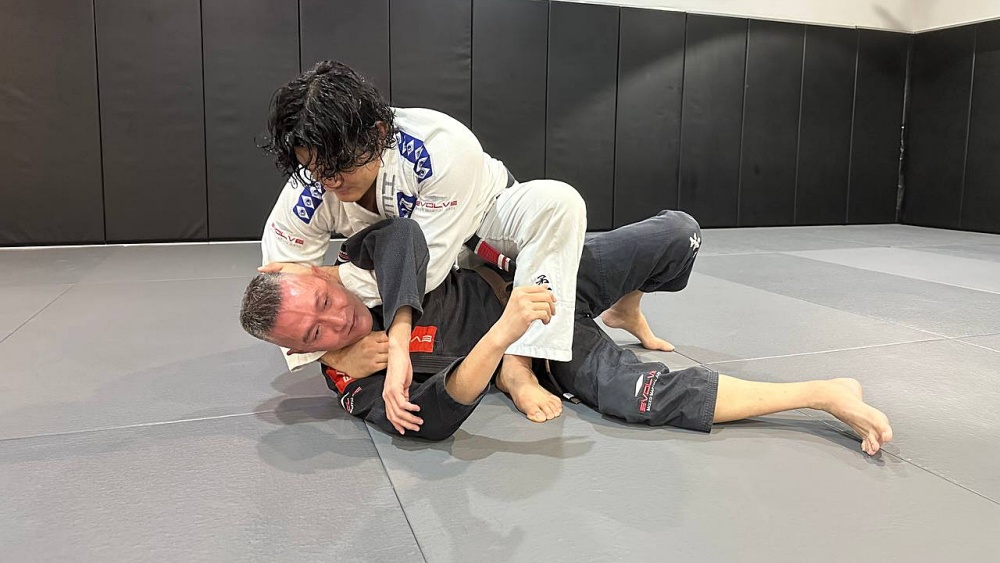
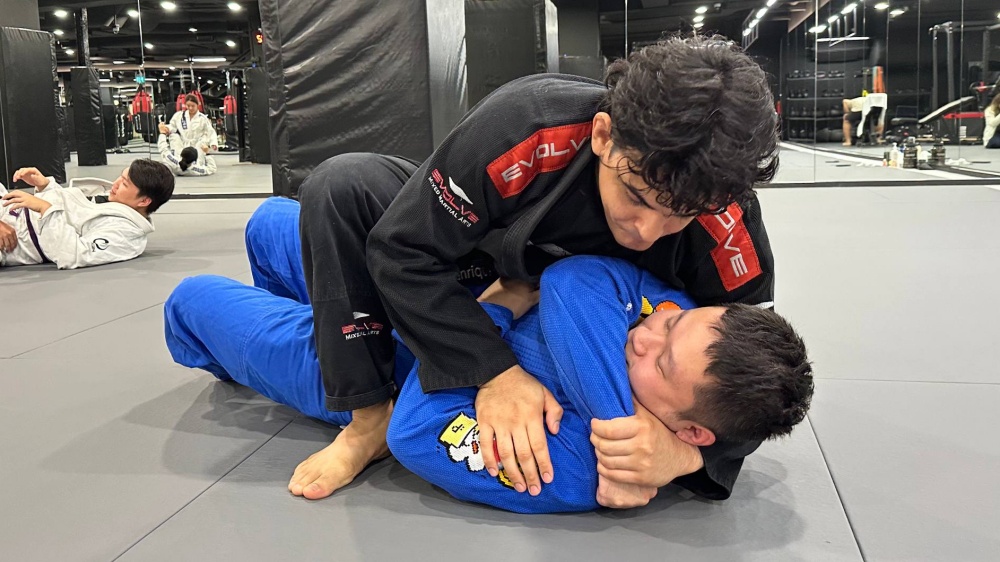
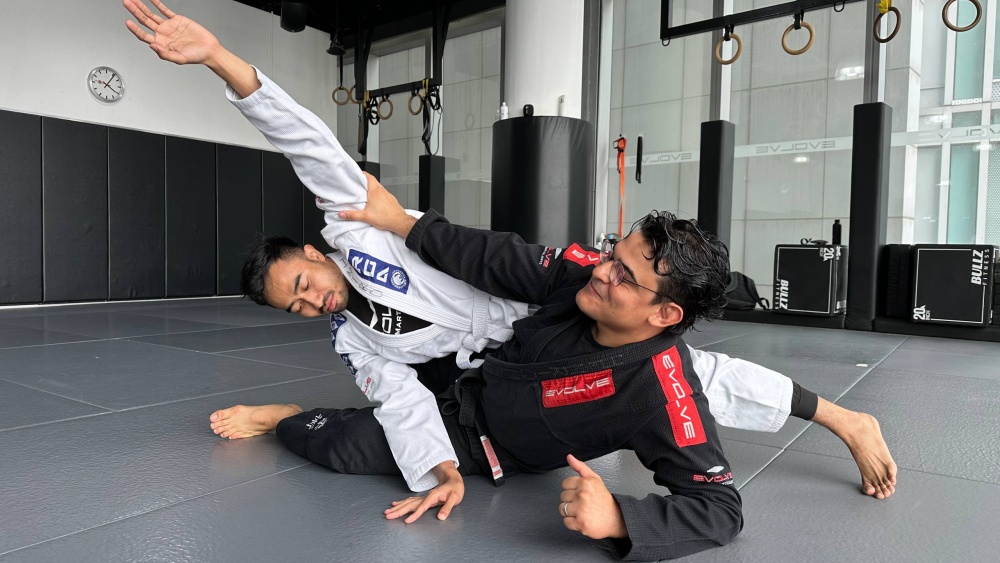
The stiff arm escape refers to extending the arm to create a rigid frame between you and your opponent. This frame prevents the top player from closing the distance and settling weight onto your torso.
Unlike pushing, the stiff arm relies on skeletal alignment rather than muscle strength. When done correctly, it allows you to manage distance, protect space, and begin hip movement.
Why The Stiff Arm Escape Works
Control in BJJ depends on chest-to-chest pressure and head positioning. The stiff arm interrupts this connection.
By keeping the opponent’s upper body away, you reduce their ability to pin your shoulders and hips. This makes it harder for them to apply pressure or transition smoothly, giving you time to reposition.
The stiff arm is especially effective when combined with hip movement rather than used alone.
How To Perform The Stiff Arm Escape
The key to the stiff arm escape is correct alignment.
Your elbow should stay slightly bent rather than locked. Your hand frames against a solid surface such as the shoulder, hip, or collarbone. Your forearm stays vertical, supporting the frame.
As you maintain the frame, your hips move away using a shrimping motion. The stiff arm creates space while the hips create the escape.
Common Positions Where the Stiff Arm Escape Is Used
- The Side Control: From the bottom side control, the stiff arm frames against the opponent’s shoulder or hip. This blocks forward pressure and allows you to shrimp away.
- The Half Guard: In the half guard, a stiff arm can prevent crossface pressure and help you re-establish posture before recovering guard or standing up.
- During Passing Transitions: During guard passes, stiff arms help slow the top player and prevent them from settling into dominant positions.
Stiff Arm Vs Pushing
Pushing uses muscle and leads to fatigue. Stiff arming uses structure.
When you push, your arm collapses easily. When you stiff-arm correctly, your bones support the load, allowing you to hold a position longer with less effort.
Simply put, the difference is structure and effort. This distinction is critical for defensive efficiency.
Common Mistakes To Avoid
Many practitioners struggle with stiff arm escapes due to small errors.
- Locking the elbow completely.
- Framing too low on the body.
- Pushing instead of framing.
- Ignoring hip movement.
- Turning the head away and losing awareness.
Fixing these issues makes the escape significantly more effective.
How To Counter Pressure While Using The Stiff Arm
Good top players will try to swim inside the frame to collapse it. To prevent this, you must constantly adept.
Small hand repositioning, elbow tracking, and angle changes keep the frame active. The stiff arm is not static. It evolves with the opponent’s movement.
How To Train The Stiff Arm Escape
The stiff arm escape is best trained through positional sparring.
Start from the side control or half guard with controlled resistance. Focus on maintaining structure rather than escaping quickly. Over time, add hip movement and transitions.
The goal is confidence under pressure, not speed. Once you’re more confident of where and when you need to reposition, you’ll gradually be able to pick up the pockets of them and be adept in your next roll.
FAQs On The Stiff Arm Escape For BJJ
Q: Is The Stiff Arm Escape Strength-Based?
A: No. Proper structure matters more than strength.
Q: Does The Stiff Arm Work In Gi And No-Gi
A: Yes. The concept applies in both, since the key factor is the structure and does not require any components of the Gi.
Q: Should I Lock My Elbow When Stiff Arming?
A: No. A slight bend protects the joint and maintains control.
Q: What Comes After The Stiff Arm Escape
A: Common follow-ups include guard recovery, underhook entries, or standing up.
Final Thoughts
The stiff arm escape is a simple but powerful defensive tool in Brazilian Jiu-Jitsu. By prioritizing structure, distance, and timing, it allows practitioners to manage pressure and regain control without exhausting effort. When paired with proper hip movement, the stiff arm escape becomes a reliable foundation for escaping difficult positions and improving overall defensive confidence on the mats.
You may also like: