Summary
Footwork is one of the most fundamental aspects of boxing, forming the foundation for both offense and defense. Good footwork allows you to maintain balance, control distance, create angles, and avoid incoming attacks while positioning yourself to strike effectively.
This guide introduces 10 essential footwork drills designed to help beginners develop coordination, agility, and movement efficiency. From shadowboxing and ladder drills to jump rope and cone work, each drill builds key attributes needed to move confidently and effectively in the ring.
By consistently practicing these drills, beginners can improve their rhythm, balance, and overall boxing performance.
Key Takeaways
- Footwork is the foundation of boxing
Every punch, defensive movement, and angle starts from your feet. - Balance and positioning are more important than speed
Staying stable and controlled allows you to attack and defend effectively. - Simple drills build elite movement over time
Exercises like shadowboxing, shuffles, and skipping rope develop coordination and rhythm. - Stay light and mobile
Being on your toes helps you move quickly and react to your opponent. - Consistency is key
Footwork improves through repetition, small improvements daily lead to major gains.
Ten Boxing Drills That Improve Your Footwork
There are a variety of ways to improve your footwork. Below we cover ten drills that you can use to help improve your footwork:
1) Shadowboxing
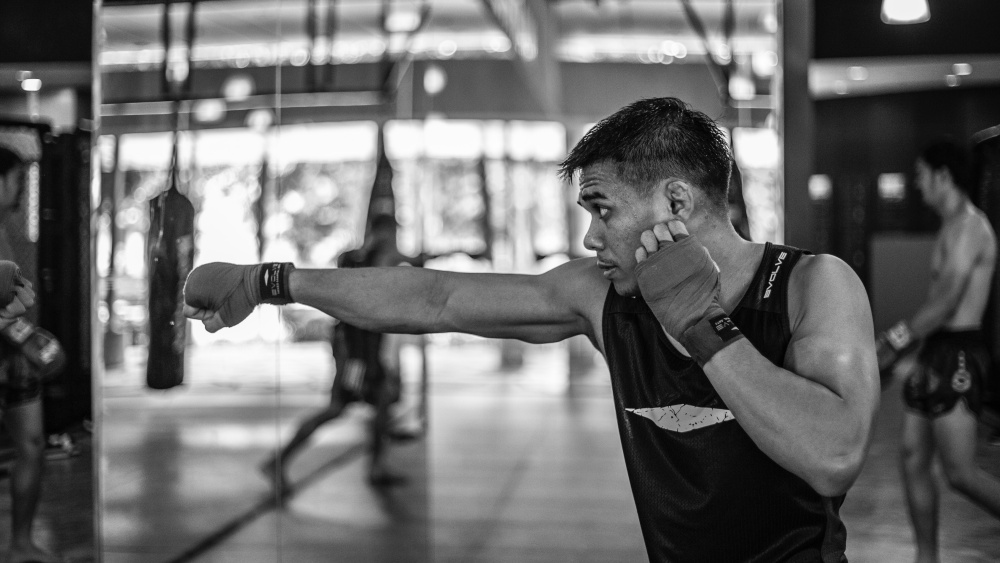
Shadow boxing is a great way to work on footwork without a training partner. You can move around the ring, practice your punches, work on your defensive moves, and focus on your footwork. Try to do three three-minute rounds of shadow boxing, with one minute of rest between each round.
2) Lateral Shuffle
The lateral shuffle is a great drill for improving your footwork. To perform this drill, start by standing with your feet together. Then, take a small step to the side with your right foot and follow it with your left. Continue moving side to side, making sure that your feet stay together. Do this for 30 seconds, and then take a 30-second break. Repeat for a total of five rounds.
3) Forward-Backward Shuttle Run
This drill is similar to the lateral shuffle, but you will be moving forward and backward instead of side to side. Start by standing with your feet together, and then take a small step forward with your right foot. Follow it with your left, and then take a small step back with your right foot. Continue moving forward and backward, making sure that your feet stay together. Do this for 60 seconds, and then take a 60-second break. Aim for at least five reps.
4) Side-To-Side Jump Rope
This drill is similar to the forward-backward shuttle run, but you will be jumping rope instead of running. Start by standing with your feet together, then jump to the side with your right foot. Follow it with your left, and then jump to the side with your right foot again. Continue jumping side to side, making sure that your feet stay together. Do this for 30 seconds, and then take a 30-second break. Go for about five reps.
5) Single-Leg Hops
This drill is excellent for developing coordination and balance. Start by standing on your left leg, then hop forward with your right leg. Land on your right foot, and immediately hop backward with your right leg. Continue hopping forward and backward, ensuring you land on the same foot each time. Do this for 60 seconds, and then switch legs. Try to get at least five sets when you perform this drill.
6) Carioca Drill
The carioca drill is great for improving your lateral movement. Start by standing with your feet together, and step to the side with your right foot. Follow it with your left, and then step to the side with your right foot again. Continue stepping side to side, making sure that your feet stay together. Do this for 60 seconds, and then take a 30-second break. Repeat five times.
7) Cone Drills
Cone drills are great for improving your agility. Set up cones in a straight line and start at the first cone. Sprint to the second cone, and then touch it with your hand. Sprint to the third cone, and then touch it with your hand. Continue sprinting and touching each cone until you reach the end of the line. Then turn around and do the drill in reverse. Do this for two minutes, and then take a one-minute break. Aim for about three rounds.
8) Ladder Drills
Ladder drills are great for improving your footwork and coordination. Set up a ladder on the ground and start at the first rung. Take a forward step with your right foot, then bring your left foot up to meet it. Step forward with your right foot again, and then bring your left foot up to meet it. Continue stepping forward, making sure that you alternate your feet each time. Do this for a minute, and then take a one-minute break. Aim for about five sets.
9) Jump Squats
Jump squats are a great way to improve your explosiveness. This improves your ability to close distances and avoid attacks. Get into position standing with your feet shoulder-width apart, then squat down until your thighs are parallel to the ground. From there, jump up as high as you can. Land softly, and then immediately squat down again and jump up. Continue doing this for 30 seconds, and then take a 30-second break. Try to get five rounds of this.
10) Skipping Rope
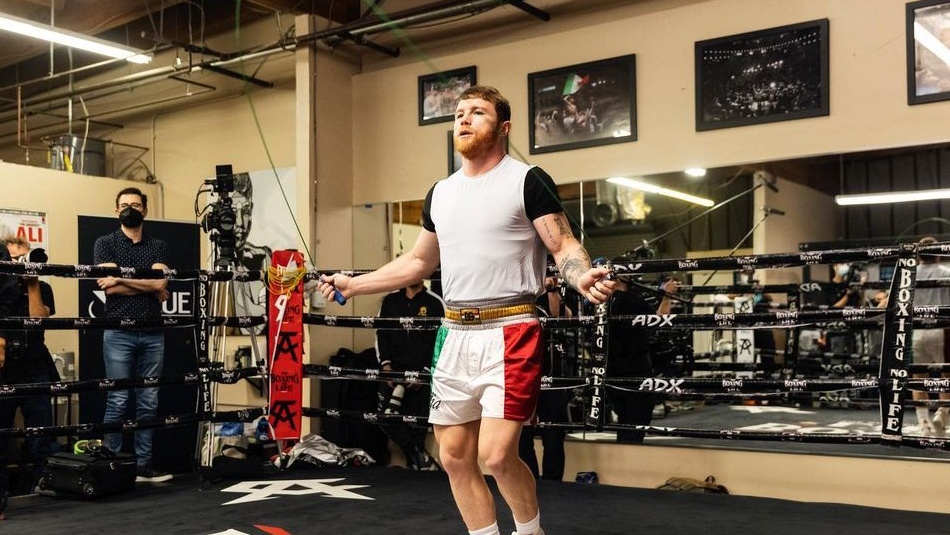
Skipping rope is a great way to improve your footwork. It helps you develop coordination and rhythm and gets your legs used to moving quickly. You can perform this drill for two minutes at a time and then rest for one minute. Do this for five rounds.
Skipping also helps to improve your endurance, so you can move around the ring for long periods without getting tired.
FAQs
1. Why is footwork so important in boxing?
Footwork helps you control distance, maintain balance, and avoid attacks while putting yourself in position to strike effectively.
2. Can beginners improve footwork quickly?
Yes. With consistent practice of basic drills like shadowboxing and skipping rope, beginners can see noticeable improvements within weeks.
3. What is the best drill for boxing footwork?
Shadowboxing is one of the best overall drills because it allows you to practice movement, positioning, and technique without pressure.
4. How often should I train footwork?
Ideally, footwork should be incorporated into every training session, even if only for 10–15 minutes.
5. Does footwork improve punching power?
Yes. Proper foot positioning and weight transfer allow you to generate more force in your punches.
Final Thoughts
Footwork is often overlooked by beginners, but it is one of the most important skills you can develop in boxing. It’s what allows you to control the fight, move efficiently, and stay one step ahead of your opponent.
“In boxing, everything starts with your feet. If your footwork is strong, your balance, timing, and power will follow naturally.”
— Drian Francisco, Boxing World Champion & Instructor at Evolve MMA
For beginners, the goal isn’t to move fast, it’s to move correctly. Focus on staying balanced, light on your feet, and in control of your movements. Over time, speed and fluidity will come naturally.
By consistently practicing these drills, you’ll build a strong foundation that supports every aspect of your boxing—from defense and movement to striking and strategy.
Book your complimentary trial class with our World Champions below!
If you have any other questions regarding Evolve MMA and the programs we offer, you can get in touch with our membership executives at the following locations:
Evolve MMA (Raffles Place)
18 Cross St,
B1-08,
Singapore 048423
Phone: (65) 6250-7751
Evolve MMA (Orchard Central)
181 Orchard Road
#06-01 Orchard Central
Singapore 238896
Phone: (65) 6536 4556
Evolve MMA (KINEX)
11 Tanjong Katong Road
#02-52 KINEX
Singapore 437157
Phone: (65) 6288 2293
Evolve MMA (Star Vista)
1 Vista Exchange Grn
#02-26A The Star Vista,
Singapore 138617
Phone: (65) 6539 9590