Summary
A breakfall, known as ‘ukemi’ in Japanese martial arts, is one of the first techniques students learn in Brazilian Jiu-Jitsu. Instead of resisting a fall, you guide your body toward the mat and use your arms and core to manage the motion.
It helps practitioners build coordination, body control, and confidence when taken down or swept. In BJJ, learning how to fall smoothly allows you to flow with momentum and recover position quickly. This article explores what a breakfall is, how to perform it, and how it develops balance, timing, and composure on the mats.
Why Breakfalls Matter In BJJ
Breakfalls build awareness and timing. When you can fall with control, you can train harder, recover faster, and continue the flow of a roll instead of stopping the exchange. They also develop coordination between your upper and lower body.
Beyond the technical aspect, breakfalls teach discipline and rhythm. Every time you fall, you learn to stay relaxed, maintain structure, and move with intention. Over time, this translates into smoother transitions and more efficient grappling.
How To Perform a Back Breakfall
The back breakfall is the foundation of all other falling techniques.
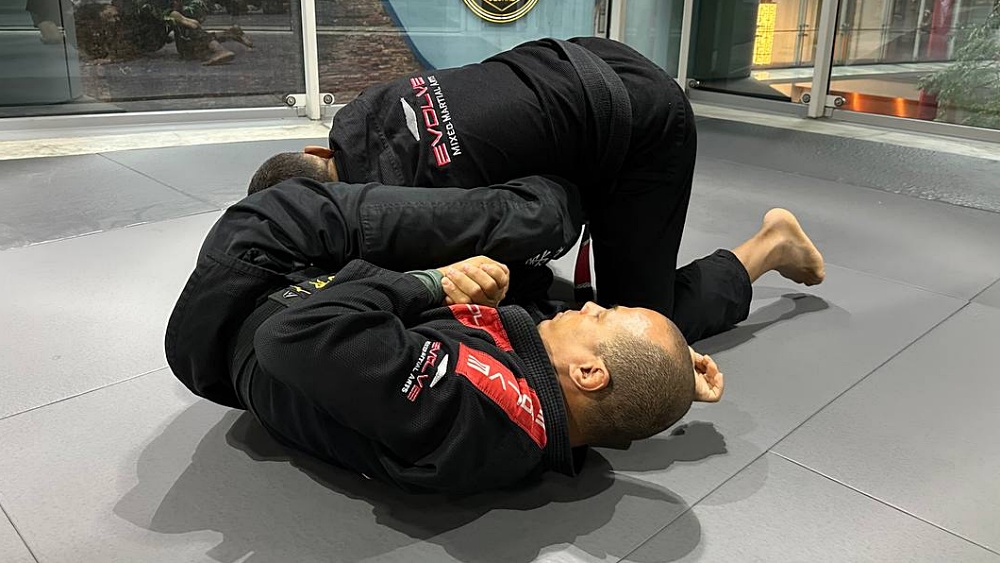
- Start From A Seated Position: Sit on the mat with your knees bent and feet flat. Cross your arms over your chest and tuck your chin slightly.
- Roll Back With Control: Let your back touch the mat first. Keep your chin tucked and avoid lifting your head.
- Use Your Arms To Absorb Motion: As your back touches the mat, extend both arms diagonally downward and strike the mat firmly with your palms. This controls your landing and spreads the force evenly.
- Return To Seated Or Defensive Posture: Bring your legs back in and rise to a seated or guard-ready position. This teaches you to move from falling to engagement fluidly.
The key is to stay relaxed and let your body roll naturally rather than stiffening up.
Side And Forward Breakfalls
In BJJ, not every fall happens straight backward. You’ll often need to move sideways or forward to stay in control. We’ve also included ways to breakfall both to the side and forward, so you can be better prepared to control your landings and protect yourself during training.
Side Breakfall
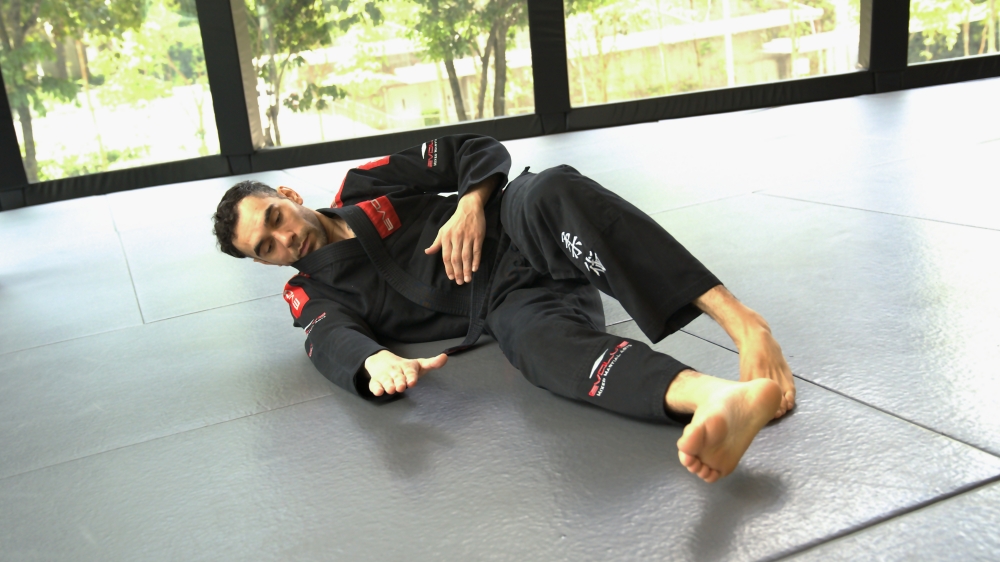
Common in sweeps or trips. As you fall to one side, keep your arm slightly bent and strike the mat diagonally. Your top leg should rise slightly to carry momentum through.
Forward Breakfall
Used when moving toward the mat from a throw or scramble. Land with your forearms and hands, keeping your elbows bent and your chest lifted.
Each variation follows the same principle: keep the movement rounded and allow your body to flow with momentum.
Common Mistakes in Breakfall Practice
- Not Tucking Your Chin: Keep the chin close to the chest to stay compact.
- Slapping Too Late: The timing of the arm movement should match the contact with the mat.
- Holding Your Breath: Breathe out naturally to stay relaxed.
- Locking Your Legs: Keep knees slightly bent and mobile.
- Overthinking The Motion: Flow with momentum instead of forcing control.
These details improve rhythm and fluidity over time.
Drills To Refine Your Breakfall
Breakfalls improve through repetition. Try adding some from the above video demonstration by JiuJitsuFlo to your warm-up, and also the below:
- Seated Roll-Backs: Sit and roll backward repeatedly, focusing on smooth motion.
- Standing Roll-Backs: Begin from a standing position and lower yourself with control into a breakfall.
- Partner Push Drill: Have a partner give light resistance to simulate realistic off-balancing(Kusuzhi).
- Rolling Integration: Practice breaking falls during technical drills that include sweeps and takedowns.
Consistency develops instinct. After enough practice, your body will naturally react without thought when you lose balance.
FAQs On Breakfalls In BJJ
Q: What Is The Purpose Of A Breakfall In BJJ?
A: It helps you control your body when landing from throws, trips, or sweeps.
Q: Do All Grappling Styles Use Breakfalls?
A: Yes. Breakfalls are part of many grappling arts, including judo, wrestling, and aikido.
Q: How Long Does It Take To Learn A Proper Breakfall?
A: With consistent practice, most beginners develop basic coordination within a few classes.
Q: When Should I Practice Breakfalls?
A: Many BJJ schools include them in every warm-up to build familiarity and rhythm.
Q: What Comes After Learning The Basic Back Breakfall?
A: You’ll progress to side, forward, and rolling variations that prepare you for dynamic movements during sparring.
Final Thoughts
Learning the breakfall is one of the first milestones in Brazilian Jiu-Jitsu. It teaches control, awareness, and adaptability. This technique is especially useful during stand-up exchanges, where either you or your opponent may end up being taken down; hence, it’s important to understand how to break your fall properly.
Over time, breakfalls become second nature, allowing you to focus more on strategy, movement, and timing. Mastering them early builds a strong foundation for everything else that happens on the mats.
You may also like: