Summary
Stepping into sparring with a training partner who is significantly larger than you is one of the most instructive and most intimidating experiences in Muay Thai. The size and strength advantage your opponent carries cannot be matched directly, but it can be neutralised with the right strategy, and that is precisely what makes these situations so valuable. This article breaks down five practical tips for sparring a larger opponent in Muay Thai: staying calm under pressure, prioritising technique over strength, mastering the range you need to operate safely, using footwork and constant movement to create angles and opportunities, and building a counter-fighting game that turns your opponent’s aggression into your scoring opportunities. Each tip builds on the one before it, forming a complete framework for the smaller fighter to not just survive against a bigger opponent, but to outperform them. As Muay Thai World Champion and Evolve MMA instructor Chaowalit Jocky Gym puts it, “Muay Thai was designed for this situation. The art was built on the idea that technique and intelligence beat size and strength. When a smaller fighter uses their footwork, their timing, and their composure correctly, size stops being an advantage and starts being a liability.” Whether you train recreationally or compete, the ability to handle larger opponents is a skill that will elevate every aspect of your game — and gyms like Evolve MMA in Singapore provide exactly the kind of diverse, high-level sparring environment where these skills can be developed properly.
1) Stay Calm
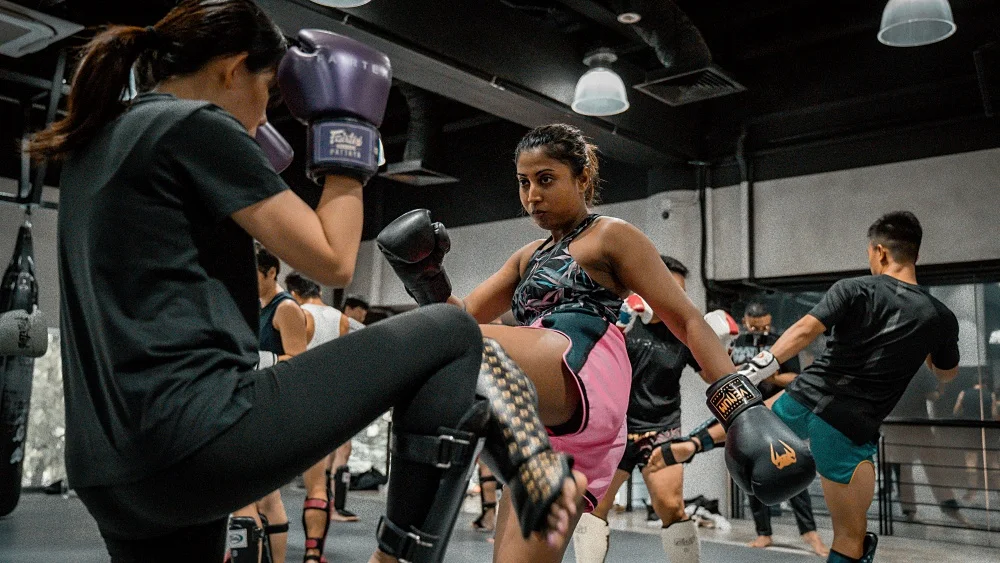
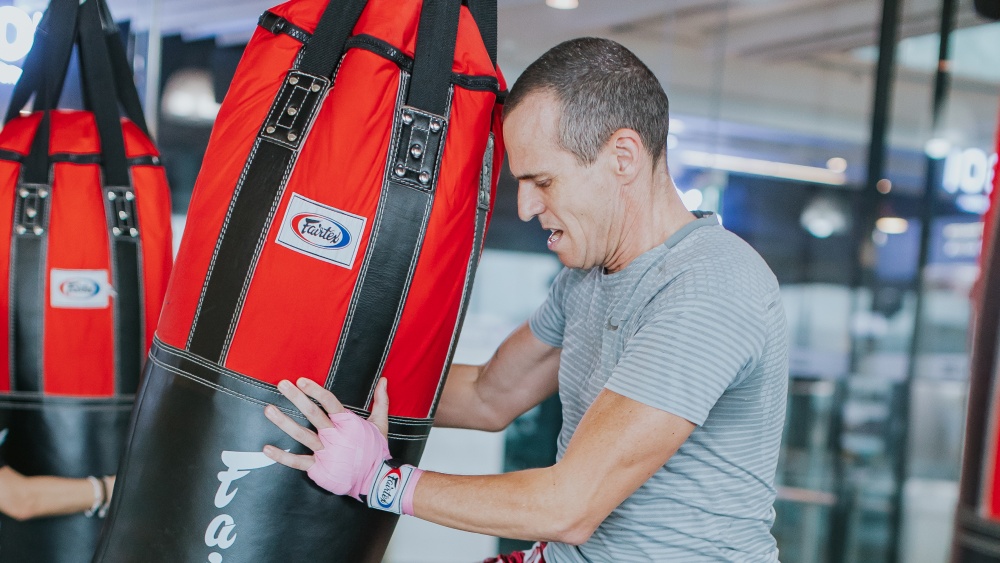
Unless you’re a seasoned fighter, chances are, you’ll find yourself feeling really tense and intimidated when facing a larger sparring partner. Learning to stay calm is the most important thing you need during sparring regardless of whether you’re facing a larger opponent or not. Resist the fear of sparring someone bigger and obviously stronger than you are, breathe, and relax; this will allow you to defend comfortably, execute techniques more efficiently, and be less fatigued.
2) Focus On Technique
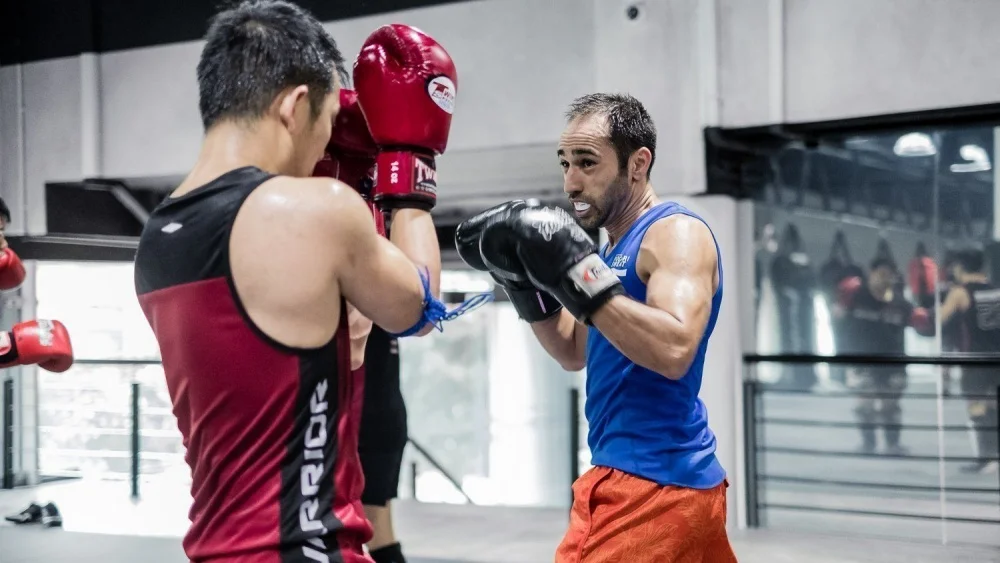
When taking on a larger opponent in sparring, it’s extremely important to accept that you’re going to lose out in the strength department. The sooner you come to terms with that, the sooner you’ll start using your mind and technique instead of trying to out-muscle your opponent as you would a regular sparring partner.
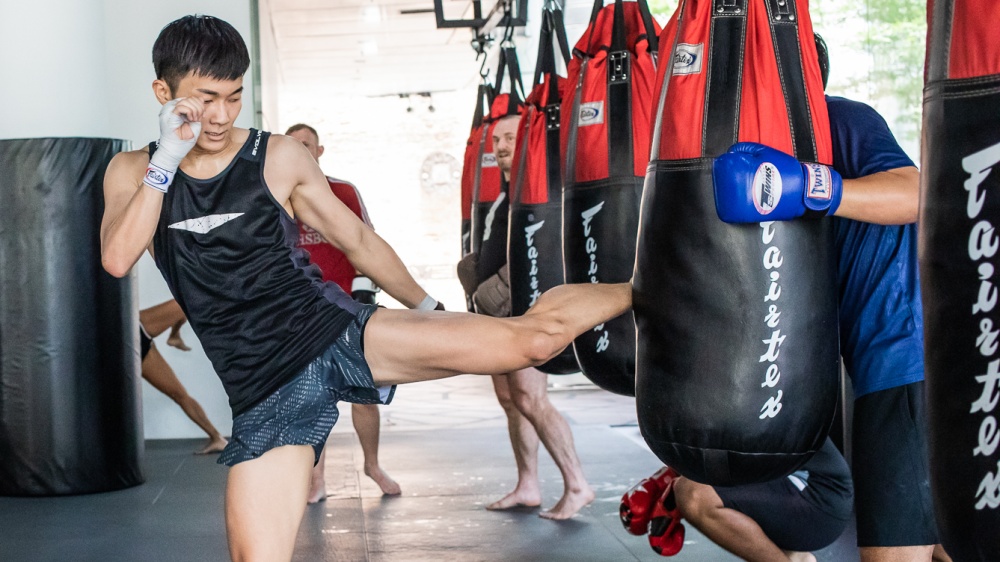
Although Muay Thai is famous for its power and deadly effectiveness, the art was built on the concept of using technique to overcome strength. So when it comes to sparring someone larger, focus on executing your techniques perfectly. Before you know it, you’ll find yourself outscoring your opponent because you’re not relying on reckless strength!
3) Master The Range
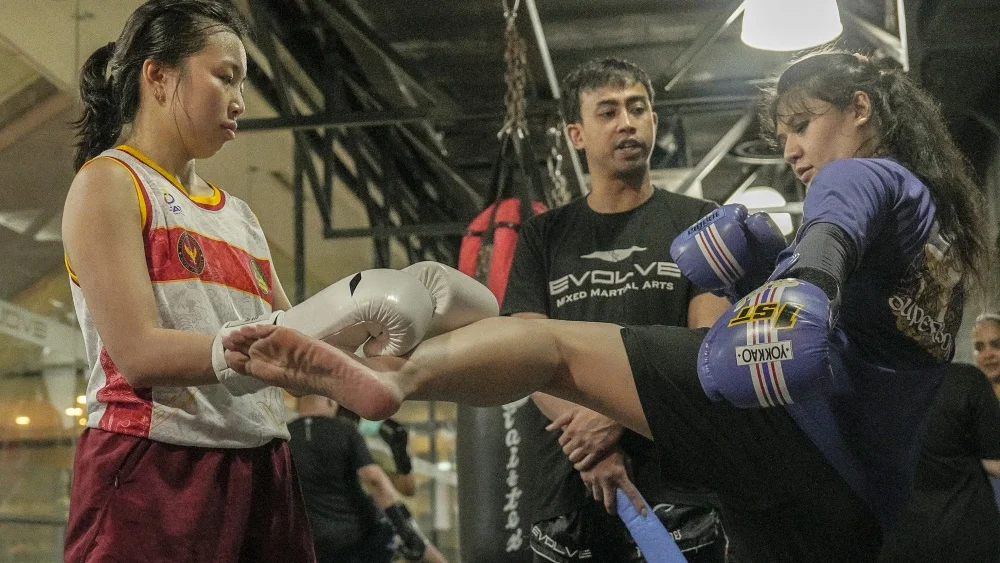
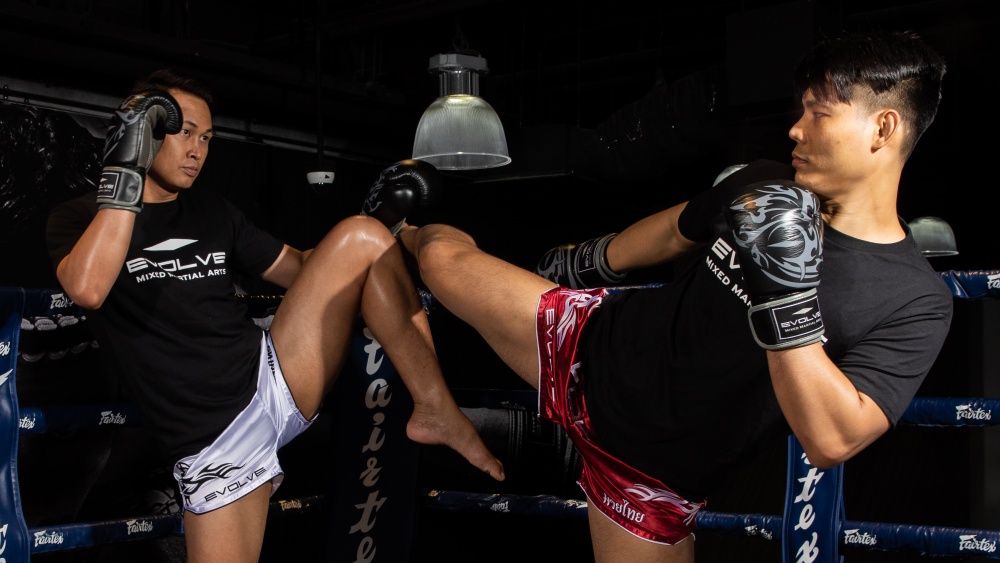
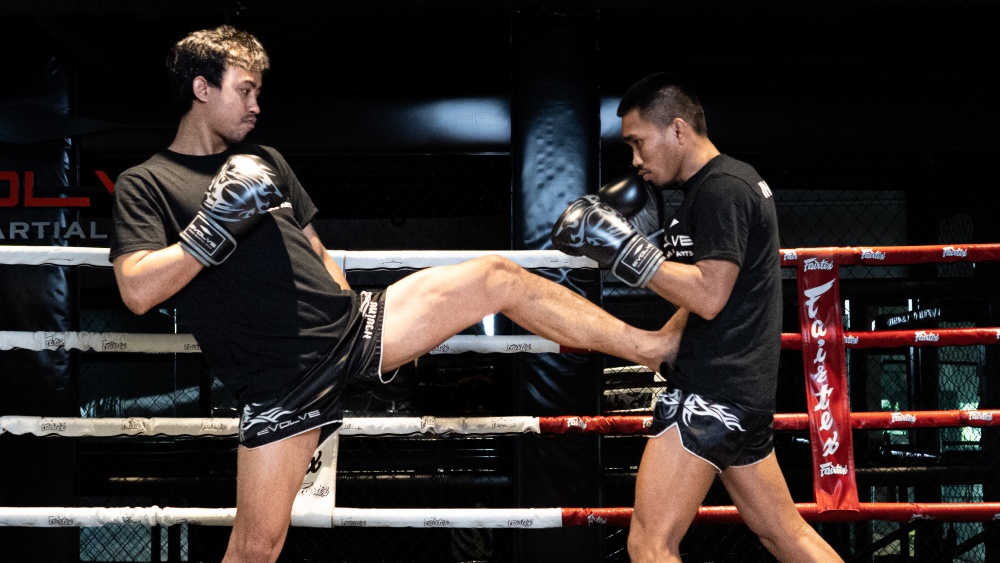
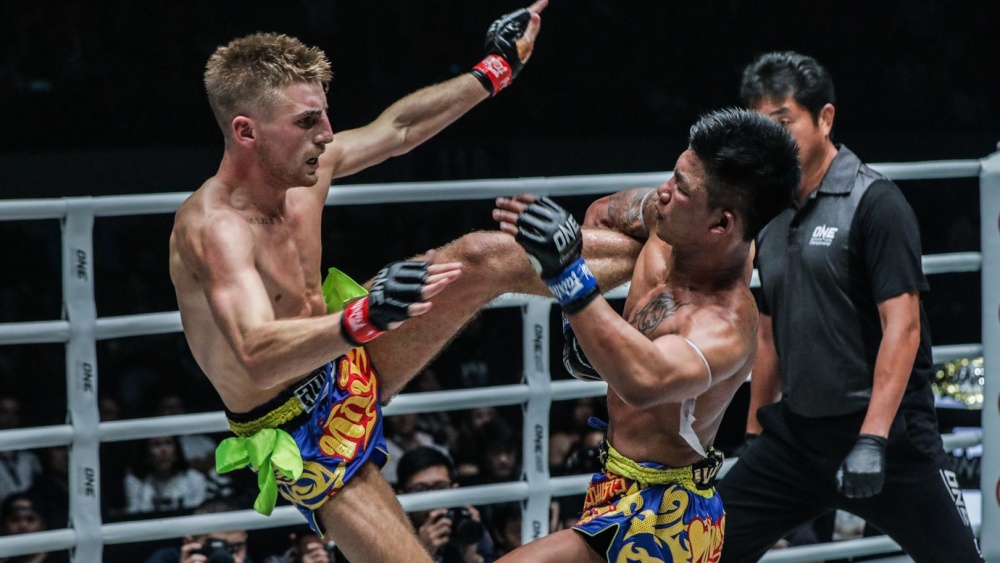
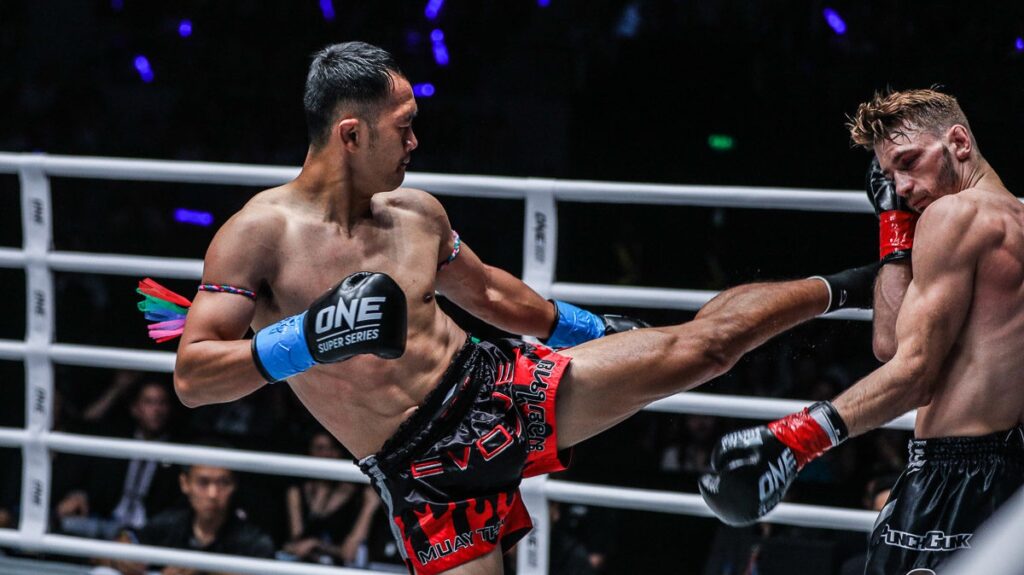
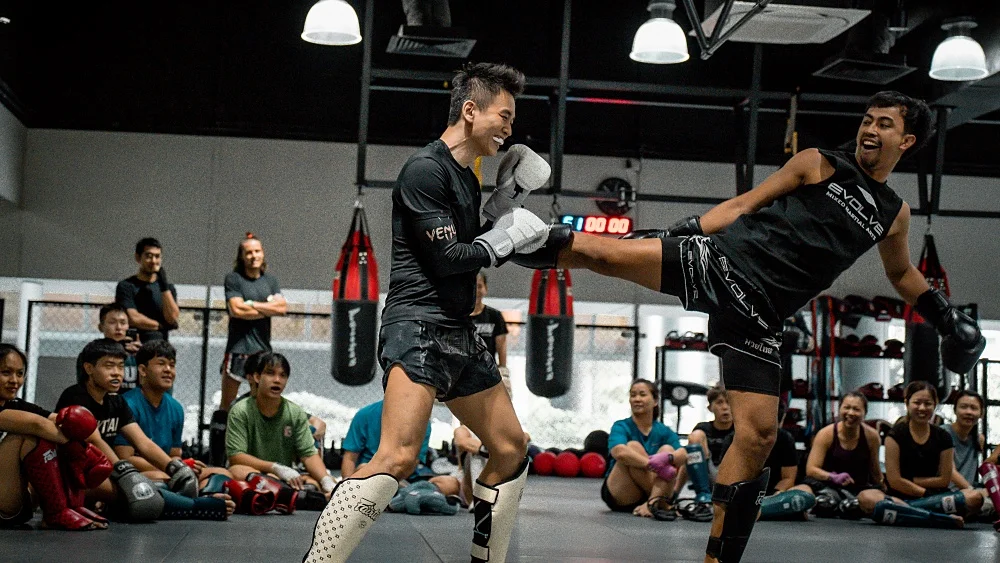
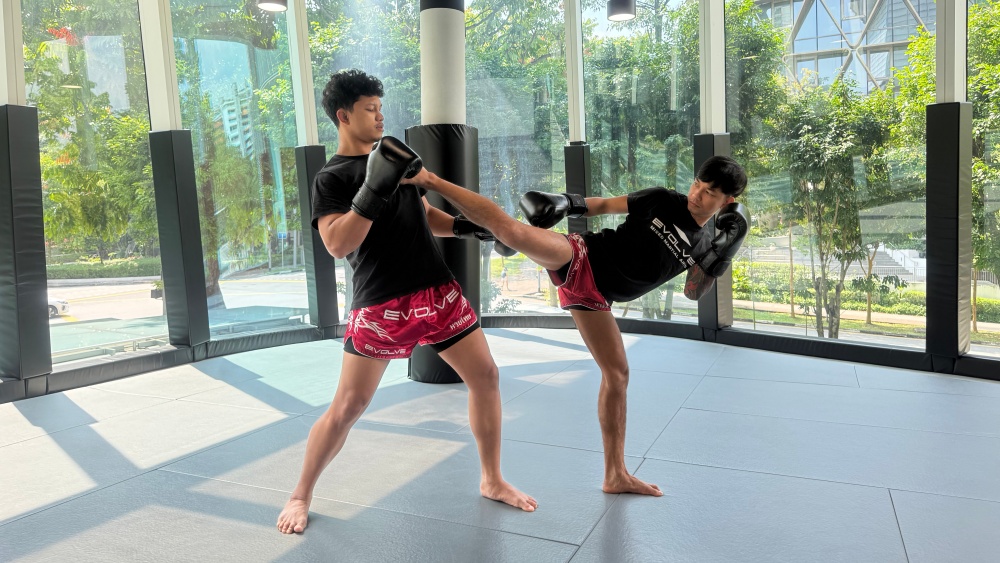
Larger opponents are most likely going to have a significant reach advantage over you, so it’s more important for you to master the range needed for you to strike and also stay safe. So instead of standing in your usual range, be cautious and start off further. From this wider, safer range, use techniques that measure distance like teeps (push kicks) and jabs.
These techniques will not only help you master range, but are also great defensive tools to keep your opponents at bay. However, remember that for all this to be effective, you must stay calm and be patient. Keep in mind that tip #4 on this list will also enhance your ability to master range.
4) Footwork And Constant Movement
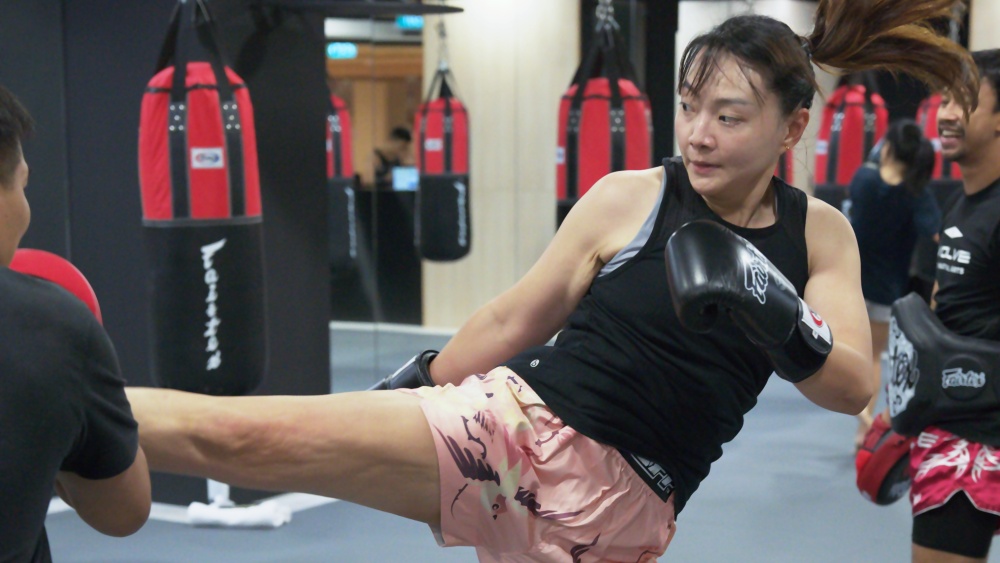
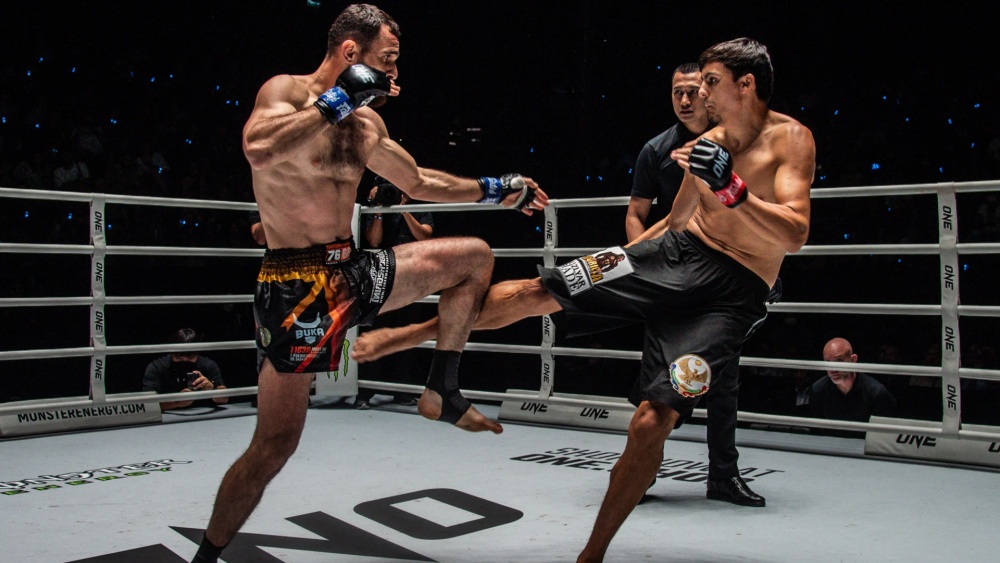
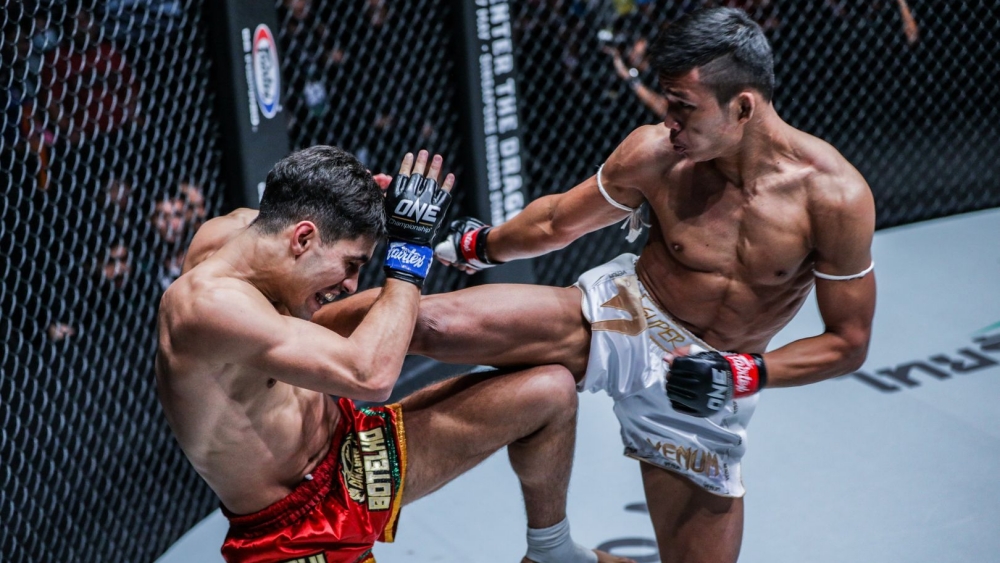
As the smaller sparring partner, speed and constant movement are going to be your biggest advantages. If you’ve watched super fights pitting smaller opponents against much bigger opponents, you’ll notice that the smaller fighter always starts off by moving strategically around the ring.
Doing so will allow you to stay in a safe range and also provide angles that open up good opportunities to hit and get out fast. Be smart, don’t take risks, strike when you can and get back out of range of your opponent’s attacks. And of course, don’t forget to keep moving!
5) Work On Countering
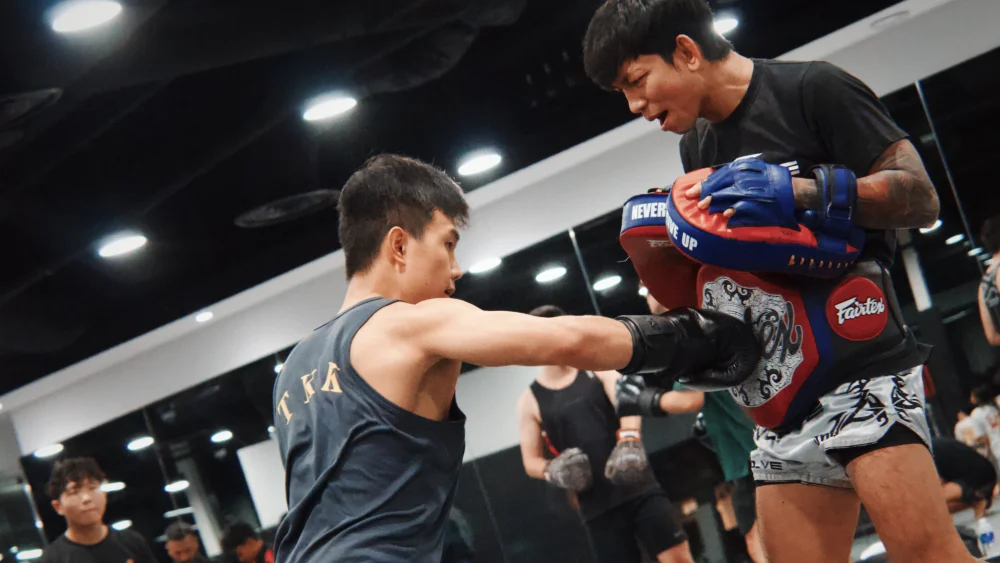
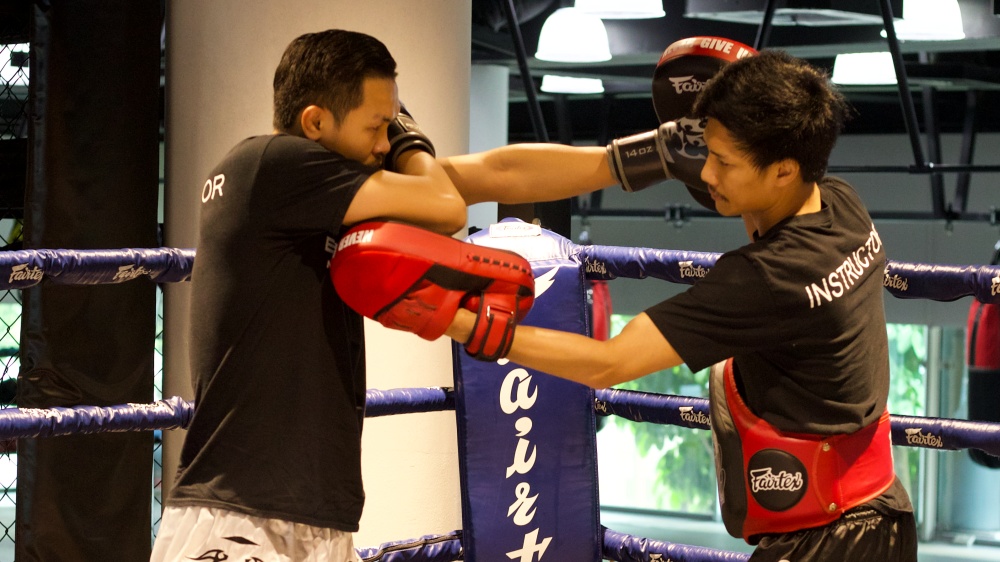
Once you’ve mastered tip #1 through #4, start working on countering. Not every successful fighter is known to be a counter-fighter, but that doesn’t mean you shouldn’t work on it. Constant movement and staying in range will allow you to see a lot of attacks coming. Start off by defending and avoiding these attacks.
Once you’ve built up the confidence to defend them, start building your attacks around them. These could mean anything from countering with punches and kicks on open areas, to catching kicks and executing sweeps or counter kicks and combinations. Remember, once you’ve performed a successful counterattack, reset back into safe range and remain calm.
Remember, never treat sparring as you would an actual fight. It is a platform for you to improve, not just with your technique, but mentally as well. And there’s no better way to conquer your mind and emotions than with a larger sparring partner. So don’t be afraid, you’ve got nothing to lose!
Frequently Asked Questions About Sparring Larger Opponents In Muay Thai
Q: Is It Normal To Feel Intimidated Sparring a Larger Opponent?
A: Completely normal — and almost universal, even among experienced fighters. The physical presence of a larger opponent triggers a genuine stress response that affects breathing, muscle tension, and decision-making. The key is not to eliminate that response entirely, which is not realistic, but to manage it well enough that it does not compromise your technique. Controlled breathing before and during sparring is the most effective tool for this. Over time, accumulated sparring experience with larger partners builds the familiarity that reduces the intimidation significantly — but the first few rounds always feel difficult, and that is expected.
Q: What Techniques Work Best For A Smaller Fighter Against A Larger Opponent?
A: The teep and the jab are the two most important tools for a smaller fighter because they operate at the range where you are safest — far enough to avoid your opponent’s most powerful strikes while still scoring. Low kicks are also highly effective because they are difficult for larger opponents to check consistently and accumulate damage to mobility over time. Body kicks thrown on the way out — landing and immediately exiting — are another staple of the smaller fighter’s game. The common thread is that the most effective techniques for the smaller fighter are those that do not require prolonged close-range engagement, where size and strength are most decisive.
Q: How Do I Use Footwork Effectively Against A Bigger Opponent?
A: The goal of footwork against a bigger opponent is not just to move — it is to move with purpose, creating angles that expose their open targets while keeping you outside their power range. Circling away from their power side is a fundamental principle: if your opponent is right-handed, circling to your right moves you away from their strongest weapon. Lateral movement disrupts their timing and forces them to reset their position before attacking, which creates the windows where your counters land. Straight backward movement, by contrast, keeps you in front of them and in range of their power shots — avoid retreating in straight lines whenever possible.
Q: What Should I Do When A Larger Opponent Tries To Clinch With Me?
A: The clinch is generally a dangerous position for a smaller fighter because a larger opponent can use their size advantage to control your posture, limit your movement, and land heavy knees. The priority when a larger opponent attempts to clinch is to prevent it from forming — using the teep to create distance before they can close the gap, or turning and circling out if the clinch does begin to form. If you find yourself in a clinch despite your best efforts, fighting for inside arm position and staying active with your own knees is preferable to passively absorbing your opponent’s. Exiting the clinch quickly and resetting to range is almost always the right strategic choice for the smaller fighter.
Q; Can A Smaller Fighter Realistically Win Against A Much Larger Opponent In Sparring?
A: Yes — and this is one of the most important lessons Muay Thai teaches. Size is an advantage, but it is not a guarantee of anything. A technically skilled, well-conditioned, composed smaller fighter can absolutely outscore and outperform a larger opponent who relies on physical attributes rather than technique. The scoring in Muay Thai rewards effective, clean strikes — not just powerful ones — which means a smaller fighter landing precise teeps, crisp body kicks, and well-timed counters will accumulate points regardless of the size differential. The mental shift required is accepting that you will not win through strength, and then committing fully to winning through technique, timing, and movement.
Q: How Does Sparring Larger Opponents Make Me A Better Fighter Overall?
A: Sparring larger opponents forces you to rely on skill rather than physical attributes, which develops technical habits that serve you in every context. When you cannot out-muscle an opponent, you are compelled to sharpen your timing, refine your range management, improve your footwork, and develop composure under pressure — all of which are the qualities that define elite fighters regardless of their size. Many coaches actively encourage their fighters to spar with larger partners regularly for exactly this reason. At Evolve MMA in Singapore, the diversity of training partners — in size, style, and experience level — is one of the most valuable aspects of the training environment, precisely because it exposes fighters to challenges they cannot solve with physical attributes alone.
Q: What Mental Approach Should I Take Into Sparring With A Much Larger Partner?
A: Treat the size difference as information rather than a threat. Your opponent being larger tells you specifically what to do: stay calm, use your range tools, move constantly, and counter rather than initiate exchanges at close range. Framing the situation as a technical puzzle — how do I score effectively and stay safe against this specific challenge? — shifts your mental state from anxiety to problem-solving, which is a far more productive headspace for learning. The fighters who grow fastest from sparring larger opponents are not the ones who go in hoping to win — they are the ones who go in curious about what the experience will teach them.
Final Thoughts
Sparring a larger opponent is uncomfortable by design — and that discomfort is the point. Every round where you are forced to rely on technique rather than physical attributes, to move rather than stand and trade, and to stay calm rather than react emotionally, is a round that makes you a fundamentally better Muay Thai fighter. The skills you develop facing larger opponents — range management, footwork, composure, counter-fighting — are not niche tools for a specific situation. They are the core skills of high-level Muay Thai, and the larger opponent is simply the clearest possible context in which their value becomes undeniable.
Do not avoid these rounds. Seek them out, approach them with a specific technical intention, and measure your progress not by whether you outscored your partner but by whether your technique held up under the pressure their size creates. The growth that comes from consistently meeting that challenge is exactly what separates the fighters who plateau from the fighters who keep improving — regardless of their size.
You may also like: