
Summary
Mia Kang’s story is one of the most compelling examples of what Muay Thai can do for a person beyond the physical. A Sports Illustrated swimsuit model who spent most of her younger years consumed by insecurity and self-doubt, Mia found in Muay Thai not just a sport but a complete transformation of how she saw herself. She quit smoking, rebuilt her relationship with her body, competed professionally, and won her debut by knockout — all while crediting the art of eight limbs as the catalyst for the most significant personal growth of her life. Her story is remarkable, but it is not unusual. Across gyms around the world, men and women from every background discover that the progressive, demanding, deeply human process of learning Muay Thai produces confidence that no other training system quite replicates. This article tells Mia’s story, explores the mechanisms behind how martial arts build genuine self-confidence, and covers the full range of physical, mental, and social benefits that come with committing to Muay Thai training. As Muay Thai World Champion and Evolve MMA instructor Chaowalit Jocky Gym puts it, “Confidence in Muay Thai is not given to you. It is built — one session at a time, one technique mastered at a time, one moment of getting through something hard and discovering you were capable of it. That kind of confidence does not disappear when you leave the gym. It comes with you everywhere.” Whether you are drawn to Muay Thai for fitness, self-defence, competition, or simply the community of a good gym like Evolve MMA in Singapore, the confidence it builds is one of the most durable and meaningful things you will take away from it.
Key Takeaways
- Muay Thai builds confidence through a mechanism that appearance-based fitness cannot replicate: the progressive mastery of a genuinely difficult skill under real pressure. Mia Kang’s transformation was not about how she looked in the mirror after training. It was about discovering, through thousands of repetitions and sparring sessions that tested everything she had, that she was more capable than she had ever believed.
- The confidence Muay Thai produces is earned rather than granted, which makes it durable rather than fragile. A confidence built on the knowledge that you have learned to defend yourself, endure hard training, and perform under the pressure of a sparring partner trying to stop you is not easily shaken by external opinion or circumstance.
- Muay Thai’s community, the peers, instructors, and training partners, is a critical part of its confidence-building effect. Mia explicitly credits the encouragement she received from her peers and instructors as the fire that first lit her passion for the sport. The support system of a Muay Thai gym is not incidental to the transformation it produces — it is one of the primary mechanisms.
- The physical transformation that Muay Thai produces is comprehensive and comes as a byproduct of training properly, not as the primary goal. Mia’s account of never having had muscle before, of her body transforming completely, and of finally feeling comfortable in her own skin — regardless of size or weight — reflects what consistent Muay Thai training produces across the full range of physical fitness qualities.
- Sparring is the crucible in which Muay Thai’s confidence-building effect is most powerfully concentrated. Standing in front of an opponent who is actively trying to score against you, and discovering that you can manage that pressure, respond to it, and even thrive within it — is an experience that translates directly into how you carry yourself in every other area of life.
- Muay Thai is increasingly recognised as a genuinely effective therapeutic tool for people dealing with low confidence, anxiety, and self-esteem issues. Mia’s story is one of thousands of documented examples of people who found in martial arts training a form of personal transformation that conventional therapy and traditional fitness had not produced.
How It All Started For Mia Kang
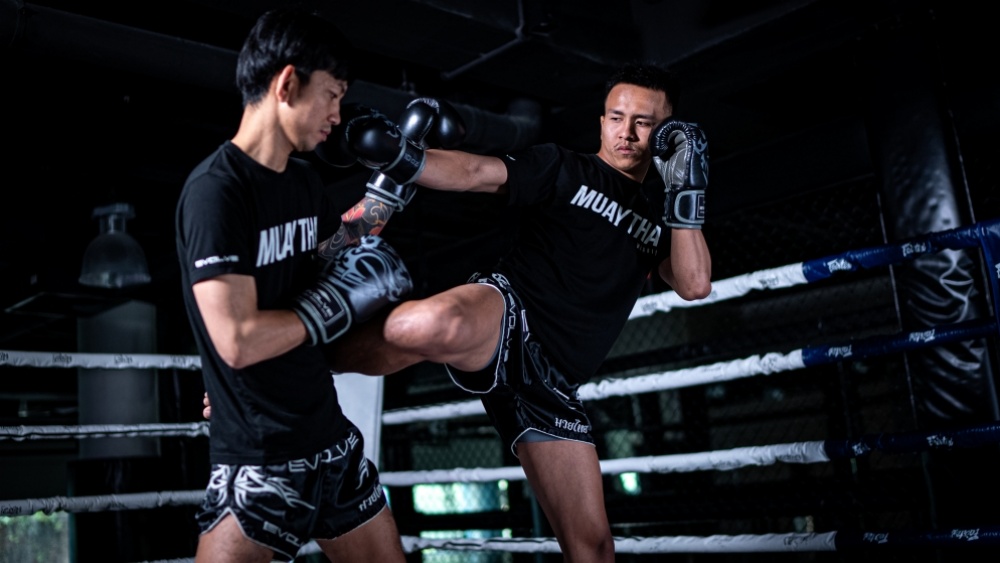
Mia isn’t the only person who has found self-confidence through martial arts training either. It comes naturally when you consistently go to the martial arts gym and put in work. Progress in Muay Thai, or any other martial art, comes slowly.
A few techniques might be easy for you to pick up, but the bulk of the things you learn at the dojo take lots of practice to master. Every class you attend, you will be taught a few techniques. With time, you end up with a mental arsenal of moves that you can execute at will without even having to think about them.
It is your growth as a martial artist that gives you confidence because it teaches you that you can accomplish any task you put your mind to.
“I remember the day when I looked in the mirror and felt secure with myself,” Mia explains. “I was happy and confident for the first time in my life.”
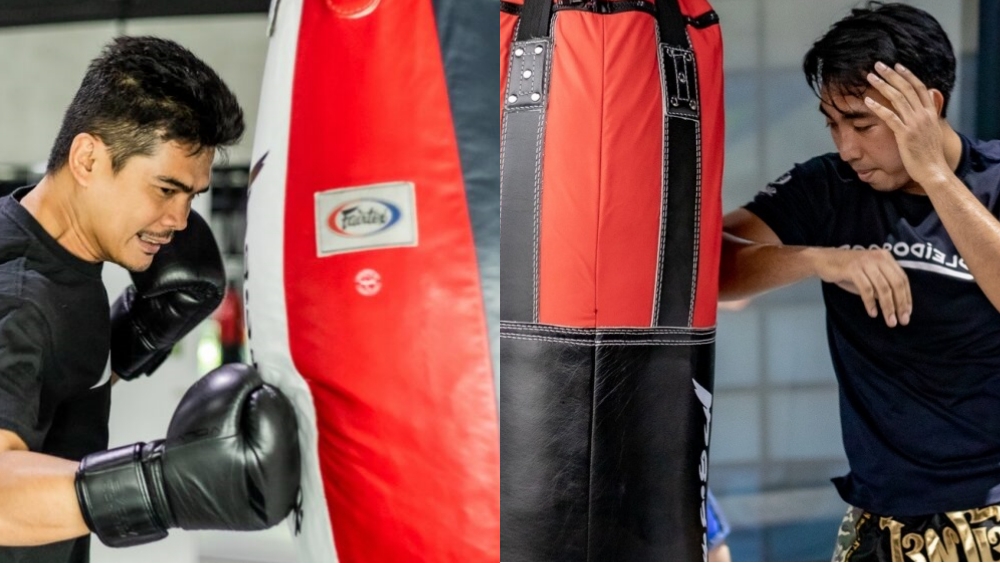
Mia likes to keep herself busy when she is not flying all over the world for photo shoots or firing kicks at a heavy bag. She’s earned herself a master’s degree in Finance and Financial Law.
With her Muay Thai debut now behind her, Mia says her preparation for the event took her to a completely different level as a person. It even helped her give up her lifelong chain-smoking habit.
“The workouts were so intense I just forgot I smoked,” Mia added. “It’s high-intensity training, and you just train, eat and sleep. I’d never had muscle before. My body completely transformed. I have been a size zero and a size 14 and I’d never ever felt comfortable in my own skin until I found fitness and health through Muay Thai and honestly I am just so comfortable with my body now. However, it continues to evolve; I can just embrace it as, honestly, I have never been so happy with who I am.”
The thought of competing as a professional fighter didn’t even cross Mia’s mind during her first couple of years training. She simply liked the physical nature of Muay Thai and the encouragement she was getting from her peers and instructors.
That was enough to light a fire inside her.
Now, Mia looks to take things to the next level. She wants to be a role model for others who are dealing with self-esteem issues like she once was. She says her increased dedication to Muay Thai as she prepares for her professional debut has taken her confidence to a completely new level.
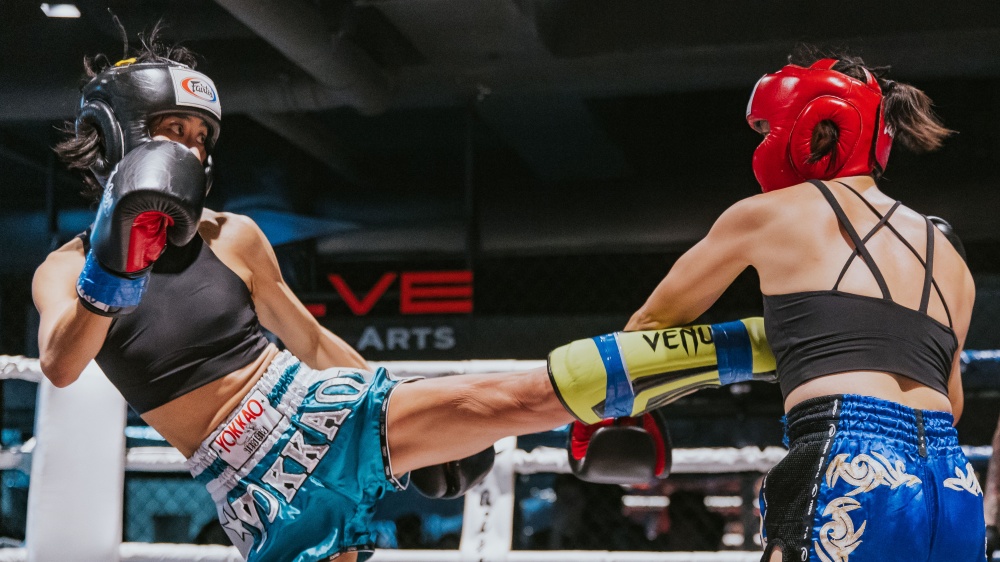
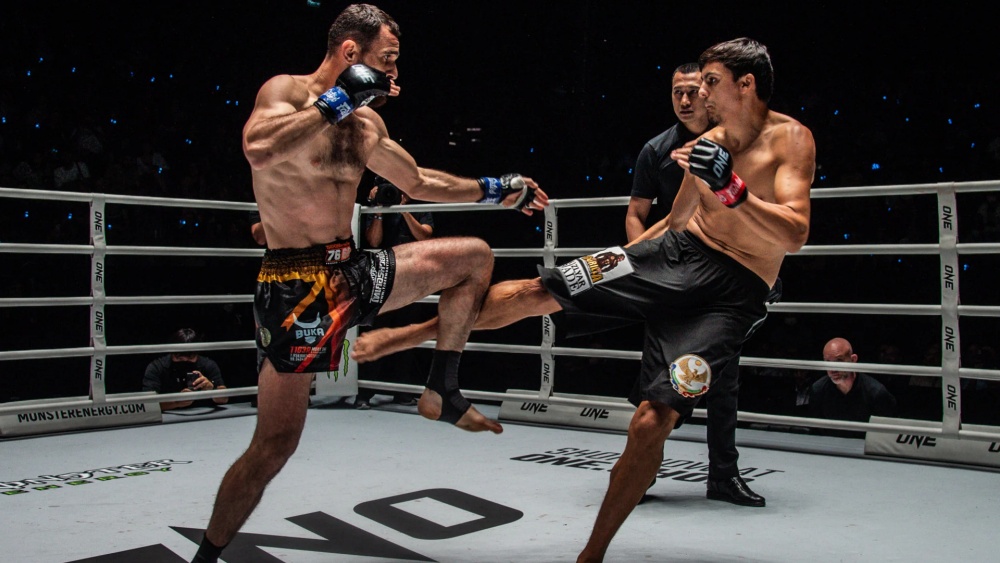
She particularly enjoys the intensity of her sparring sessions.
“When you are standing in front of an opponent, you have to have 100 percent self-confidence – not 95, not 99 but 100 percent belief that you have the ability to beat that person,” she says. “You can’t explain it until you do it. It’s a real ego check. There are times when you get the s*** kicked out of you and you wonder what the hell you are doing. But it builds so much strength inside you. It’s an amazing journey that Muay Thai takes you on.”
Mia’s Kang Debut Fight
Mia won her professional Muay Thai debut, knocking out her opponent, Nong B, during the third round of their contest. She now plans to compete in mixed martial arts.
“The first thing I said was ‘I want to do it again’,” Kang said about her victory. “I’m not completely happy. I didn’t reach my full potential but no fighter does the first time.”
Martial arts are increasingly being used as a form of unconventional therapy for people with low confidence and anxiety issues.
Your confidence levels will naturally grow as you progress through the ranks. That will eventually lead to you seeing yourself in a completely different light. The new friends that you meet at the dojo will serve as a support system that’s always there to motivate you when feelings of self-doubt start creeping in.
There are also many other essential benefits that you get from training a martial art like Muay Thai. Some of these include:
- Improved flexibility
- Improved balance
- Improved endurance
- Reduced fat levels
- Increased energy
- Reduced stress and anxiety
- Improved sleep
- Improved self-control
- Ability to defend yourself
Frequently Asked Questions About Muay Thai And Confidence
Q: Why Does Muay Thai Build Confidence More Effectively Than Conventional Fitness Training?
A: The key difference is the nature of the progress being made. Conventional fitness training, running, lifting weights, and general conditioning produce physical improvements that are visible and meaningful but do not require the mastery of a genuinely difficult skill under pressure. Muay Thai requires you to learn complex techniques, execute them correctly under the resistance of a training partner who is actively working against you, and maintain composure in sparring when someone is hitting back. The confidence that comes from discovering you can do those things — particularly sparring, which Mia specifically identifies as the crucible of her transformation — is qualitatively different from confidence in your appearance or your physical strength. It is confidence in your capability, your judgment, and your resilience under pressure, and those qualities transfer into every other area of life in a way that aesthetic improvement alone rarely does.
Q: Is Muay Thai Suitable For People With Anxiety Or Low Self-Esteem?
A: Yes, and it is increasingly recognised as a genuinely therapeutic tool for exactly these challenges. The mechanisms through which it helps are well-documented: the intense physical exertion releases endorphins that directly reduce anxiety. The absorbing focus required during training and sparring provides an active mindfulness experience that interrupts anxious thought patterns. The community of a Muay Thai gym offers social connection and mutual encouragement. And the progressive development of competence builds a self-belief that anxiety can erode in every other context but struggles to undermine when it is grounded in demonstrated physical and mental capability. Mia’s story is one of many examples of people who found that Muay Thai addressed the root causes of their insecurity in ways that other interventions had not.
Q: Do I Need To Compete In Muay Thai To Get The Confidence Benefits Mia Describes?
A: No, and the vast majority of Muay Thai practitioners around the world never compete. The confidence Mia describes was already well-established before she ever considered professional competition. It came from the training itself, the classes, the drilling, the pad work, the sparring, and from the community of peers and instructors who supported her progress. Competition added a new dimension to her confidence, particularly the experience of performing under the most high-stakes pressure the sport can create, but it was not the source of the transformation. Recreational practitioners who train consistently at their own pace and without any competitive ambitions report the same progressive confidence development that Mia describes.
Q: How Long Does It Take To Start Feeling The Confidence Benefits Of Muay Thai Training?
A: Most practitioners notice meaningful improvements in how they feel about themselves within the first few weeks of consistent training, not because they have mastered anything yet, but because the act of showing up to something physically demanding and progressively more familiar produces an almost immediate shift in self-perception. The deeper confidence that comes from technical mastery, sparring composure, and the physical transformation Muay Thai produces develops over months and years of consistent training. What most people find is that the confidence benefits compound over time rather than plateauing — each new technical milestone, each challenging sparring session survived, and each physical improvement adds another layer to a self-belief that grows more solid with every session.
Q: What Specifically About Sparring Builds Confidence According To Mia’s Experience?
A: Mia identifies the 100 percent self-belief required when standing in front of an opponent as something that cannot be explained from the outside; it has to be experienced. The specific confidence-building mechanism of sparring is the repeated experience of facing a genuinely uncomfortable, uncertain situation, someone who is actively trying to score against you, and discovering that you can manage it. The first few sparring sessions are often overwhelming. Over time, the ability to stay calm, think clearly, execute technique under pressure, and recover from difficult moments in a round becomes increasingly automatic. That experience of performing under genuine pressure, not simulated or controlled pressure, but the real thing, is what produces the unshakeable quality of confidence that Mia describes as unlike anything she had found before Muay Thai.
Q: How Does The Muay Thai Community Specifically Contribute To The Confidence-Building Process?
A: Mia credits the encouragement from her peers and instructors as the initial spark that lit her passion for the sport — before she had any ambition to compete or any sense of how far the training would take her. The Muay Thai gym community contributes to confidence through several specific mechanisms: the shared experience of a genuinely demanding physical challenge creates genuine bonds between training partners; experienced practitioners who have been through the difficult early stages offer specific, credible encouragement rather than empty reassurance; and the culture of mutual respect and progression that characterises well-run Muay Thai gyms creates an environment where every practitioner’s growth is celebrated rather than competed against. At gyms like Evolve MMA in Singapore, where practitioners from all backgrounds train alongside World Champion instructors in a structured, inclusive environment, these community qualities are built into the training culture rather than left to chance.
Q: Can Muay Thai Help With Body Image Issues Specifically, As It Did For Mia?
A: Yes, and Mia’s experience of going from never feeling comfortable in her own skin at any size to feeling genuinely at ease with her body regardless of how it continues to change is one of the clearest examples of how Muay Thai addresses body image differently from appearance-focused fitness. Conventional fitness often frames the body as something to be fixed, reduced, or improved toward an external standard. Muay Thai reframes the body as a tool — something to be trained, fuelled, and respected for what it can do rather than criticised for how it looks. The physical transformation Muay Thai produces is real and often dramatic, but the more significant shift for many practitioners is exactly what Mia describes: learning to appreciate and nourish the body as a capable, powerful instrument rather than as an object of aesthetic judgment.
Q: What Other Benefits Does Muay Thai Training Produce Beyond Confidence?
A: The physical benefits of Muay Thai training are comprehensive: improved cardiovascular fitness, muscular strength and endurance, flexibility, balance, coordination, and body composition all develop through consistent training. Beyond the physical, Muay Thai produces improved sleep quality — a direct result of the intense physical exertion and the reduction in anxiety that training provides. Stress and anxiety reduction are among the most consistently reported benefits, operating through the endorphin release of intense exercise, the mindfulness of focused technical training, and the perspective that regular physical challenge provides. Improved self-control — the discipline of showing up consistently, pushing through difficulty, and managing your emotions under pressure — develops through the training and transfers into how practitioners handle challenging situations across every area of their lives. And the ability to defend yourself adds a practical dimension of security that, for many practitioners, underlies all the other confidence benefits the art produces.
Final Thoughts
Mia Kang’s story is extraordinary in its details — the Sports Illustrated covers, the professional knockout, the master’s degree — but the transformation at its core is one that happens in Muay Thai gyms around the world every day. People who arrive uncertain of themselves, uncomfortable in their bodies, and carrying doubts that conventional fitness and conventional therapy have not resolved find in the training something that works differently and more deeply.
The reason is not mysterious. Muay Thai asks more of you than most activities do — more physical commitment, more mental resilience, more willingness to be uncomfortable and keep going — and in return it gives you proof, earned through your own effort, that you are more capable than you believed. That proof is the foundation of a confidence that does not depend on external validation, does not fluctuate with your weight or your appearance, and does not disappear when circumstances get difficult. You have everything to gain. The only thing required is showing up — and then showing up again.
This story was originally featured on www.scmp.com and www.uproxx.com.
You may also like:
How To Prepare For Your First Muay Thai Fight Or Competition