With the rise of global fitness competitions showcasing athletes from different sports and the recent appearance of Bokh Wrestling Champion Orkhonbayar Bayarsaikhan in Physical Asia, many have started to wonder what Bokh Wrestling is all about.
Bokh, which translates to “unbreakable and unbeatable” wrestling is one of the oldest martial arts in the world. Rooted in Mongolia’s rich nomadic heritage, it remains a cornerstone of the country’s identity, blending physical strength, mental discipline, and deep cultural symbolism.
While modern audiences may associate wrestling with Olympic Freestyle or Greco-Roman, Bokh stands apart. It’s not just a sport, but a living tradition that has carried through generations of warriors, emperors, and herders, shaping Mongolia’s culture for centuries.
The Ancient Roots Of Bokh
Bokh Wrestling and its history go back more than 7,000 years, far older than many other organized combat systems. Archeological discoveries, including petroglyphs and cave paintings found in the mountains of Mongolia, depict early grappling scenes that closely resemble the stances and holds used in Bokh today.
Traditionally, Bokh was more than recreation. It was a vital skill for survival among Mongolian nomads. Wrestling built strength, endurance, and coordination; qualities essential for hunting, herding, and warfare. Warriors used Bokh to prepare for battle and to demonstrate dominance without bloodshed.
Bokh During The Mongol Empire
Bokh’s importance reached new heights during the reign of Genghis Khan in the 13th century. Historical records describe how Genghis Khan encouraged wrestling competitions among his soldiers to promote discipline and morale.
During festivals and military gatherings, bouts of Bokh became symbols of unity and strength. Victorious wrestlers were celebrated as heroes, earning respect across tribes. The emphasis was not only on victory but also on sportsmanship, humility, and honor, values that still define Bokh today.
The Mongol Empire spread across vast territories, and wherever it went, so did Bokh. The art influenced regional wrestling forms throughout Central Asia, laying the groundwork for variations seen in countries like Kazakhstan, Kyrgyzstan, and Uzbekistan.
The Rules And Format Of Traditional Bokh
Unlike modern wrestling styles with timed rounds and point systems, Bokh follows simpler, more ancient principles.
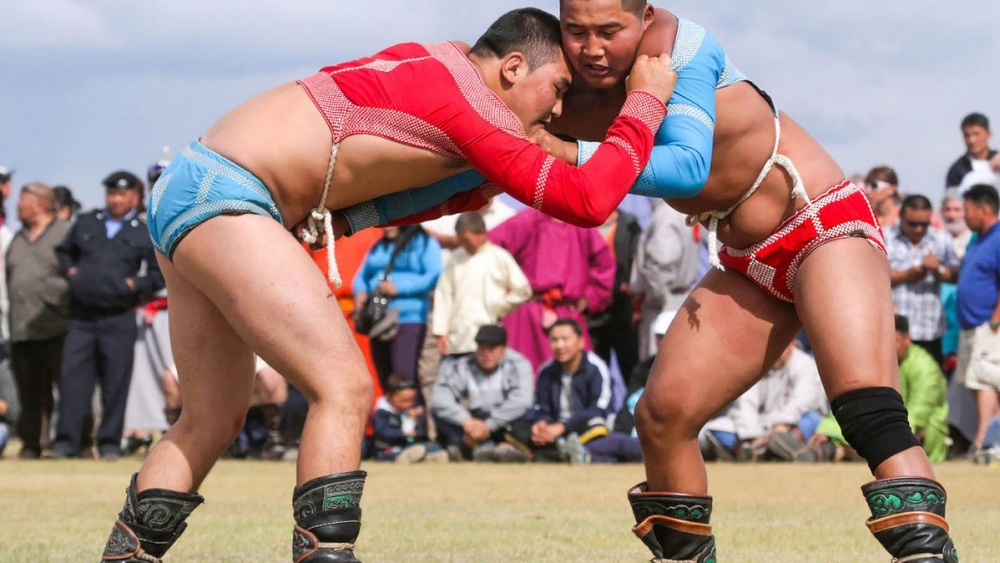
- Victory Condition: A match ends when any part of a wrestler’s body other than the feet or hands touches the ground.
- No Weight Classes: Competitors are matched regardless of size, emphasizing skill, leverage, and technique.
- No Time Limits: Matches continue until one wrestler forces the other down.
The simplicity of these rules reflects Bokh’s traditional spirit, a pure test of balance, strength, and adaptability rather than scoring or endurance.
The Iconic Bokh Attire
One of Bokh’s most distinctive features is its traditional outfit, which carries both symbolism and practicality.
- Zodog: An open-chested jacket made of strong fabric or leather. Legend says the open chest design originated after a female wrestler once disguised herself as a man and won a major competition. Since then, the open jacket has served as proof of the competitor’s identity.
- Shuudag: Tight shorts that allow a full range of motion.
- Gutal: Leather boots with turned-up toes, designed for stability and grip on uneven terrain.
Each element reflects centuries of tradition, connecting the sport to Mongolia’s nomadic lifestyle and values of honesty and integrity.
Bokh In The Modern Era
While Bokh remains deeply traditional, it has also embraced modern recognition. The sport is now practiced internationally and is officially recognized by UNESCO as an Intangible Cultural Heritage of Humanity.
In Mongolia, Bokh is taught to children at an early age as both physical training and cultural education. Modern tournaments include ceremonial music, dance, and traditional songs celebrating warriors, keeping the connection between sport and culture alive.
Final Thoughts
Bokh wrestling stands as a living reminder of Mongolia’s enduring spirit. It is not just a martial art but a bridge between past and present, a link connecting nomadic warriors of the steppes with the athletes of today.
Its simplicity, respect, and emphasis on strength through technique continue to inspire martial artists worldwide. As modern combat sports evolve, Bokh remains timeless, reminding us that even in an age of advanced training methods and global competition, tradition still holds a powerful place in the heart of martial arts.
You may also like: