Summary
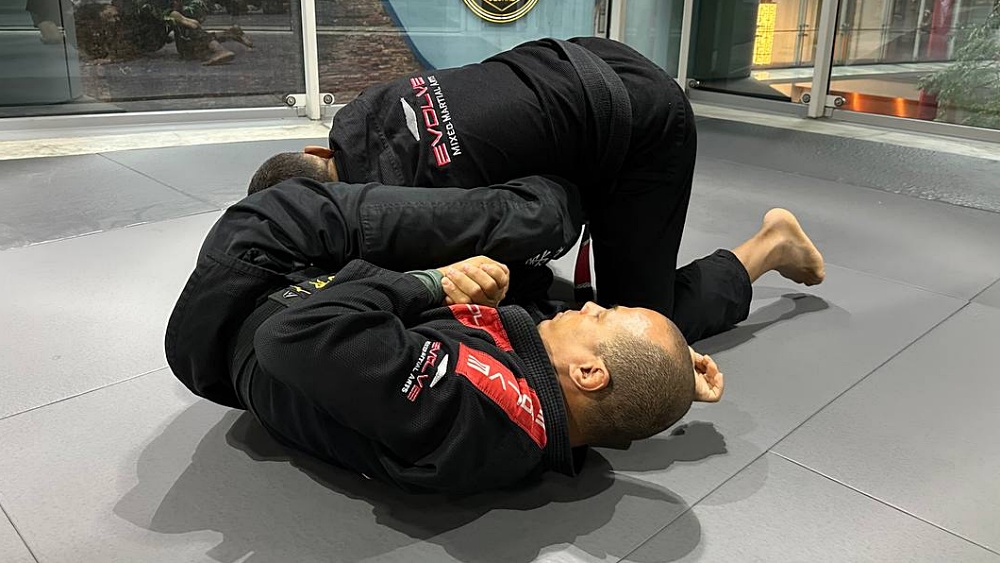
A large part of a beginner’s Brazilian Jiu-Jitsu journey will focus on selecting a handful of submissions. This starts from the time you begin to tap other beginners in class. As your development progresses, you might find yourself tweaking your chosen submissions every so often. This is normal and even encouraged, as exposing yourself to as many attacks as possible will only help you learn more about the game. Today, we’ll discuss an effective yet unorthodox technique that can surprise your comrades in the gym, the banana split.
Key Takeaways
-
Understanding body mechanics, positional weaknesses, and triggers (like the Open Elbow) makes submissions more effective and easier to apply across situations.
-
From back control or turtle, the banana split targets the legs and hips, exploits defensive reactions, and allows easy transitions back to traditional back control if needed.
-
Complex submissions become simple when learned as sequences, and regular drilling is essential to make execution instinctive and reliable.
The Art Of Learning Submissions
Learning submissions is one of the highlights of learning Brazilian Jiu-Jitsu. A submission is defined by using a move (or set of moves) that’s aimed to force a person to give up. BJJ submissions typically focus on attacking the joints of the arms and legs. The majority of the submissions you’ll learn as a white belt are variations of armlocks, and maybe a basic footlock.
Aside from limb submissions, you can also attack the neck by restricting blood and oxygen flow to the head. This is a highly useful approach and is preferred by many competitors as a perfectly executed choke can work against bigger and stronger opponents.
Regardless of the submissions you prefer, it is critical to understand where the body is weakest relative to its position. A good way to learn this is by first focusing on concepts and then technically breaking down the submissions.
An example is the Open Elbow concept, an approach made famous by Ryan Hall. The Open Elbow teaches that you can attack with bent armlocks like the kimura, but the arm should first be bent. You can either bait the opponent to post on the mat, thus giving you space to attack, or force the arm to assume the position and attack from there.
The banana split also follows a series of triggers. To perform the banana split, you must first have solid access to the opponent’s hip. Isolate an opponent’s leg as you move your body at an angle. The banana split is ripe for the picking after this.
In the above video, BJJ black belt and MMA Legend Shinya Aoki demonstrates the banana split from back control. He starts by dragging the opponent to a side while removing his top hook. He uses his top leg to wrap around the opponent’s leg using the “lockdown” technique. This will severely limit the opponent’s leg movement.
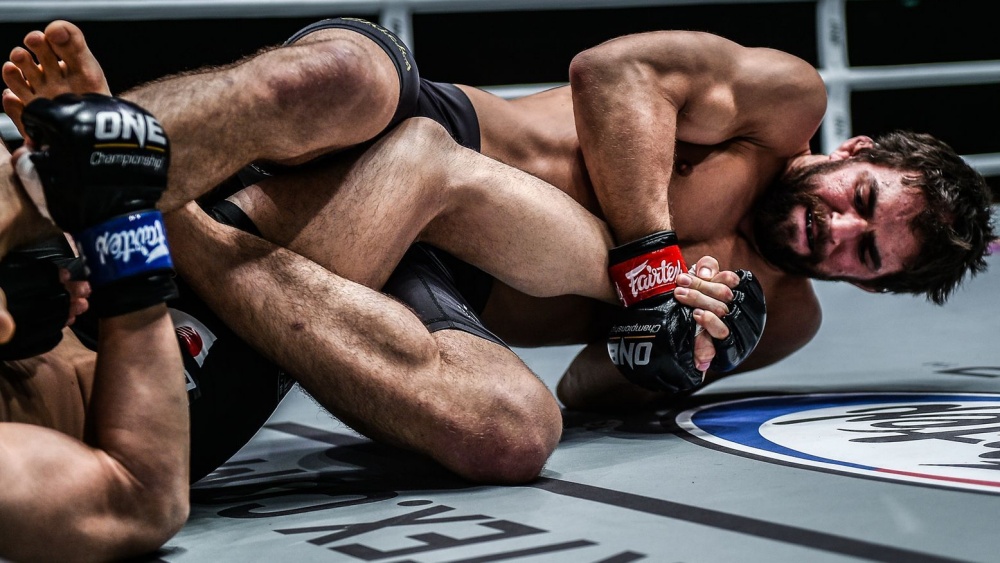
Next, he sits up, grabs the opponent’s free leg, and drops to his back as he pulls the top leg and pushes the bottom leg in one motion. By extending the legs in opposite directions, you apply a tremendous amount of pressure on the hips and legs. Don’t be surprised if you need to stay in the position longer against specific training partners, as hip flexibility depends from person to person.
You can also apply the banana split when the opponent goes to turtle. From the turtle position, secure your bottom hook as you face behind the opponent and bring your foot over their ankle. Grab the opponent’s feet and fall back. You can catch the opponent with a calf crush mid-roll, you can also transition to the lockdown, a technique we learned in the earlier video.
Once the lockdown is secured, grab the free leg near the knee and pull it to your chest as you extend your leg. Notice that you have flexibility on how you’d like to secure the top grip. The key here is to avoid overexposing your arms to prevent counterattacks like the armbar.
An Effective Tool To Attack The Back
Taking the back is one of the strongest positions in all of grappling. By taking the back, you are in a prime position to attack the neck and arms. It also places the opponent in a situation where their offense is very limited and is basically forced to defend while stuck in the position.
It is safe to assume that once you threaten a back take, the opponent will almost always defend their neck and arms from attacks. Use this opportunity to target their legs using techniques like the banana split. We guarantee you’ll get into the position with little trouble, especially against those unfamiliar with the submission.
Another benefit of the banana split and the position leading to the submission is that you can always switch back to the basic chest-to-back position (traditional back control) whenever you want. All you need to do is to remove the lockdown and transition to establishing your hooks as you switch to a seatbelt grip. Doing this is easy enough, provided that you follow the opponent’s back as you switch.
Breaking Down New Techniques
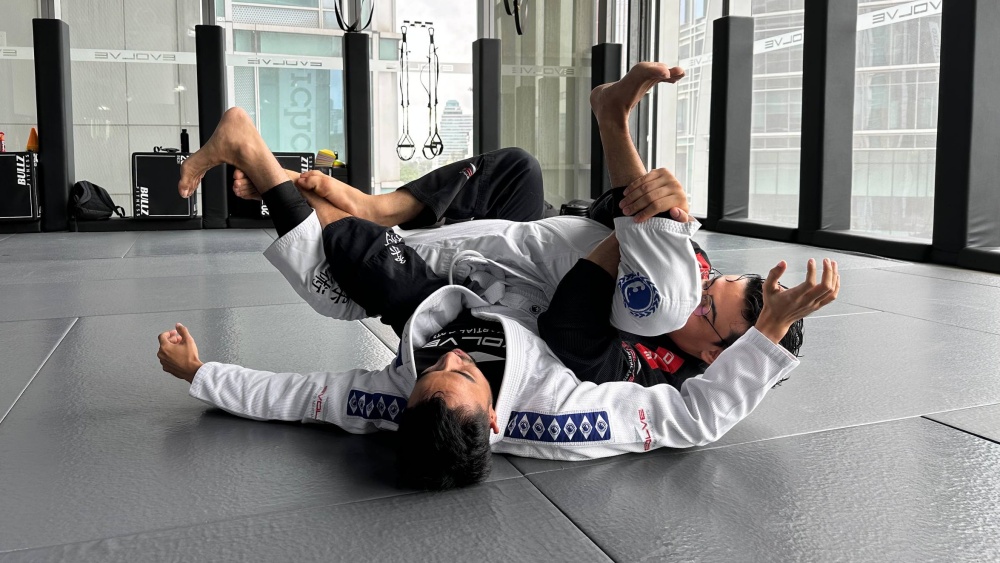
Techniques like the banana split might seem too complex, but it is actually straightforward once you see that it only requires a few vital steps. Remember that in order to attack with the banana split, you must first enter the lockdown by keeping one hook in and using your other leg to secure the figure four grip. Move your upper body away from the opponent’s back until you face their hip. From here, you can start your offense by grabbing the legs, threatening with submissions like the banana split and calf crush, or taking the opponent’s back.
Regardless of what you do, the sequence will become second nature once you understand the above-mentioned steps. Of course, as with any technique, drilling is super important so that your body gets acquainted with the required movements.
FAQs On The Banana Split In BJJ
Q: What Is The Banana Split In Brazilian Jiu-Jitsu?
A: The banana split is a leg-based control and submission setup that targets your opponent’s hips and legs. It uses leg separation and pressure to off-balance your opponent, limit their mobility, and create openings for sweeps or submissions.
Q: Is the banana Split A Submission Or A Control Position?
A: It is primarily a control position, but it can lead to submissions. Many practitioners use it to break posture, force reactions, or transition into leg locks, back takes, or sweeps rather than finishing directly from it.
Q: Is The Banana Split Safe To Use In Training?
A: Yes, when applied with control and awareness. Like all leg-based techniques, it should be practiced slowly, with good communication between partners, and without forcing range of motion.
Q: When Is The Banana Split Most Effective?
A: It works best when your opponent is kneeling or attempting to pass, as their base is more vulnerable. Timing and angle are key to using the position effectively without overcommitting.
Conclusion
The banana split is an excellent submission option for those who like to attack the opponent’s back. It is unique in its setup and does not require compromising your position, meaning that you have minimal risk of getting countered if it fails.
The key to building a solid submission game is to find techniques that work well against anyone. While we don’t qualify the banana split as a must-learn technique that all beginners should master, it is a nice complementary attack to add to your toolbox. Use the banana split’s unorthodox nature to surprise your opponents, and they’ll surely remember your name after the fact.
You may also like: