Summary
Training bags have been a cornerstone of striking for decades. They allow athletes to practice timing, precision, and combinations without needing a live partner. In both Boxing and Muay Thai, bags are used not only for developing power but also for improving balance, rhythm, and endurance.
However, not all bags are the same. Some are built to strengthen specific strikes, while others help refine movement or simulate real opponents. Understanding the differences helps you choose the right tool for your goals
Whether you’re a boxer or Muay Thai practitioner, training bags are essential tools for improving technique, power, and conditioning. Each bag serves a unique purpose, from building punching accuracy to refining kicks, knees, and elbows. This guide explores the most common types of bags used in striking arts and how each helps you develop different aspects of your game.
1) Heavy Bag
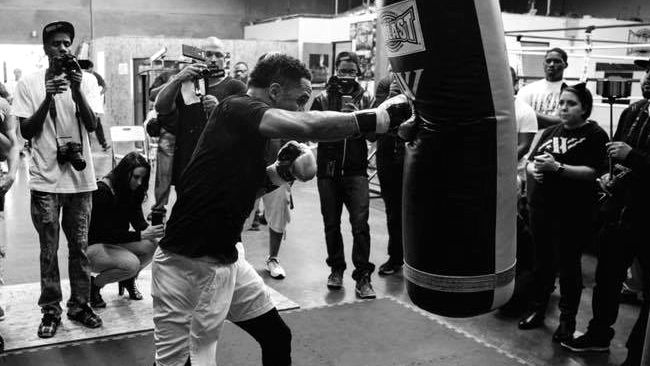
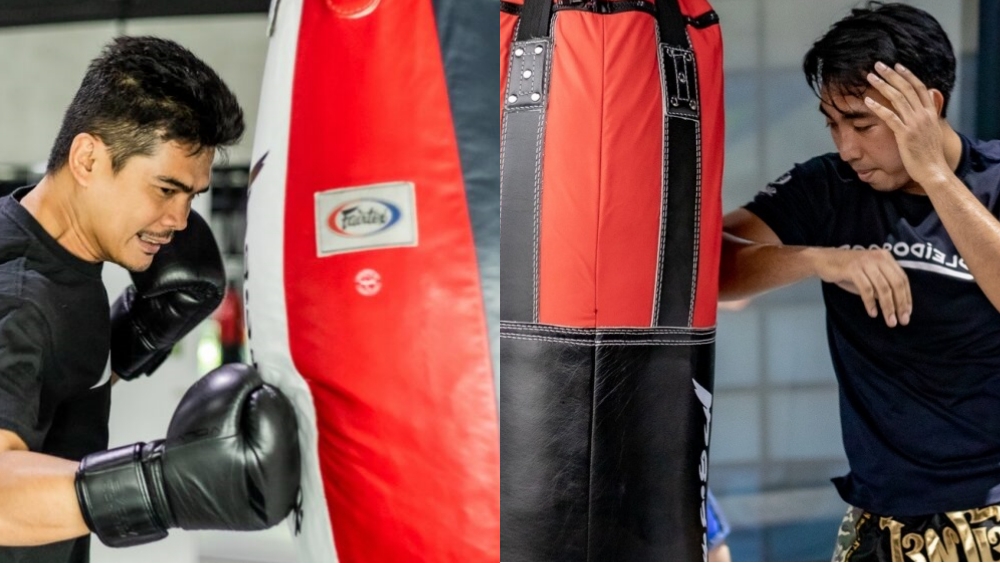
The heavy bag is the most recognizable training tool in any striking gym. It’s designed to build power and endurance in punches, kicks, and knees. Heavy bags are usually filled with fabric or sand and range between 70 to 150 pounds.
They’re ideal for developing punching combinations, low kicks, and rhythm while conditioning your hands and shins. Muay Thai gyms often use longer heavy bags to accommodate low and mid kicks.
2) Banana Bag
The banana bag is a Muay Thai staple. It’s longer and thinner than a standard heavy bag, allowing you to train low kicks, body kicks, and knees in one continuous motion. The length also mimics the body of an opponent, helping you work on realistic striking angles.
Because of its design, the banana bag swings more, which teaches balance and timing as you learn to manage movement between strikes.
3) Teardrop Bag
The teardrop bag has a rounded, tapered shape that makes it perfect for close-range training. It’s excellent for practicing uppercuts, hooks, knees, and elbow strikes. The natural swing of the bag forces you to adjust your distance and footwork constantly, improving your reaction speed.
Teardrop bags are especially useful for clinch work in Muay Thai, as their shape and motion mimic an opponent’s torso.
4) Wrecking Ball Bag
The wrecking ball bag is a round, heavy bag often used for uppercuts and head-level hooks. It allows you to work around angles and simulate head movement more effectively than a straight bag.
Boxers use it to refine punching accuracy and learn to hit from various positions without overcommitting. It’s also great for improving power shots while maintaining head-level awareness.
5) Uppercut Bag
The uppercut bag is specifically designed to help boxers and Muay Thai fighters practice upward strikes and tight hooks. It’s either wall-mounted or suspended at chest height.
Because of its angle, it encourages short, powerful punches that are ideal for close-range exchanges. You can combine it with footwork drills to work defense and offense simultaneously.
6) Wall-Mounted Bag
A wall-mounted bag provides a stable surface for powerful punches and elbows without the swinging motion of a hanging bag. It’s commonly used in boxing for uppercuts and combinations that require precision.
In Muay Thai, it’s excellent for elbow drills and body punches, especially in limited training spaces.
7) Double-End Bag
The double-end bag is a small, elastic bag connected to the floor and ceiling by cords. Its fast rebound helps develop timing, accuracy, and reflexes.
Boxers often use it to practice head movement and counterpunching rhythm, while Muay Thai athletes can work quick strikes and feints. It’s a tool that rewards rhythm and timing rather than raw power.
8) Speed Bag
The speed bag is a compact, air-filled bag mounted on a rebound platform. It improves hand-eye coordination, endurance, and rhythm.
The constant rebound pattern helps you develop faster hands and controlled punching tempo. For beginners, it’s also a fun way to build consistency and timing in combinations.
9) Aqua Bag
An aqua bag is filled with water instead of fabric. Its softer surface absorbs impact more naturally, making it ideal for long training sessions. The density of water simulates a realistic striking feel and provides consistent resistance.
It’s particularly effective for developing punching mechanics and minimizing hand fatigue during repetitive drills.
10) Free-Standing Bag
A free-standing bag has a weighted base instead of hanging from a ceiling or frame. It’s portable, easy to set up, and ideal for home training.
While it doesn’t swing as much as a hanging bag, it offers a convenient way to practice combinations and cardio drills in smaller spaces. Muay Thai versions often feature taller designs for kick training.
11) Reflex Bag
The reflex bag is a free-standing, spring-mounted bag designed to mimic the unpredictable movement of a real opponent. It rebounds quickly when struck, forcing you to maintain focus, timing, and defensive awareness.
The reflex bag is excellent for practicing head movement, counterpunching, and accuracy while improving reaction speed. It also helps train rhythm and distance control, especially when combined with light footwork and defensive slips.
Unlike the double-end or speed bag, the reflex bag moves in more irregular patterns, which adds realism and unpredictability to your training.
Choosing the Right Bag for Your Training
Each type of bag focuses on a different area of development, so your choice depends on what you want to work on most:
- For power and endurance, go for heavy or banana bags.
- For close-range techniques, try teardrop, wrecking ball, or uppercut bags.
- For timing, rhythm, and reflexes, use speed, double-end, or reflex bags.
- For home setups or smaller spaces, free-standing or wall-mounted bags are great options.
- For variety and realism, include aqua bags, which simulate real impact while reducing strain.
A balanced training approach combines different bags over time. Mixing tools that improve power, precision, and movement helps create a complete striking style that feels natural and adaptable.
FAQ On Types Bags For Boxing And Muay Thai
Q: What Is The Main Difference Between A Heavy Bag And A Banana Bag?
A: A banana bag is longer and slimmer, allowing you to train low kicks and knees in addition to punches. A heavy bag is shorter and primarily used for boxing and mid-level strikes.
Q: Which Bag Is Best For Building Reaction Time?
A: The reflex bag and double-end bag are ideal for reaction and defensive drills because they rebound quickly and move unpredictably.
Q: What Bag Should Beginners Start With?
A: A standard heavy bag is best for beginners since it helps build endurance, coordination, and striking technique before progressing to more specialized bags.
Q: Can Muay Thai Athletes Use Boxing Bags?
A: Yes. While Muay Thai bags are longer to accommodate kicks and knees, most boxing bags can still be used effectively with slight adjustments in height and placement.
Q: How Heavy Should A Training Bag Be?
A: Choose a bag that weighs around half your body weight. Lighter bags are better for movement and speed, while heavier ones improve strength and stability.
Q:What’s The Benefit Of Using Multiple Bags In Training?
A: Each bag develops a different skill. Combining them improves timing, balance, striking precision, and adaptability across different fighting scenarios.
Final Thoughts
Training bags are more than just equipment, they are essential tools for developing rhythm, balance, and striking precision. Each type of bag challenges different aspects of your technique and body control.
By understanding how each one works, you can train more purposefully and build a well-rounded striking foundation. Over time, knowing when to switch between different bags will help you become faster, more accurate, and more adaptable in your striking game.
You may also like: