Summary
Boxing is more than just punches, it is a sport defined by strategy, movement, and individual expression. While all boxers learn the same fundamental techniques, each fighter eventually develops a unique style based on their strengths, physical attributes, and approach to combat.
This article explores five of the most common boxing styles: the pressure fighter, out-boxer, slugger, counterpuncher and the boxer-puncher. Each style offers different advantages and challenges, and understanding them helps fighters not only improve their own skills but also adapt to different opponents in the ring.
Key Takeaways
- There is no “best” boxing style
Each style is effective in its own way—the key is finding one that suits your strengths and attributes. - Pressure fighters rely on volume and aggression
They overwhelm opponents with constant attacks and high output. - Out-boxers focus on distance and control
Using footwork and jabs, they stay on the outside and pick opponents apart strategically. - Sluggers depend on power and knockout ability
They aim to end fights with a few powerful punches rather than high volume. - Well-rounded fighters adapt across styles
Boxer-punchers and counterpunchers combine multiple approaches, making them highly versatile.
1) Pressure Fighter
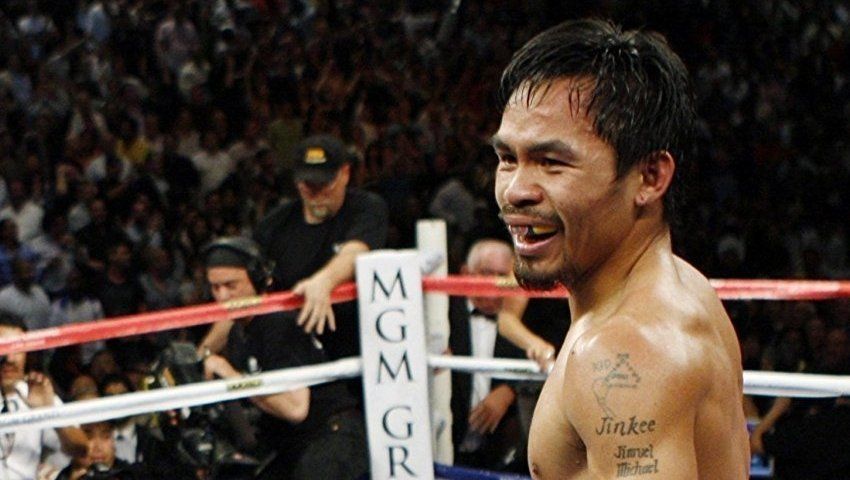
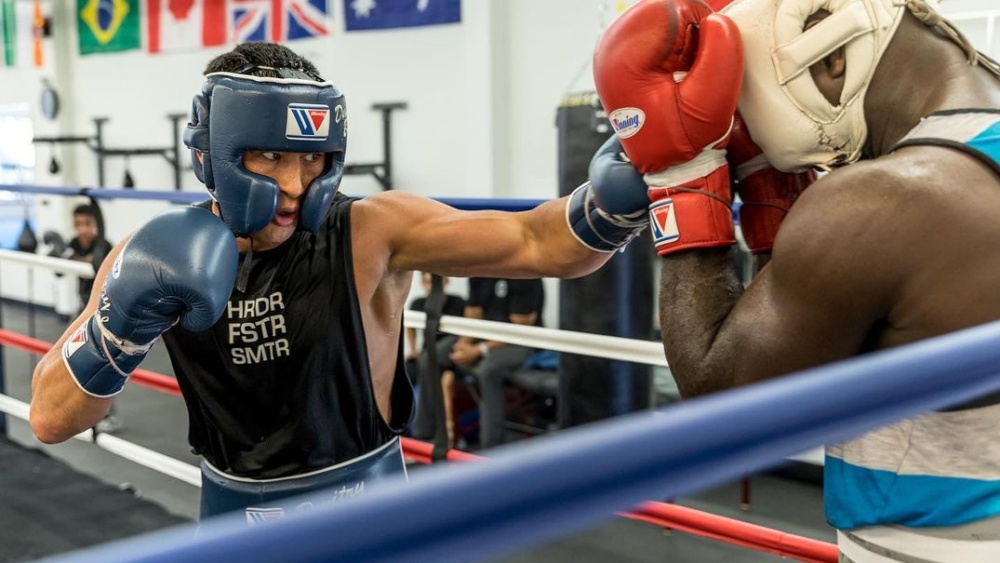
Being a pressure fighter is all about unleashing a good volume of punches on an opponent. Swarming with multiple combinations allows this type of fighter to overwhelm foes with punches in bunches, often keeping opponents on the defensive for long periods of time. Since a lot of boxing is centered on offense, maintaining a solid stream of output in each and every round also scores major points with the judges.
While defense is surely important, most judges in modern times favor the aggressor in boxing matches — or those who initiate the action. This is the trademark of a pressure fighter. Getting off first and often is the key tactic for pressure and volume punchers. Needless to say, this style requires tremendous cardiovascular endurance and supreme conditioning.
Each punch a boxer throws expends energy, and there’s only so much energy to go around in a given bout. A lot of emphasis must be placed on cardiovascular endurance training.
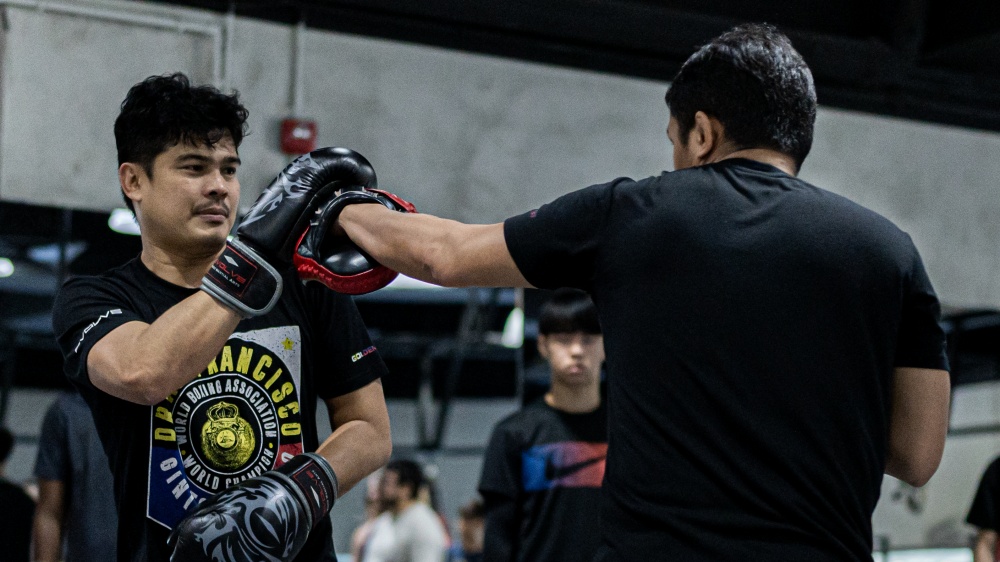
“Pressure fighting is about breaking your opponent mentally as much as physically. When you don’t give them room to breathe, they start to make mistakes.”
— Drian Francisco, Boxing World Champion & Instructor at Evolve MMA
Pressure fighting is a highly effective style that is perhaps the most common in boxing. Well-known boxers in the history of the sport who were pressure fighters include Manny “Pacman” Pacquiao, Roberto Duran, and Julio Cesar Chavez.
2) Out-Boxer
While being a pressure fighter means throwing as many effective punches as you can for the duration of a bout, being an out-boxer is the opposite. It’s about staying on the outside, using the reach as a weapon and keeping opponents at bay with crafty technique.
Out-boxers usually have long wingspans and possess a height and reach advantage over their opponents. Utilizing a long, rangy, and effective jab, out-boxers like to pepper their foes with pinpoint accuracy, connecting with shots from the outside to prevent opponents from closing the gap and getting on the inside.
Out-boxers usually like to defeat opponents with technique. While the majority of an out-boxer’s victories come by decision, the truly skilled out-boxers can even score knockouts. By accumulating damage on an opponent, breaking them down with clean, accurate punching, out-boxers pick apart their foes methodically until a precise finish.
Notable out-boxers include heavyweight champion Deontay Wilder, boxing legend Floyd “Money” Mayweather Jr., and the greatest of all time, Muhammad Ali.
3) Slugger
The slugger pays very little attention to strategy, if any, and would rather overwhelm an opponent with his strength and brute force. Most of the time, sluggers are also not afraid to take a healthy amount of punishment in order to deal their own volume of damage.
You’ll want to avoid trading punches with sluggers because this type of boxer cares very little about avoiding firefights. In fact, they relish in this sort of environment. These are boxing’s “action stars” and are usually responsible for giving fans the most entertaining bouts.
Sluggers aren’t mindless fighters, however. A lot of what they do involves a great deal of technique, although it isn’t immediately evident. Sluggers have a distinct ability to be able to force their way inside and trap opponents along the ropes or into corners. A key skill for sluggers to have is ring generalship or knowing how to cut off the ring.
Notable sluggers include Britain’s Ricky “Hitman” Hatton, the late Arturo “Thunder” Gatti, and “Irish” Micky Ward.
4) Counter Puncher
Counter punchers in boxing are the most surgically precise practitioners of the sweet science. Known for their incredible, high-level skill, immense talent, and near-flawless technique, counter punchers make opponents miss and then make them pay with damaging and accurate counter shots.
They have the ability to frustrate opponents to no end, often presenting seemingly hittable targets and then masterfully and gracefully slipping out of harm’s way while simultaneously delivering unbelievably accurate counters. The level of knowledge and skill counter punchers possess is unfathomable.
One drawback of being a counter puncher, however, is the lack of activity. Often, counter punchers are on the reactive side of fights, waiting on their opponents to commit to their offense so that they can operate with laser-like exactitude. This means that counter punchers are rarely the aggressors in a bout and can be outworked at times.
Fans and judges who appreciate the subtle but undeniable technique a counter puncher possesses usually give them the credit they deserve. Notable counter punchers in boxing include Cuban Olympic gold medalist Guillermo “El Chacal” Rigondeaux, multiple-division Mexican boxing legend Juan Manuel Marquez, and all-time great Sugar Ray Robinson.
5) Boxer-Puncher
This is the most dynamic form of boxer in the sport and one that combines the best of all worlds into a single style. The boxer-puncher can effortlessly switch between being a pressure fighter, to being a methodical out-boxer waiting for an opening to close the gap.
Boxer-punchers usually start from outside and work their way in, utilizing combinations from range to frustrate their opponents and force mistakes. They capitalize on the mistakes and take advantage of openings. When they have opponents hurt, boxer-punchers know exactly how to push the pedal to the metal and finish the job.
Boxer-punchers are the most difficult to deal with because their offensive style is so varied. They give different looks each round and are incredibly reactive to their opponent’s style. One area where boxer-punchers often lack however is on defense. Like most offense-inclined styles, boxer-punchers rarely pay attention to defense and are only looking to unload their combinations in the best possible manner.
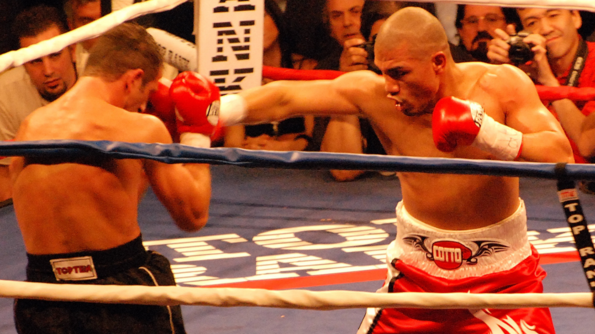
Notable boxer-punchers include former heavyweight legend “Iron” Mike Tyson, retired Puerto Rican superstar Miguel Cotto, and the blazingly fast Sugar Ray Leonard.
FAQs
1. What are the main fighting styles in boxing?
The five common styles are pressure fighter, out-boxer, slugger, boxer-puncher, and counterpuncher, each with distinct strategies and strengths.
2. Which boxing style is the most effective?
There is no single “best” style. Effectiveness depends on the fighter’s attributes, skill level, and ability to adapt to their opponent.
3. What style is best for beginners?
Most beginners start with a balanced approach, learning fundamentals before naturally gravitating toward a style that suits them.
4. Can a boxer use more than one style?
Yes. Many elite fighters blend styles, for example, combining pressure with counterpunching or technique with power.
5. How do I find my boxing style?
Your style develops over time through training, sparring, and understanding your strengths, such as speed, power, endurance, or timing.
Final Thoughts
One of the most fascinating aspects of boxing is that no two fighters are exactly the same. While these five styles provide a framework, true mastery comes from adapting, evolving, and developing your own unique approach.
“In boxing, style is an expression of who you are as a fighter. You can learn the fundamentals, but your true style comes from experience, adaptation, and understanding your strengths.”
— Drian Francisco, Boxing World Champion & Instructor at Evolve MMA
For beginners, the goal isn’t to force yourself into a specific style, but to explore, learn, and refine your skills over time. As you gain experience, your natural tendencies will start to emerge.
Ultimately, the best fighters are not limited by one style, they understand all styles, adapt to any opponent, and continue evolving every time they step into the ring.
You may also like: