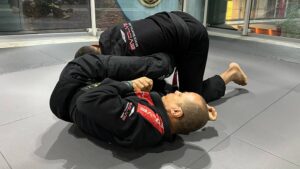
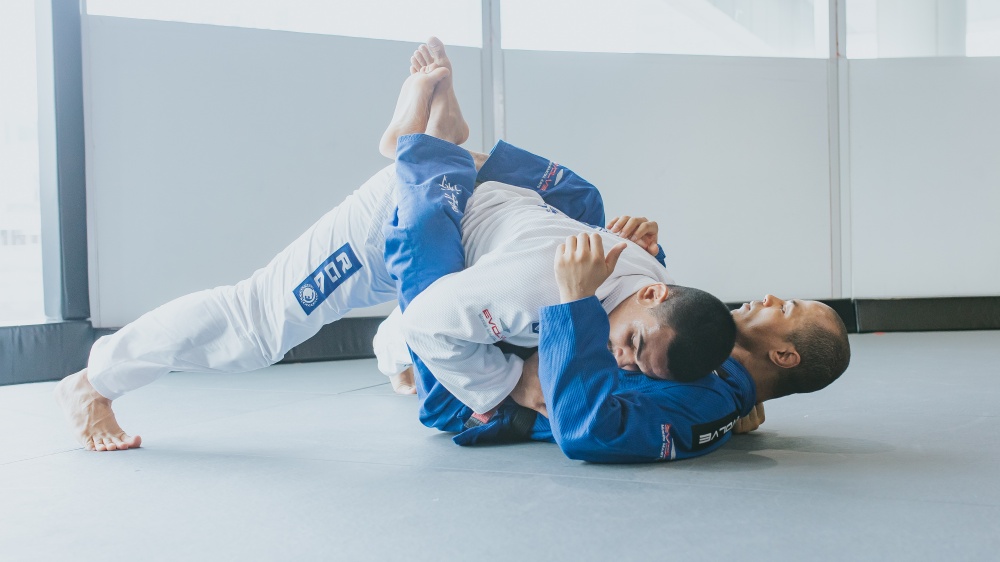
When you first start training Brazilian Jiu-Jitsu, instructors often tell you to “use your weight” when passing guard or holding top positions. But what does that actually mean?
Weight distribution is how you place and shift your body weight across your opponent. It’s not just about being heavy. A smaller person with great weight distribution can feel like a ton, while a bigger person with poor weight distribution can feel light. It’s about balance, angles, and applying force where your opponent is weakest.
Think of it like balancing on ice: one wrong step and you slip. In BJJ, one wrong shift in pressure and your opponent escapes or reverses. Mastering weight distribution is the difference between holding someone down with ease or getting swept despite being on top.
Why It Matters Beyond Pressure Passing
While weight distribution is most famously associated with pressure passing, where you smother and slowly dismantle an opponent’s guard, it shows up everywhere:
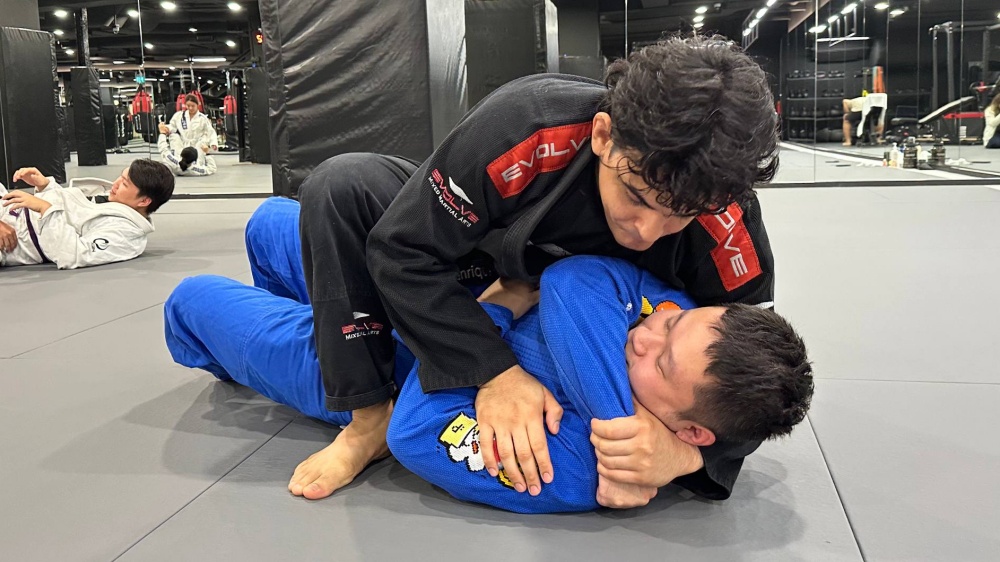
- Mount: Leaning slightly too far forward or back can let your opponent trap and roll you.
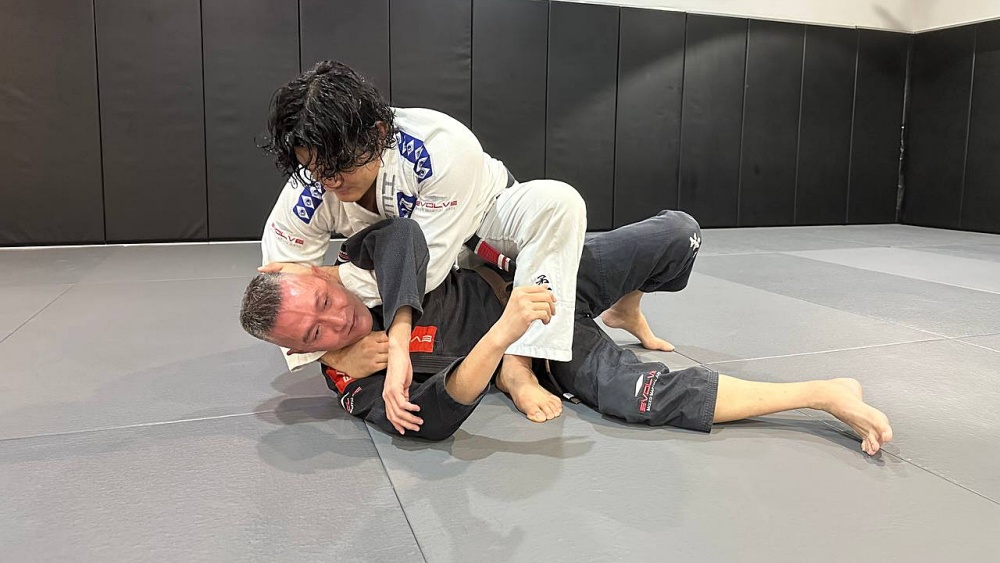
- Side Control: Chest pressure on the wrong spot lets your opponent shrimp out.
- Back Control: Failing to angle your hips correctly makes it easier for them to escape.
Small adjustments, a shift of the hip, a drop of the shoulder, a widened base, decide whether your control sticks or fails.
Examples Of Weight Distribution In Action
1) Bernardo Faria: The King Of Pressure Passing
Five-time IBJJF World Champion Bernardo Faria built his game around half guard passing and over-under pressure. Watching him compete, you’ll see how he uses his chest, head, and hips to pin opponents until they collapse. His success proves that pressure isn’t about brute size, but about understanding where to place weight at each stage of the pass.
2) Roger Gracie: Precision And Patience
Considered by many as the greatest BJJ competitor of all time, Roger Gracie dominated with the basics. His mount and cross-collar choke were legendary. What made them effective wasn’t complexity but his ability to sink his weight perfectly, making escape feel impossible.
3) Marcelo Garcia: Light But Crushing
Though not a heavyweight, Marcelo Garcia’s top control was notorious. He combined constant micro-adjustments with sharp balance to feel heavier than opponents double his size. His ability to flow between pressure and movement showed that weight distribution isn’t about staying static; it’s about always applying pressure intelligently.
Practicing Effective Weight Distribution
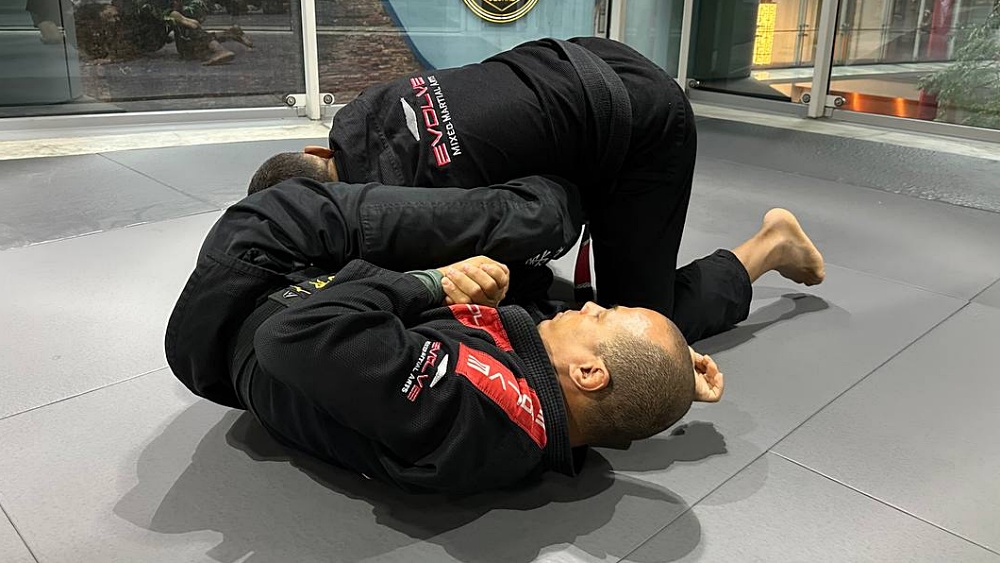
- Focus On Chest-To-Chest Contact: In side control, don’t just lie on top. Drive your shoulder into their jawline or chest and keep your hips low.
- Use Your Head And Hips: Place your head in positions that create extra weight angles, and keep your hips engaged rather than floating.
- Drill Slow Passes: Instead of rushing through guard passes, practice slowly, feeling where your opponent carries weight and adjusting.
- Pay Attention To Feedback: A good training partner will tell you if you feel heavy or light. Use that feedback to refine positioning.
Leveling Up: Weight Distribution For Intermediate Practitioners
By the time you reach blue or purple belt, you know the basics of top control. What takes your game to the next level is using micro-shifts to anticipate and counter your opponent’s movements.
- Dynamic Pressure Passing: Instead of just “feeling heavy,” start moving your weight mid-pass, dropping your shoulder as they frame, switching your hip angle as they shrimp. Pressure becomes dynamic, not static.
- Pinning While Transitioning: At an intermediate level, weight distribution isn’t just about holding. It’s about applying pressure while moving. For example, when transitioning from knee cut to side control, keep your chest heavy and head positioned to kill underhooks.
- Setting Traps: Shifting weight to one side often baits an escape attempt. By anticipating the reaction, you can switch pressure and advance your position. This is how intermediates turn weight distribution into a strategic tool, not just a defensive one.
- Energy Efficiency: At this stage, you’ll notice the less you muscle through, the longer you last in rolls. Smart weight placement allows you to control bigger or younger training partners without burning out.
The goal for intermediates is not just to “feel heavy” but to use weight like a weapon, applying pressure in small, deliberate shifts that force opponents into bad decisions.
FAQ: Weight Distribution In BJJ
Q: Can Smaller Practitioners Use Weight Distribution Effectively?
A: Yes. Proper angles and balance let smaller grapplers feel far heavier than their actual size.
Q: Is Pressure Passing The Only Time Weight Distribution Matters?
A: No. It applies in every position, the mount, side control, guard passing, and even back control.
Q: How Do I Practice Weight Distribution?
A: Drill slowly, focus on chest-to-chest pressure, and ask your training partners for feedback on whether you feel heavy or light.
Final Thoughts
Weight distribution is one of those “invisible” skills that separates advanced practitioners from beginners. It’s not about size but precision. Legends like Bernardo Faria, Roger Gracie, and Marcelo Garcia proved that mastery of micro-shifts can make you feel unmovable, even against larger or stronger opponents.
For white belts, learning this skill early accelerates your guard passing and control. For intermediates, it turns your top game into a suffocating weapon that forces mistakes. For black belts, it becomes second nature, the kind of subtle mastery that makes elite grapplers feel untouchable.
In the end, BJJ isn’t just about techniques, it’s about how you use your body weight in every moment.
You may also like: