Summary
Whether you train BJJ or wrestling, the body lock takedown works well against a wide range of opponents. Instead of shooting for the legs, you secure tight control around the torso, use angles to off-balance your opponent (Kuzushi), and bring them to the ground with minimal risk.
Its simplicity makes it beginner-friendly, yet it remains a staple for advanced grapplers because of its efficiency and reliability. You will even see it used in high-level competition because it keeps you close, limits your opponent’s counters, and allows you to land in dominant positions.
The technique relies on tight upper body control, strong positioning, and efficient leverage rather than explosive strength. This guide covers what the body lock is, why it works, how to execute it safely, and how grapplers from different styles adapt it to their game.
Key Takeaways
- The body lock takedown is one of the safest and most reliable takedowns in both BJJ and wrestling.
- It relies on tight upper-body control, proper angles, and a strong hip connection rather than strength.
- The technique works well from underhooks, over-under clinches, and rear control.
- Both sports use the body lock differently, with BJJ focusing more on trips and positional transitions while wrestling emphasizes lifts and mat returns.
What Is The Body Lock Takedown
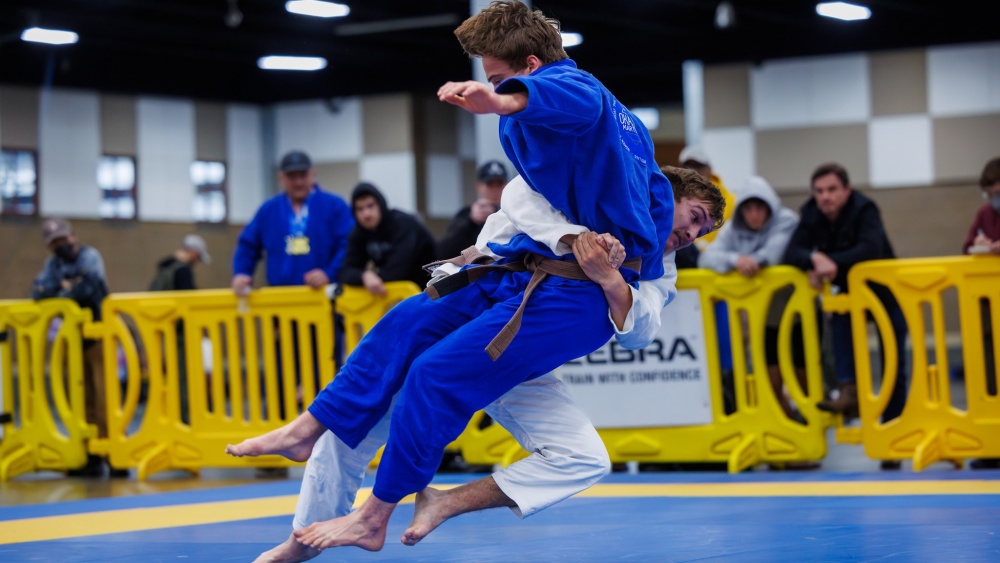
The body lock takedown involves wrapping your arms around your opponent’s upper body and locking your hands behind their back or around their waist. From there, you use hip pressure, footwork, and angles to off-balance and take them down.
It is often executed from:
- Double underhooks
- Over-under clinch
- Rear body lock
- Chest-to-chest pressure
The goal is to control the hips and center of gravity. Once you control the core, the rest of the body follows.
Why The Body Lock Works
The body lock is highly effective for several reasons:
- Strong Upper Body Control: When you control the torso, you limit your opponent’s balance and movement.
- Hard To Counter: Unlike shots that expose your head or neck, the body lock keeps you close and protected.
- Works Against Larger Opponents: Proper angles and pressure matter more than strength.
- Leads Directly Into Dominant Positions: Common landing positions include side control, mount, or back control.
- Useful For Both Gi And No-Gi: The grip changes slightly, but the mechanics stay the same.
This is why body locks are seen in wrestling, BJJ, MMA, and even Judo adaptations.
How To Execute A Body Lock Takedown
After learning about the benefits and the efficiency of the technique, let’s dive into how to properly execute it.
- Close The Distance: Move into clinch range with good posture. Use underhooks or an over-under position to secure your arms around your opponent’s torso.
- Lock Your Hands: Clasp your hands behind their back or ribs. Keep your elbows tight and hips close. Your lock must feel firm but relaxed, not overly tense.
- Break Their Posture: Use your forehead, shoulder, or chest to shift their upper body. Small adjustments help disrupt balance.
- Angle Off: Step your foot to the outside or pivot your hips. Angling prevents your opponent from planting their feet to defend.
- Off Balance And Lift Or Twist: Depending on the variation, you can consider lifting if you have strong hip pressure, twisting with your upper body or even using foot hooks to trip them. The key focus is to use your whole body, not just your arms.
- Follow And Control On The Ground: Land with chest-to-chest control or transition immediately to side control or the back.
Popular Body Lock Variations
1) Body Lock Trip
One of the most used forms in BJJ and wrestling. After securing the lock, step behind your opponent’s leg and use your hips to drive them over the trapped leg.
2) Rear Body Lock Mat Return
Common in wrestling and MMA. From the back, lift or tilt your opponent and return them safely to the mat while keeping control.
3) Over-Under Body Lock
A staple position in BJJ. You pinch your elbows, drive your underhook high, and use hip pressure and angles to land a trip or twist takedown.
4) Body Lock Lift
Used when you have deep control and a strong hip position. Lift slightly, tilt to one side, and guide your opponent down without losing balance.
Body Lock In BJJ Vs Wrestling
BJJ
- The focus is on control and securing dominant ground positions.
- Trips are preferred over lifts.
- More emphasis is placed on staying tight to avoid guard recovery.
- Transitions often lead to side control or mount.
Wrestling
- Athletic lifting and mat returns are common.
- More upright posture.
- Strong focus on maintaining the hips lower than the opponent’s.
- Frequently use in clinch scrambles and chain wrestling.
Both sports use the same foundation but adapt the technique to their rules and strategies.
How To Train The Body Lock
- Clinch Pummeling: Build comfort fighting for underhooks and controlling the inside space.
- Angle Step Drills: Practice stepping to the outside to create off-balance angles.
- Trip And Balance Drills: Work with a training partner to feel their weight shift and learn when to sweep or block their leg.
- Controlled Sparring: Start from body lock positions and practice finishing the takedown without using strength.
- Grip Strength And Core Work: Body lock pressure relies on strong posture and stable core strength.
Common Mistakes To Avoid
With that, some of the most common mistakes that many grapplers face while executing the body lock takedown include:
- Standing too tall.
- Forgetting to pinch your elbows.
- Pulling with arms instead of using hips.
- Staying directly in front of your opponent.
- Forgetting to follow through on the ground.
Good body locks rely on connection and angles, not brute force.
FAQs On The Body Lock Takedown
Q: Can Smaller Athletes Use Body Lock Takedowns?
A: Absolutely. Proper angles and leverage allow smaller grapplers to take down bigger opponents.
Q: Does The Body Lock Takedown Work In No Gi?
A: It works very well in No-Gi, especially because grips are limited, and clinch control becomes even more important.
Q: What Is The Best Finish From The Body Lock Takedown?
A: In Brazilian Jiu-Jitsu, follow-ups like the armbar are among the most reliable finishes after a successful body lock takedown because the position naturally exposes the arm during transitions. For wrestling-focused follow-ups, consider moving into side control pressure, back control, or securing a front headlock to set up pins or further takedown chains.
Final Thoughts
The body lock takedown is a powerful and versatile tool for both BJJ and wrestling. It allows you to control your opponent’s balance, stay tight in the clinch, and finish the takedown with efficiency. With practice, the body lock becomes a reliable way to bring the fight to the ground and transition into dominant positions. It is a technique built on timing, pressure, and smart body mechanics, making it valuable for grapplers of all levels.
You may also like:
The Art Of BJJ Trips And How They Help You Control Opponents