Summary
Hand position plays a major role in boxing defense, movement, and counter punching. Some boxers prefer a traditional hands-up guard for protection and structure, while others fight with their hands down to rely on reflexes, movement, and timing. Both styles have been used successfully at the highest level. This article breaks down the differences between hands-up and hands-down boxing styles, when each works best, and how boxers choose what suits them.
Key Takeaways
- Hands up offers consistent protection and structure, especially for defense-focused boxers.
- Hands down relies on movement, reflexes, and timing rather than a static guard.
- The best hand position depends on experience level, opponent style, and fight context.
How Fighters Choose Between Hands Up And Hands Down
Most boxers do not strictly use one style at all times. Many switch hand positions depending on distance, opponent behavior, and fatigue.
Hands up is often used when under pressure or against aggressive punchers. Hands down may appear when controlling distance, drawing counters, or when the opponent is hesitant.
The choice depends on comfort, experience, and strategic intent rather than preference alone. That being said, we’ll go through the advantages and risks of both hands up versus hands down, to give you a clearer picture before letting you decide which suits your style.
What Does Hands Up Mean In Boxing
A hands-up guard refers to keeping both gloves high near the face, with elbows closer to the body. This position protects the head, limits openings, and allows boxers to block or parry punches efficiently.
Hands up is commonly taught to beginners because it builds defensive habits and reduces exposure to clean shots. It also supports a strong jab and straightforward combinations.
This guard is often associated with pressure fighters and technical boxers who value structure and control.
Examples of Boxers Who Fight With Hands Up
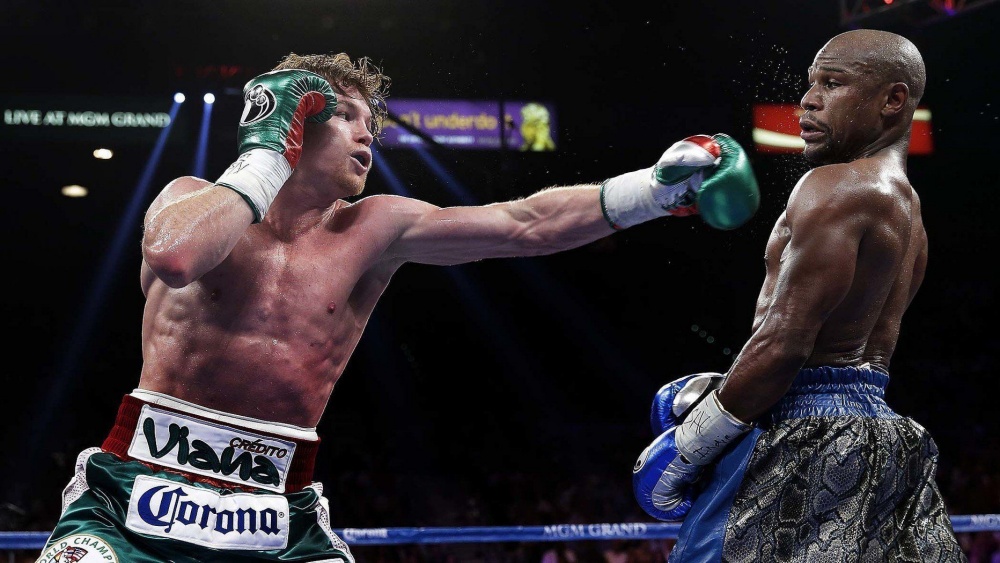
A well-known example of a hands-up boxer is Canelo Álvarez. Canelo uses a compact high guard combined with subtle head movement and strong balance. Rather than simply blocking shots, he absorbs punches on his gloves and immediately counters with precision. His hands-up style allows him to stay composed in close-range exchanges while conserving energy and maintaining defensive structure.
Another example is Gennady Golovkin, who uses a disciplined high guard to walk opponents down. His hands-up approach supports forward pressure and reduces exposure to clean shots, allowing him to control the pace and force opponents into uncomfortable exchanges.
Advantages Of Hands Up Boxing
- Strong Defensive Coverage: Keeping the hands high reduces the number of clean shots absorbed, especially against fast punchers.
- Easier To Learn And Maintain: Hands up creates a stable structure that helps boxers stay composed under pressure.
- Better For Close Range Exchanges: In tight exchanges, a high guard makes it easier to block hooks and uppercuts.
- Consistent Energy Use: Blocking often requires less energy than constant slipping and moving.
Risks Of Hands Up
- Can limit vision if the guard is too tight.
- May encourage passive defense.
- Slower counter opportunities if overly static.
What Does Hands Down Mean In Boxing
A hands-down style keeps the gloves lower, often around chest level or below. Defense relies more on head movement, footwork, distance control, and anticipation rather than blocking.
Boxers who fight hands down often aim to bait opponents into overcommitting, creating openings for counters. This style requires excellent reflexes, awareness, and confidence in movement.
Hands down is less forgiving and usually adopted by experienced fighters who understand timing and range deeply.
Examples Of Boxers Who Fight With Hands Down
One of the most famous hands-down boxers is Floyd Mayweather Jr. His low hand position works in combination with exceptional reflexes, shoulder rolls, and precise distance control. Rather than blocking punches, he relies on anticipation and subtle movement to make opponents miss, then counters sharply. His style shows how hands-down boxing can work when timing and awareness are elite.
Another example is Roy Jones Jr., who used a hands-down stance to maximize speed and unpredictability. His relaxed posture allowed him to explode into punches from unusual angles, catching opponents off guard. This approach depended heavily on athleticism and reaction speed, highlighting both the effectiveness and risk of fighting with the hands lowered.
Advantages Of Hands Down Boxing
- Improved Vision And Awareness: Lower hands allow clearer sightlines, helping with anticipation and counters.
- Faster Counter Punching: With hands relaxed, punches can be thrown more fluidly and with less tension.
- Psychological Pressure: A hands-down stance can frustrate opponents and force mistakes.
- Enhanced Mobility: This style encourages constant movement, angles, and rhythm changes.
Risks Of Hands Down
- Higher exposure to head shots.
- Requires excellent timing and reactions.
- Punishes mistakes more severely.
Can Beginners Use A Hands-Down Style?
Beginners are usually encouraged to keep their hands up. This builds defensive awareness and reduces unnecessary damage.
As experience grows, experimenting with hand position becomes safer and more effective. Developing head movement and footwork first is essential before lowering the guard.
FAQs On Hands Up Vs Down In Boxing
Q: Is Hands Up Better Than Hands Down In Boxing?
A: Neither is universally better. Effectiveness depends on skill level and context.
Q: Do Professional Boxers Use Both Styles?
A: Yes. Many switch between them during fights.
Q: Is Hands Down Unsafe?
A: It can be risky without proper movement and timing.
Q: Can Hand Position Change During A Fight?
A: Yes. Good boxers adjust constantly.
Final Thoughts
Hands up and hands down boxing styles reflect different approaches to defense and control. Hands up emphasizes structure and safety, while hands down prioritizes movement and timing. Understanding both allows boxers to adapt to different opponents and situations. Rather than choosing one permanently, developing the ability to shift between styles is often what separates good boxers from great ones.
You may also like:
7 Simple Ways To Maintain Energy And Last Longer In Boxing Rounds