Summary
In Brazilian Jiu-Jitsu, control always comes before submission. Before you can attack effectively, you must secure a stable position, and the seat belt is one of the best ways to achieve that.
The seat belt is one of the most important control grips in Brazilian Jiu-Jitsu. It connects the upper body to the opponent’s torso, giving control, balance, and access to powerful submissions like the rear naked choke. While often described as a grip, it also functions as a position that anchors back control. Whether you’re attacking the back or maintaining control during scrambles, mastering the seat belt grip is essential for all grapplers.
This article explores what the seat belt is, how to apply it, and why it is a cornerstone of BJJ control.
What Is The Seat Belt In BJJ?
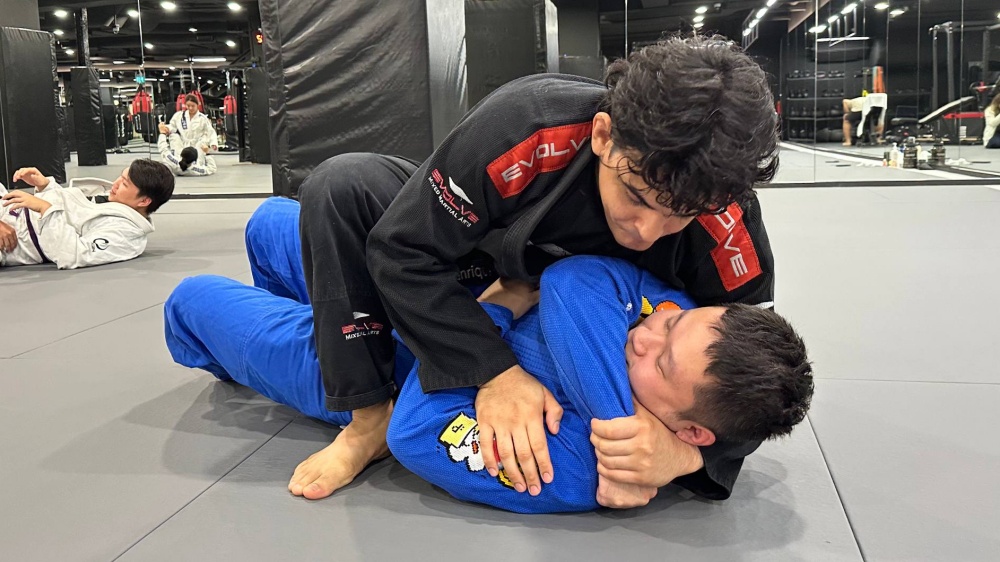
In simple terms, the seat belt refers to a grip where one arm goes over the opponent’s shoulder and the other arm goes under the opposite armpit. The hands are then connected in front of the opponent’s chest or stomach.
The name “seat belt” comes from the way the arms wrap around the opponent’s torso, similar to fastening a seat belt across your body. It keeps the opponent close and prevents them from turning or escaping easily.
The top arm (the one over the shoulder) is usually the choking arm, while the bottom arm (the one under the armpit) acts as the anchor that prevents escapes.
The seat belt can be understood as both a grip and a position, depending on how it’s used.
As a grip, it’s a way to secure the upper body connection from behind or during transitions. You might use the seat belt grip while moving from turtle position to back control, or while maintaining pressure before setting hooks.
As a position, the seat belt becomes part of the back control, one of the most dominant positions in BJJ. Once both hooks (legs) are in and the seat belt is secured, you have control over your opponent’s entire upper body. From here, you can stabilize, attack, or transition between chokes and traps.
In essence, the seat belt starts as a grip but becomes a position once combined with leg control.
How To Apply The Seat Belt Grip
- Get Behind Your Opponent: Whether from it is from the turtle, scrambles, or transitions, position yourself behind the opponent’s back or shoulder line.
- Insert One Arm Over And One Arm Under: Your top arm goes over the shoulder near the neck, and your bottom arm slides under the armpit on the opposite side.
- Connect Your Hands: Grab your own wrist or palm to create a firm lock across the opponent’s chest or belly. Keep your elbows tight and chest close to their back.
- Maintain Chest-To-Back Pressure: Keep constant upper body contact. Your chest should stay glued to their upper back to prevent space for them to turn or escape.
- Use Hooks For Full Control: Once both legs (hooks) are in, you’ve established full back control. If they try to escape, your seat belt grip will help you follow their movement while keeping control.
Why The Seat Belt Works
The seat belt works because it gives you positional dominance and mobility at the same time. It restricts your opponent’s rotation while allowing you to move freely.
- It keeps you connected to the opponent, preventing escapes.
- It allows you to switch sides for chokes and attacks.
- It gives you leverage for controlling balance, especially when the opponent tries to roll or spin.
Because of its versatility, the seat belt is a key link between control and submission in BJJ.
Common Mistakes When Using The Seat Belt
- Holding Too High Or Too Loose: Keep the grip tight and centered. Holding too high around the chest makes it easier for your opponent to slip out.
- Not Keeping The Head On The Choking Arm: Your head should align with the choking arm to maintain control and avoid getting peeled off.
- Crossing Arms Incorrectly: Never put the choking arm on the bottom; it risks being trapped or attacked. The choking arm always goes on top.
- Lack Of Hip Connection: Without close hip pressure, your opponent can escape backward. Stay tight and connected.
- Not Transitioning Quickly: The seat belt should lead to progress, whether to hooks, chokes, or control transitions. Don’t hold without a plan.
Attacks And Transitions From The Seat Belt
Once the seat belt is secured, it opens doors to multiple attacks and positional controls:
- Rear Naked Choke (RNC): The most direct attack from the seat belt. Once you establish control, slide your top arm deeper and lock the choke.
- Bow And Arrow Choke (In Gi): Grip the opponent’s collar with your top arm and finish by extending your legs to apply leverage.
- Back Transitions: If your opponent defends the choke, you can switch sides while maintaining the seat belt to keep dominant control.
- Body Triangle Setup: Replace your hooks with a body triangle for additional control and pressure.
FAQs About The Seat Belt In BJJ
Q: Is The Seat Belt A Grip Or A Position?
A: Both. The seat belt starts as a grip to connect to your opponent’s upper body, but when combined with leg hooks, it becomes a full positional control from the back.
Q: Which Arm Is The Choking Arm In The Seat Belt?
A: The top arm, the one over the shoulder, is the choking arm. The bottom arm is the anchor for stability.
Q: Why Is The Seat Belt Important In BJJ?
A: It allows you to maintain strong upper body control while setting up chokes or transitions. It is a key component of back control, one of the most dominant positions in BJJ.
Q: How Do I Prevent My Opponent From Escaping The Seat Belt?
A: Keep your elbows tight, your chest glued to their back, and your head aligned with your top arm. Constant pressure and correct angles stop them from turning into you.
Conclusion
The seat belt in BJJ is more than a simple grip; it’s a control system that defines dominance from the back. It teaches the principles of connection, leverage, and patience, all of which lie at the heart of grappling.
Whether you view it as a grip or a position, its purpose remains the same: to control your opponent, stay one step ahead, and open the path to submission. Mastering the seat belt gives you one of the most reliable and technical forms of control in Brazilian Jiu-Jitsu, a perfect example of efficiency through intelligent movement.
You may also like:
5 Important Things To Look For When Picking A BJJ Gym In Singapore