
Summary
Every Muay Thai fighter starts from the same foundation, the same strikes, the same footwork, the same rules. But once those fundamentals are internalised, something interesting happens: individual personality, physical attributes, and natural instincts begin to shape how a fighter expresses the art. The result is a collection of distinct fighting styles that have evolved over generations of Thai competition, each one a different answer to the question of how to dominate in the ring. This article breaks down the five primary Muay Thai fighting styles, Muay Femur, Muay Mat, Muay Khao, Muay Tae, and Muay Sok — explaining what defines each style, which weapons and tactics it prioritises, and the type of fighter personality it suits best. Understanding these styles does more than help you identify your own tendencies — it teaches you to read opponents, exploit stylistic mismatches, and develop the all-round game that every serious Muay Thai practitioner should have regardless of their primary style. As Muay Thai World Champion and Evolve MMA instructor Chaowalit Jocky Gym puts it, “In Muay Thai, your style is not something you choose from a list. It is something you discover through training, sparring, and paying attention to what feels natural to you. But once you understand the five styles, you can train your strengths with more intention and understand your opponents with more clarity. That knowledge makes you a much more dangerous fighter.” Read this guide, experiment in sparring, and let your style find you.
Key Takeaways
- The five Muay Thai fighting styles, Muay Femur, Muay Mat, Muay Khao, Muay Tae, and Muay Sok, are not rigid categories but expressive frameworks that individual fighters adapt to their own personality, attributes, and preferences.
- Your natural instincts in sparring are the most reliable guide to your primary style. Do you find yourself waiting patiently for openings? That is Muay Femur. Pressing forward with heavy punches? Muay Mat. Dominating the clinch with knees? Muay Khao. Hanging at range and kicking? Muay Tae. Looking for elbows on the inside? Muay Sok. Your instincts reveal your tendencies before your conscious mind does.
- Understanding all five styles makes you a better fighter regardless of your primary preference. Knowing how a Muay Khao fighter sets up their knees helps you defend against them. Understanding what a Muay Femur fighter is waiting for tells you what patterns to avoid. Knowledge of each style is tactical intelligence as much as self-knowledge.
- No single style is objectively superior; each has structural strengths and corresponding vulnerabilities. Muay Femur’s patience can be disrupted by overwhelming aggression. Muay Mat’s forward pressure can be neutralised by distance and kicks. Muay Khao’s dominance requires getting inside, which distance fighters work hard to prevent. Understanding these matchup dynamics is the foundation of effective game planning.
- The most dangerous Muay Thai fighters are those who develop a primary style to a high level while maintaining functional competence across the others. A pure style is predictable. A fighter whose primary identity is Muay Tae but who can transition to clinch knees when the fight demands it is significantly harder to prepare for.
- Your fighting style is an expression of your character as much as your technique. Muay Femur reflects intelligence and patience. Muay Mat reflects aggression and will. Muay Khao reflects physical dominance and relentlessness. Muay Tae reflects precision and distance management. Muay Sok reflects creativity and aggression at close range. Finding your style is part of understanding yourself as a martial artist.
1) Muay Femur
Muay Femur fighters are known for their smarts. Their fight IQ tends to be relatively high, and they utilize their intelligence to fight smarter, not harder. This type of fighter tends to pick their shots wisely. They tend to avoid throwing punches for the sake of throwing punches, keeping themselves safe from unnecessary risk. After all, their intelligence guides them to land shots based on wisdom.
Muay Femur fighters are excellent at taking advantage of fighters who more brashly “rush in.” Throwing the right strikes at the right times will generate higher scoring, and a Muay Femur fighter will certainly leverage their knowledge to capitalize on that fact.
Is Muay Femur For You?
If you tend to be a thinker, are happy being patient, and want to bring your knowledge and chess-like skills to your Muay Thai game, the Muay Femur style is for you. This style will allow you to wait patiently for your opponent’s mistakes, avoid taking on too much damage, and rack up the points as you land key shots to your opponent’s body.
2) Muay Mat
Muay Mat fighters are marked by their aggressive, forward-driving nature and their instinct to always look for the knockout. They tend to be heavy punchers, utilizing their hands as their primary, favored weapon. This style tends to be less about picking your shots and more about landing as many hard shots as possible.
Stepping into a match with a Muay Mat fighter will ensure quick, explosive action in the ring. While these fighters may not utilize their fight IQ in the same way as a Muay Femur fighter, they make up for it in brute aggression.
Is Muay Mat For You?
If you find that you are often pressing forward toward your opponent, prefer throwing heavy punches, and don’t mind taking some solid shots in return, this style may be one for you to consider. For those with a more aggressive nature, the Muay Mat style of fighting is a natural fit to your already programmed instincts, and an excellent way for you to express yourself in Muay Thai.
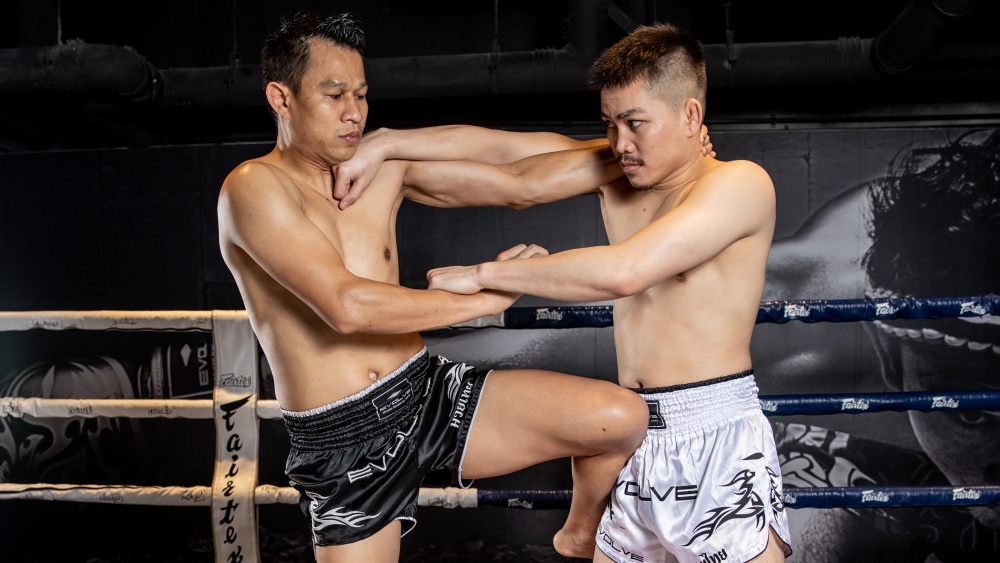
3) Muay Khao
Muay Khao fighters are known for their incredibly effective, powerful, and plentiful knees. These fighters are adept at landing knees, both inside and outside of the clinch. They may use punches to set up their knees or utilize a highly skilled clinch game to get on the inside to land a string of powerful knees to their opponent’s body. Either way, if you are fighting a Muay Khao-styled fighter, be prepared for knees.
Muay Khao tends to be a very dominating style, and one that crowds seem to really enjoy. These fighters capitalize on exhausting their opponents through the use of their many knees, all while causing damage to the body, as well.
Is Muay Khao For You?
If you tend to find yourself snatching up and dominating in the clinch, this style might be one for you to explore. Your existing clinch game is the perfect set-up to land a succession of knees while fighting, and chances are that you will begin to find your knees outside of the clinch, too. The next time you step into a match, be sure to experiment with Muay Khao, using your knees to dominate the ring.
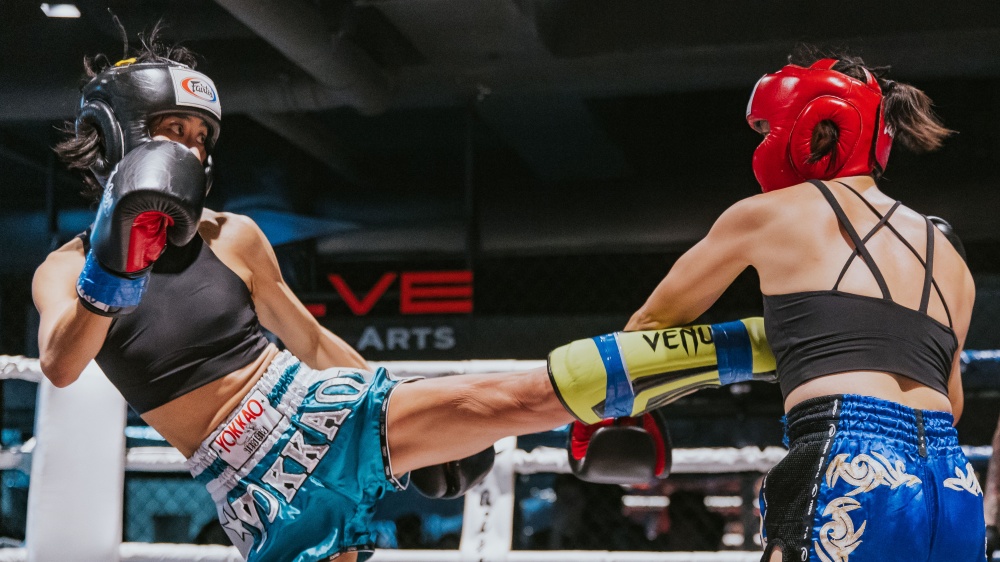
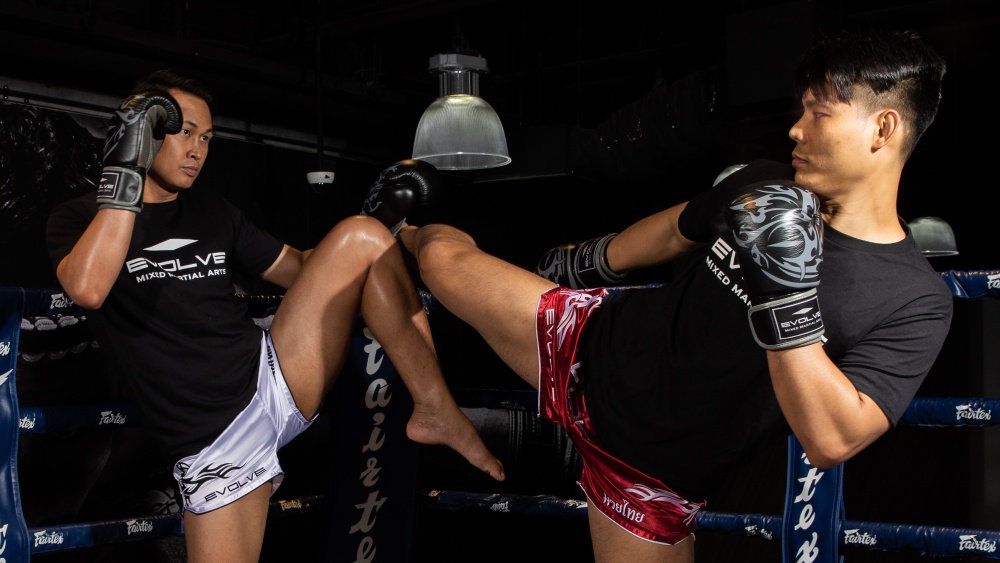
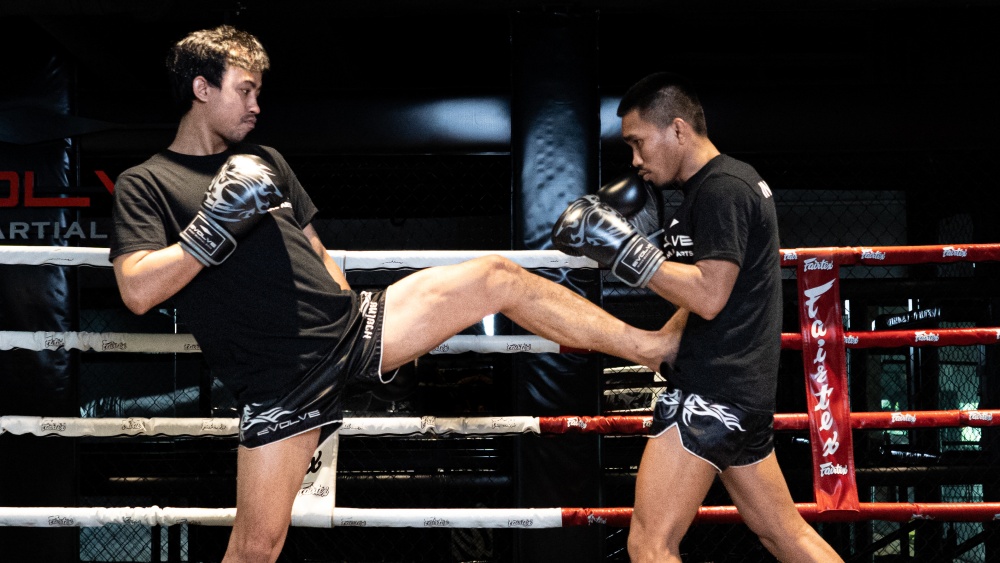
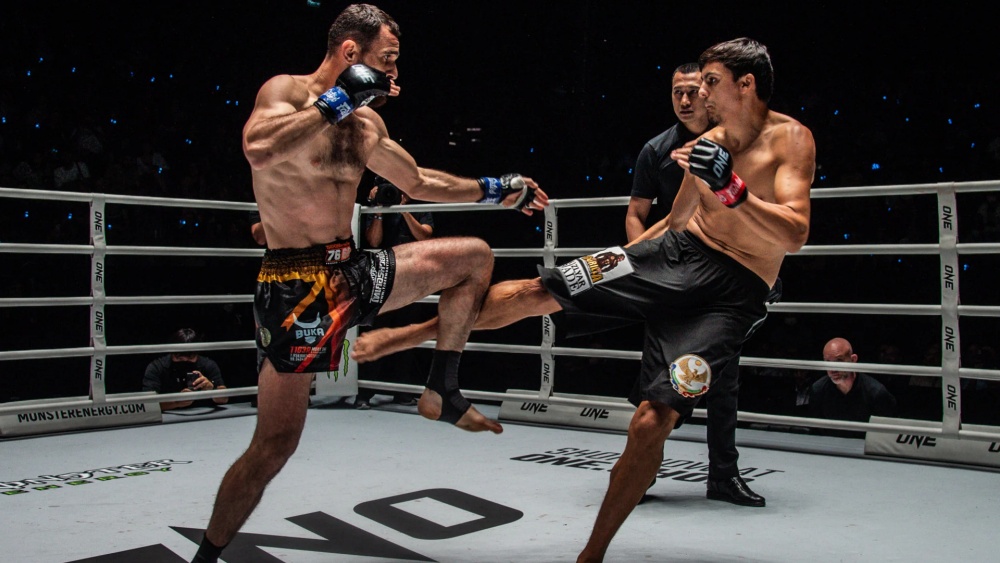
4) Muay Tae
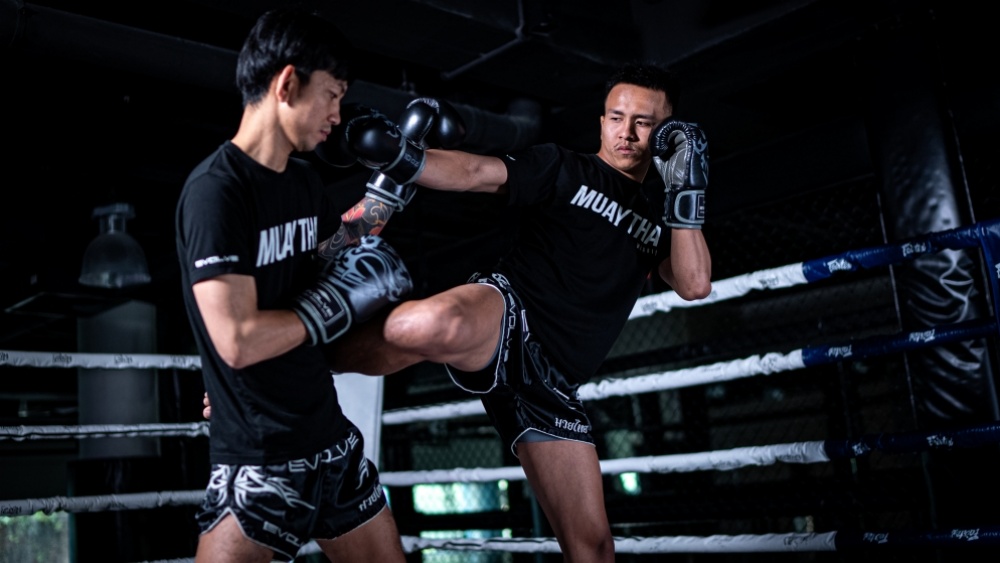
Muay Tae fighters are easily noted for their love for kicking. These fighters will wear their opponents down by throwing solid, heavy shots at their opponents. Because these fighters prefer kicking, you will often see them staying on the outside of the range, making it difficult for a fighter who favors punches or knees to cut the distance and land any significant strikes on them.
While these fighters are happy to land a kick anywhere on the body, they are often looking to capitalize on opportunities to throw a kick to the head for a knockout.
Is Muay Tae For You?
If you find that you prefer to hang back on the outside of your range, this style may be a good fit for you. It allows you to keep some distance from your opponent while still maintaining range for solid kicks.
If you find yourself looking primarily for opportunities to kick your opponent, this style sets you up quite nicely to accomplish that. If you think this style might be a good fit, be sure to give it a try next time you step into the ring.
5) Muay Sok
Muay Sok fighters are bearers of brutal elbows. These fighters like to capitalize on being on the inside and are always looking for opportunities to land powerful elbows on their opponent. They often look for their chance between their opponent’s punches to find space to slide in a quick elbow.
These fighters are aggressive and dangerous and are excellent counter-fighters. The agility when throwing strikes keeps the pace of the match running at a high volume and intensity, providing lots of excitement for spectators.
Is Muay Sok For You?
If you love to fight on the inside, are okay with taking risks, and prefer your elbows as your weapon of choice, this style will be a great fit for your Muay Thai game.
Choosing Your Muay Thai Style
No matter how you like to fight or your personality, there is bound to be a fighting style that fits you well. Further, there is no rule that you can only master one style. Exploring and understanding each distinct style, whether you prefer it or not, will make you a better all-around Muay Thai fighter.
The next time you step into a match, be sure to work and explore one of the styles that you think might best fit you personally. Figure out how it can enhance your game as a Muay Thai fighter, and figure out how to exploit the styles of your competitors.
There is a style for everyone. Don’t forget, however, that Muay Thai is a martial art, and that you should use it to express yourself in an artistic way. Never feel bound by any one particular style, and always feel free to add your own flair.
Frequently Asked Questions About Muay Thai Fighting Styles
Q: What Is Muay Femur And Which Fighters Are Known For It?
A: Muay Femur translates loosely to “technical fighter” and describes a style built on high fight IQ, precise shot selection, and the ability to read and exploit an opponent’s patterns rather than simply overpowering them. Muay Femur fighters score with calculated strikes rather than volume, avoid unnecessary damage, and excel at punishing aggressive opponents who rush in without thinking. Saenchai is widely considered the modern embodiment of the Muay Femur style — his ability to control fights through intelligence, timing, and creativity while taking minimal damage represents the style at its highest expression. Muay Femur is the style most associated with the elite stadium circuit in Thailand, where judges reward effective striking and ring control over aggression.
Q: What Type Of Fighter Naturally Suits The Muay Mat Style?
A: Muay Mat suits fighters who are naturally aggressive, physically powerful, and mentally inclined to push the pace and pressure their opponents rather than wait for opportunities. These fighters typically have strong punching power — Muay Mat translates roughly to “heavy punches” — and a willingness to trade strikes rather than avoid exchanges. The Muay Mat fighter’s greatest asset is the psychological pressure their aggression creates: opponents who are constantly being forced backward and hit hard tend to make defensive errors that the Muay Mat fighter immediately capitalises on. Buakaw Banchamek and Yodsanklai Fairtex are often cited as fighters who have used aggressive, punch-heavy approaches as significant parts of their game.
Q: How Does Muay Khao Differ From Just Fighting In The Clinch?
A: The Muay Khao style goes significantly beyond simply fighting in the clinch. While the clinch is the primary vehicle for delivering knees, Muay Khao fighters also use outside knees — fired from open range — and develop the ability to enter the clinch from multiple approaches using footwork, setups, and combinations. The defining characteristic is the knee as the primary weapon and the relentless pursuit of the dominant inside position where knees can be delivered most effectively. Muay Khao fighters also develop exceptional physical conditioning specifically for the clinch — the strength, balance, and endurance to maintain dominant positioning and continue delivering knees late in a fight when opponents are fatigued. Dieselnoi Chor Thanasukarn is the most celebrated Muay Khao fighter in history.
Q: Can A Muay Tae Fighter Compete Effectively Against Opponents Who Close The Distance Aggressively?
A: Yes — but it requires specific defensive and transitional skills. A pure Muay Tae fighter whose only answer to forward pressure is more kicks will be neutralised by a Muay Mat or Muay Khao fighter who accepts the kicks and keeps closing the distance. Effective Muay Tae fighters develop a range of distance management tools: the teep as a primary distance creator, footwork and angle cutting to prevent opponents from closing the gap cleanly, and the ability to time their kicks as counters to forward movement rather than purely as initiating attacks. They also need a secondary game for when the distance collapses — typically developing enough clinch competence to slow down an opponent who has successfully closed range, before re-establishing the distance they prefer.
Q: What Makes Muay Sok Difficult To Train And Develop As A Primary Style?
A: Muay Sok — elbow fighting — is technically demanding because elbows are close-range weapons that require exceptional positioning and timing to land cleanly without the fighter exposing themselves to counters. The range at which elbows are most effective is also the range at which the opponent’s punches and knees are most dangerous, which means Muay Sok fighters must simultaneously be aggressive enough to enter elbow range and defensively aware enough to avoid being destroyed in the process. Finding the gaps between an opponent’s punches to slide in an elbow requires a level of reactive timing that takes significant sparring development. Elbows are also strictly regulated or prohibited in some rulesets, which means Muay Sok fighters who compete across different promotions must be prepared to adapt their primary weapon to the rules of each event.
Q: Is It Better To Master One Muay Thai Style Or Develop Competence Across All Five?
A: The most effective approach is to develop a primary style that suits your natural attributes and personality to a high level, while building functional competence in the other styles. A fighter who is exclusively one-dimensional — pure Muay Mat with no kicks, for example, or pure Muay Tae with no clinch — is significantly more predictable and easier to game-plan against than one who has clear strengths but no obvious gaps. The most celebrated fighters in Muay Thai history — Saenchai, Dieselnoi, Buakaw — all had identifiable primary styles but were genuinely dangerous across multiple ranges and with multiple weapons. Think of the primary style as your identity and the secondary styles as your tools for solving problems that your primary style cannot always address on its own.
Q: How Do The Five Styles Match Up Against Each Other In Competition?
A: Each style has natural advantages and disadvantages against specific opponents. Muay Femur’s patience and precision are most effective against aggressive, tunnel-vision opponents like Muay Mat fighters, but can be disrupted by overwhelming forward pressure that makes careful shot selection difficult. Muay Mat’s aggression is most effective against cautious or reactive fighters — but is vulnerable to distance fighters like Muay Tae who can pick apart a forward-pressing opponent from the outside. Muay Khao dominates against fighters who cannot prevent or escape the clinch, but is nullified by expert distance management. Muay Tae is most effective against shorter-range fighters — but is vulnerable to opponents with strong teep defense and clinch entries. Muay Sok thrives against fighters who are passive on the inside, but struggles against experienced clinch fighters who can neutralise elbow attempts through positional control. These matchup dynamics are why tactical awareness of all five styles is so important for competitive Muay Thai.
Q: How Do I Figure Out Which Muay Thai Style Suits Me As A Beginner?
A: The most reliable method is simply to spar with intention and pay attention to your instincts. When you are under pressure, what do you naturally reach for — distance, aggression, clinch, kicks, or close-range strikes? When you see an opening, what is your first impulse? Your natural responses under sparring pressure reveal your instincts more honestly than any personality quiz or self-assessment. Beyond sparring observation, pay attention to which aspects of technique work feel most satisfying and natural during drilling: if kicking feels powerful and comfortable while punching feels forced, Muay Tae is worth exploring. If you find yourself constantly trying to get into the clinch, Muay Khao is your direction. Start with the style that matches your existing instincts, develop it deliberately, and then build outward from there.
Final Thoughts
The five Muay Thai fighting styles are not boxes to be sorted into — they are mirrors that reflect different aspects of the fighter’s character, physical attributes, and tactical intelligence. Muay Femur is the chess player. Muay Mat is the warrior. Muay Khao is the relentless physical dominator. Muay Tae is the precision kicker who controls distance. Muay Sok is the dangerous, creative infighter. Every fighter will see pieces of themselves in more than one of these descriptions, and the most complete fighters will have developed something meaningful from each.
The value of understanding these styles is not just self-knowledge — it is tactical intelligence. When you recognise that your opponent is a Muay Khao fighter, you know exactly what they want and what you need to deny them. When you identify a Muay Femur fighter across the ring, you know that patience and precision will be tested, and that aggression without thought will be punished.
Train your primary style with genuine depth. Study the others with genuine curiosity. And remember that Muay Thai is an art — the styles are the tradition, and how you blend, adapt, and express them is entirely your own.
You may also like: