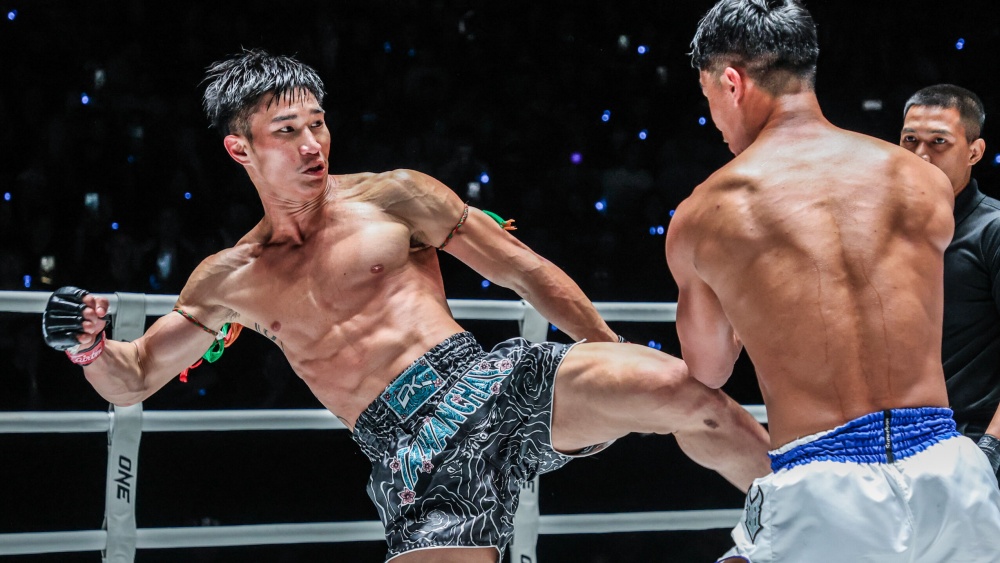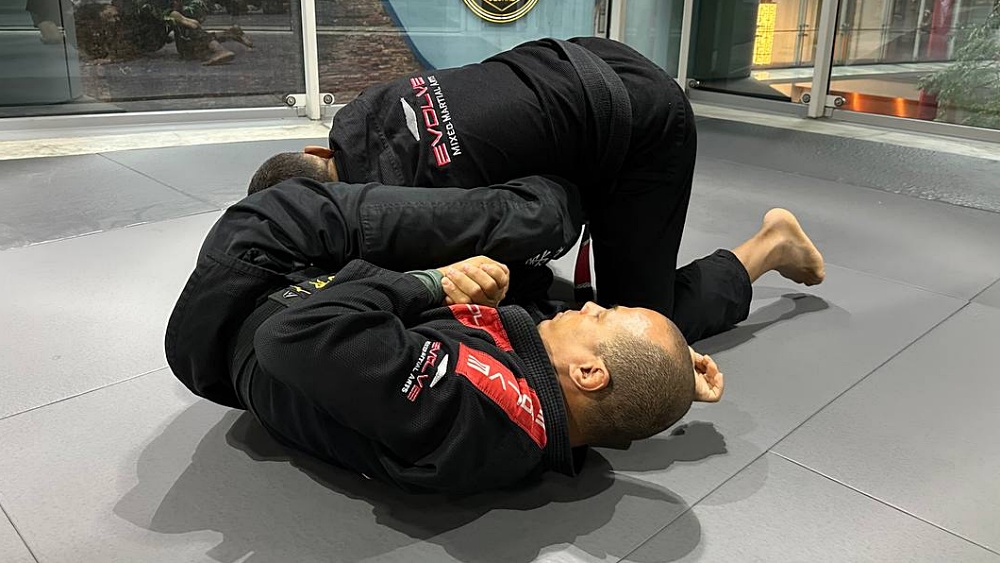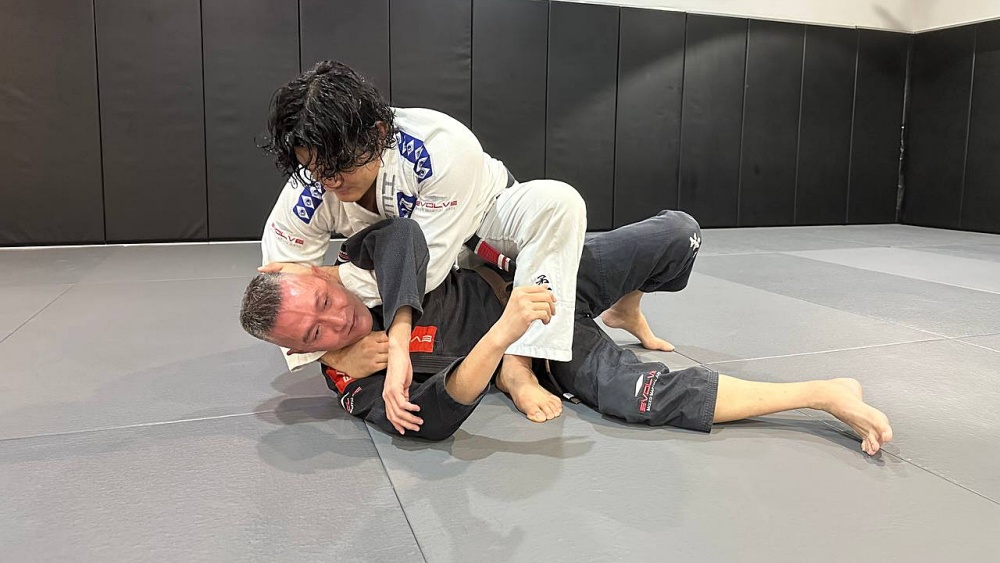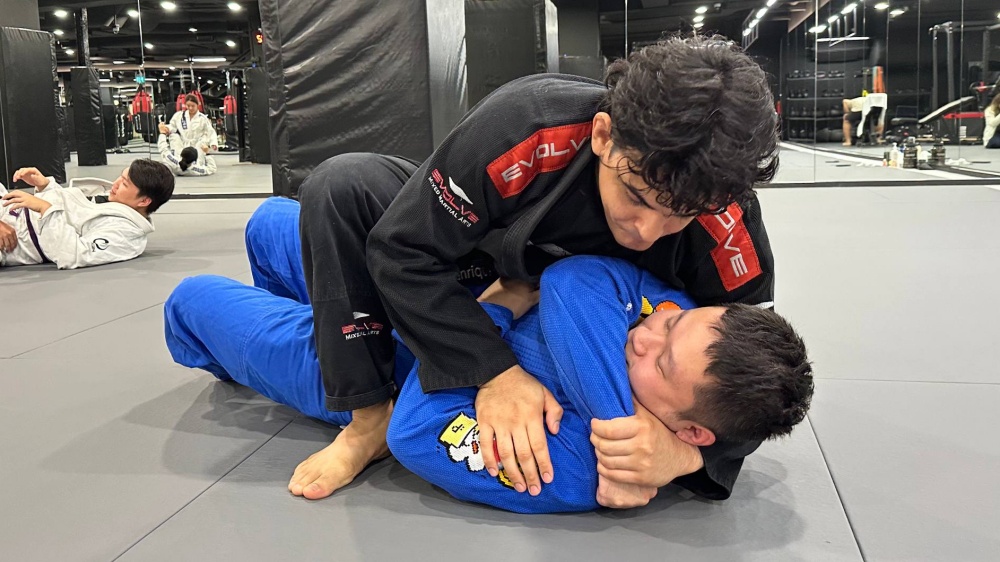
Brazilian Jiu-Jitsu and Judo are two of the most popular grappling martial arts in the world. While both share historical roots in Japanese jujutsu, they emphasize different aspects of grappling. Judo focuses on explosive throws and takedowns, while Brazilian Jiu-Jitsu emphasizes ground control and submissions. Understanding the strengths of each style can help determine which martial art may be more effective depending on the situation.
BJJ vs Judo at a Glance
• Judo focuses on throws and takedowns
• BJJ focuses on ground control and submissions
• Judo matches can end instantly with a perfect throw (ippon)
• BJJ emphasizes positional control before submission
• Both arts evolved from traditional Japanese jujutsu
The History Of Judo
Judo traces its origins to traditional Japanese jujutsu, a collection of grappling systems developed during Japan’s feudal period. These techniques were used by samurai warriors as a method of close-quarters combat when weapons were unavailable. Because armored opponents were difficult to strike effectively, many jujutsu techniques focused on throws, joint locks, pins, and chokes that could control or disable an opponent.
During the late 19th century, Japan underwent major social changes as the feudal system was dismantled and the samurai class was abolished. Many traditional martial arts schools began to disappear during this period.
A young martial artist named Jigoro Kano believed that the principles of jujutsu could be preserved and adapted for modern society. In 1882, he founded the Kodokan Judo in Tokyo and introduced a refined system he called Judo, which means “the gentle way.” Kano removed many dangerous techniques and emphasized safe training methods, physical education, and live sparring (randori).
Judo quickly gained popularity throughout Japan and was adopted by police and military training programs. Kano’s efforts to promote the art internationally were highly successful, and he later became the first Asian member of the International Olympic Committee in 1909. In 1964, Judo made its debut as an official Olympic sport at the Tokyo Olympic Games.
And Then Came Brazilian Jiu-Jitsu
While Kano made Judo a global sport, it was one of his disciples Mitsuyo Maeda who took the grappling art to Brazil. He arrived there in 1914 and started the first Judo school. A group of brothers, Carlos, Helio, Oswaldo, and Jorge Gracie, started training with him, and they eventually started focusing on the ground aspect of Judo: “newaza.” Carlos and Helio Gracie in particular are credited with modifying Judo ground techniques to the point it eventually became its unique fighting style called Brazilian Jiu-Jitsu. They used their ground fighting skills to dominate Vale Tudo – no holds barred – fights in Brazil.
While Kano made Judo a global sport, it was one of his disciples Mitsuyo Maeda who took the grappling art to Brazil. He arrived there in 1914 and started the first Judo school. A group of brothers, Carlos, Helio, Oswaldo, and Jorge Gracie, started training with him, and they eventually started focusing on the ground aspect of Judo: “newaza.” Carlos and Helio Gracie in particular are credited with modifying Judo ground techniques to the point it eventually became its unique fighting style called Brazilian Jiu-Jitsu. They used their ground fighting skills to dominate Vale Tudo – no holds barred – fights in Brazil.
The Gracie family eventually brought their ground fighting system to the U.S. and founded the first no-hold fighting league, the Ultimate Fighting Championship. No one had any answer for their fighting system during the early days of mixed martial arts.
Differences Between BJJ And Judo
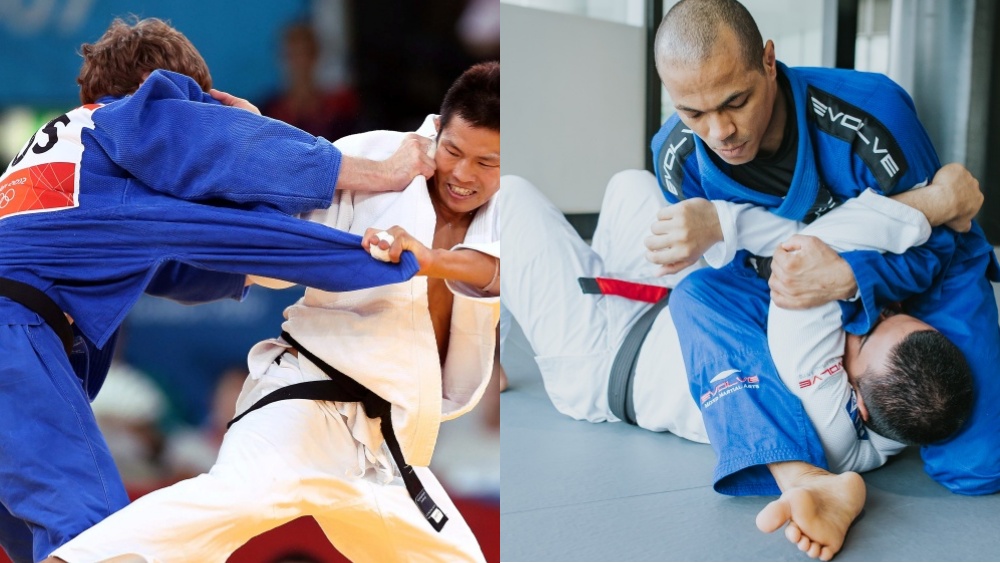
BJJ and Judo share many similarities since they are both derived from traditional Jiu-Jitsu. Techniques like throws, joint locks, and choke holds are used in both styles. The key difference between these sports is what they specialize in: Judo players specialize in throws, trips, and foot sweeps executed from standing and clinch positions, while BJJ fighters focus on submissions and ground fighting.
Judo fighters look to execute perfect throws that instantly win matches, while BJJ prioritizes controlling and submitting opponents on the ground.
Rule Differences
Although Judo and Brazilian Jiu-Jitsu share a common heritage, their competition rules differ significantly. These rule differences shape how each sport is practiced and influence the strategies competitors use during matches. Judo competitions tend to emphasize throws and stand-up grappling, while Brazilian Jiu-Jitsu allows more time for ground fighting and submission attempts.
Judo Rules
In Judo, anything classified as an “ippon” can win you a match. Some ways to score an ippon in Judo include:
- Throwing your opponent, so they land on their back
- Using a joint lock or submission to get an opponent to tap out
- Keeping your opponent pinned on the mat for 20 seconds
Judo players can also win matches by accumulating two “Waza-aris.” Some of the ways to score a Waza-ari include:
- Holding an opponent down for 10-19 seconds
- Throwing your opponent to the ground but not getting them to land on their back
While most takedowns are allowed in BJJ, Judo doesn’t allow the use of any techniques that involve grabbing hold of your opponent’s legs.
BJJ Rules
The goal of a BJJ match is to force your opponent to submit. You also earn points for specific tasks you perform. Here’s how most BJJ tournaments are scored:
- Two points are scored per takedown
- Two points are awarded per sweep
- Three points are awarded for passing the guard
- Four points are awarded for dominant positions like full mount or back control
- Two points are scored for attaining the knee-on-belly position
If neither fighter gets submitted in a BJJ match, the fighter with the most points wins the contest.
Which Is More Effective: Judo Or Brazilian Jiu-Jitsu?
Determining whether Judo or Brazilian Jiu-Jitsu is more effective is not always straightforward. Both martial arts are highly effective grappling systems, but they emphasize different techniques and strategies. As a result, their effectiveness often depends on the situation, the practitioner’s goals, and the environment in which they are used.
Advantages Of Judo
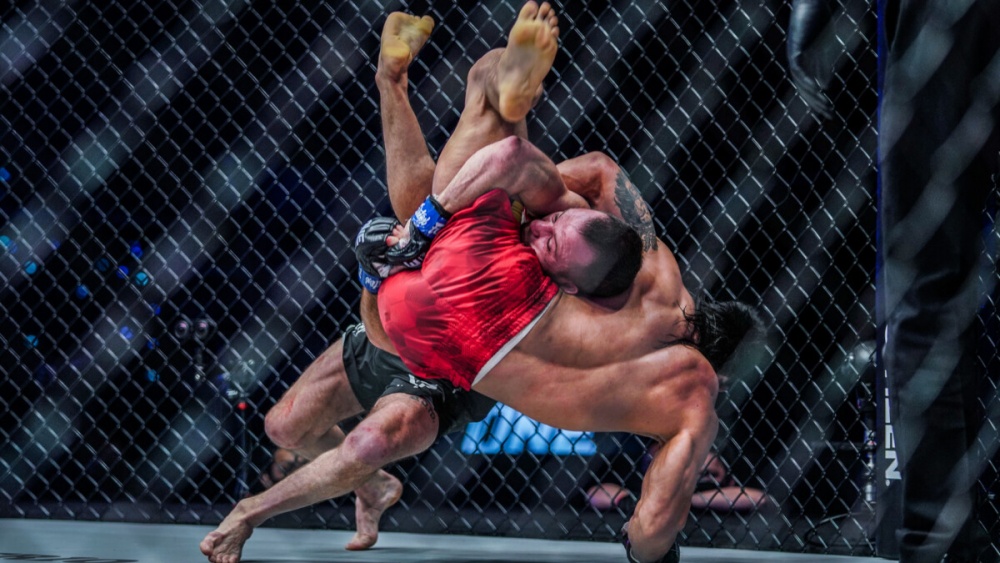
Judo is well known for its powerful throwing techniques and emphasis on stand-up grappling. A well-executed throw can instantly neutralize an opponent by taking them off balance and driving them to the ground with significant force. In sport Judo, a perfectly executed throw can immediately end the match with an ippon.
Another advantage of Judo is its strong focus on balance, posture, and controlling an opponent while standing. Judoka spend a significant amount of training time developing grips, footwork, and timing, which allows them to dominate the standing phase of a fight. In situations where staying on one’s feet is important, such as certain self-defense scenarios, these skills can be particularly valuable.
Judo also teaches effective pins and control positions on the ground. While ground fighting is typically shorter in Judo competition compared to BJJ, judoka are trained to secure dominant positions quickly and finish with submissions such as armlocks and chokes.
Advantages Of Brazilian Jiu-Jitsu
Brazilian Jiu-Jitsu is widely regarded as one of the most effective martial arts for ground fighting. The art places a strong emphasis on positional control, leverage, and submissions such as chokes and joint locks. BJJ practitioners spend a large portion of their training developing the ability to control opponents on the ground and finish fights through submission.
One of the major advantages of BJJ is its ability to allow smaller practitioners to control and defeat larger opponents using technique rather than strength. Through the use of leverage and positioning, BJJ practitioners can neutralize an opponent’s physical advantages and create opportunities to submit them.
Because BJJ competitions allow extended ground fighting, practitioners also develop a deep understanding of positional strategy. Techniques such as guard control, sweeps, and transitions between positions give BJJ fighters a wide range of tools to manage opponents once the fight goes to the ground.
Effectiveness Depends On Context
Ultimately, the effectiveness of Judo or Brazilian Jiu-Jitsu depends heavily on the context in which the martial art is applied. Judo’s explosive throws and strong standing control can be extremely effective in situations where the fight remains upright, while BJJ excels when the fight transitions to the ground.
Many modern martial artists choose to study both disciplines because they complement each other well. Judo provides powerful takedowns and stand-up control, while Brazilian Jiu-Jitsu offers sophisticated ground-fighting techniques and submissions. Together, they form a well-rounded grappling skill set that is highly effective in a wide range of situations.
Should You Train Judo Or Brazilian Jiu-Jitsu?
Both Judo and Brazilian Jiu-Jitsu are excellent grappling martial arts, and the best choice often depends on your personal preferences and training goals. While the two arts share common roots, they emphasize different aspects of grappling, which can make one more appealing than the other depending on what you enjoy most.
If you enjoy explosive throws, takedowns and fast paced stand up grappling exchanges, Judo could be for you. However, if you prefer ground grappling, positional control and submissions like chokes and joint locks, BJJ might the better choice.
Ultimately, both arts complement each other extremely well. Many martial artists choose to train in both disciplines, as Judo provides strong takedowns and stand-up control, while Brazilian Jiu-Jitsu offers a deep and sophisticated system of ground fighting and submissions.
Frequently Asked Questions About Judo vs BJJ
What is the main difference between Judo and Brazilian Jiu-Jitsu?
The main difference is their focus during combat. Judo emphasizes throws, takedowns, and stand-up grappling, while Brazilian Jiu-Jitsu focuses more on ground fighting, positional control, and submissions.
Did Brazilian Jiu-Jitsu originate from Judo?
Yes. Brazilian Jiu-Jitsu developed from Judo in the early 20th century when Japanese judoka Mitsuyo Maeda taught the art in Brazil. The techniques were later refined and expanded by the Gracie family, eventually evolving into modern Brazilian Jiu-Jitsu.
Is Judo or BJJ better for self-defense?
Both can be effective for self-defense. Judo provides powerful takedowns and strong standing control, while Brazilian Jiu-Jitsu excels at controlling opponents and applying submissions on the ground. The effectiveness often depends on the situation and the practitioner’s skill level.
Is Judo harder to learn than BJJ?
Judo can be physically demanding because it relies heavily on explosive throws and balance. Brazilian Jiu-Jitsu tends to focus more on technique and ground strategy, which some beginners find easier to learn at the start.
Can Judo and BJJ complement each other?
Yes. Judo and Brazilian Jiu-Jitsu work extremely well together. Judo provides strong takedowns and standing control, while BJJ offers advanced ground fighting and submission techniques. Many practitioners train in both to become well-rounded grapplers.
Which martial art should beginners start with?
Both Judo and Brazilian Jiu-Jitsu are suitable for beginners. The choice often depends on personal preference. Those who enjoy dynamic throws and standing grappling may prefer Judo, while those interested in ground fighting and submissions may gravitate toward Brazilian Jiu-Jitsu.
You may also like: