Summary
Takedown feints are one of the most effective tools in modern MMA. By threatening a level change without committing fully, fighters can draw defensive reactions, open striking opportunities, or disguise real takedown attempts. This article explores how takedown feints work, why they are crucial in high-level competition, and how fighters use them to control the rhythm of a fight.
Mixed martial arts has evolved into a sport where strategy and deception are just as important as technique. One of the most powerful examples of this is the takedown feint. A well-timed feint can manipulate an opponent’s reactions, set up strikes, clinches, or even a real takedown moments later.
While grappling remains the foundation for many MMA fighters, the smartest athletes do not rely on raw takedowns alone. Instead, they blend striking and grappling through timing, rhythm, and misdirection. That is the essence of the takedown feint.
What Is A Takedown Feint?
A takedown feint is a movement that mimics a takedown entry, such as a level change or forward step, without committing fully to the shot. The goal is to trigger a defensive response from the opponent, such as lowering their hands, widening their stance, or even stepping back. Once the opponent bites the bait, the fighter can then capitalize on the opening with either a strike or an actual takedown.
Feints are not about faking for the sake of it. They are calculated tools that rely on timing, body language, and the opponent’s expectations. The best fighters sell their feints so convincingly that every move becomes a guessing game.
Why Takedown Feints Work
The key to any feint lies in the conditioning. When an opponent believes you might shoot for a takedown at any moment, they become hesitant to commit to strikes. This hesitation is exactly what the feint exploits.
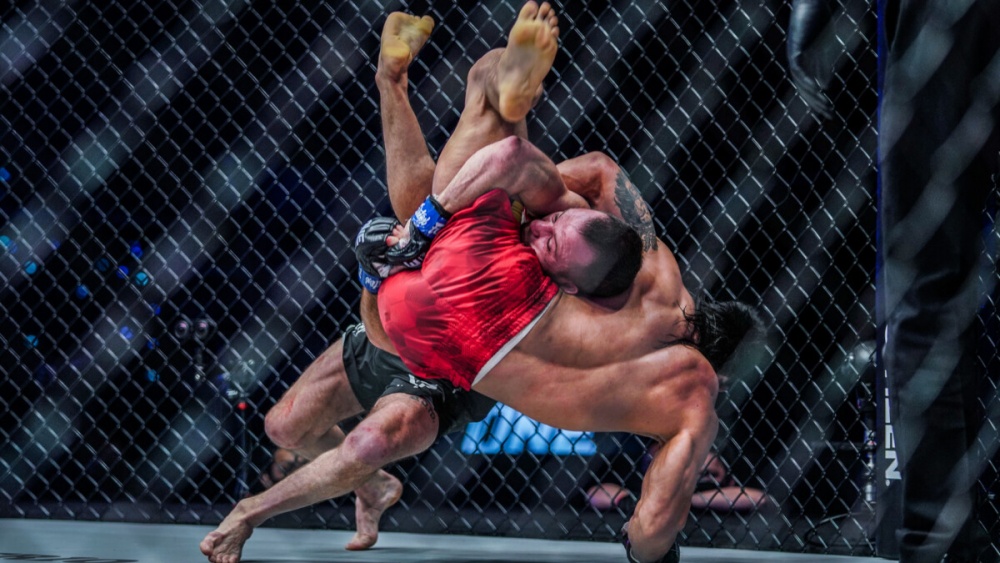
In MMA, striking and grappling exist on a constant loop of threat and opportunity. A fighter who feints a takedown makes their opponent drop their guard or brace for contact, opening the door for head strikes or uppercuts. Conversely, once the opponent starts reacting too heavily to feints, the real takedown becomes easier to land.
This balance between real and fake creates a mental edge. Fighters like Georges St-Pierre, Khabib Nurmagomedov, and Henry Cejudo used takedown feints to control the pace, forcing opponents to defend even when no real shot was coming.
Common Types Of Takedown Feints
1) Level Change Feint
This is the most basic and effective form. The fighter dips their hips as if to shoot for a double leg, making the opponent lower their guard. The real follow-up can be a hook, an uppercut, or a kick once the opponent’s focus drops.
2) Step-In Feint
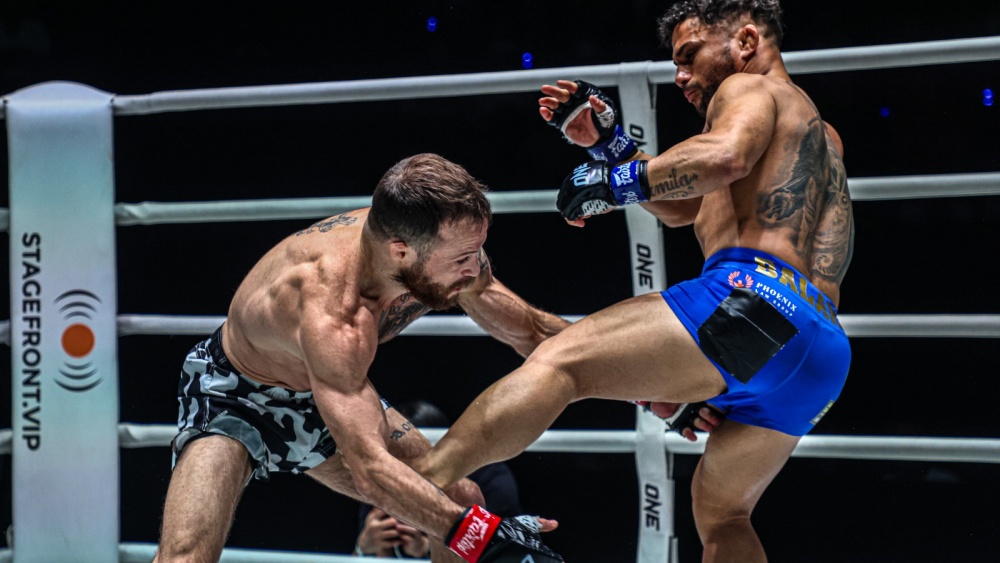
By stepping forward aggressively, the fighter simulates a takedown entry and closes distance without committing. This draws the opponent’s attention to the lower body, setting up overhands or head kicks.
3) Cage Pressure Feint
When fighting near the cage, fighters often use shoulder movement or quick steps to make the opponent think they are about to shoot. The moment the opponent braces backward, the fighter transitions into strikes or clinch control.
The Relationship Between Feints And Striking
Takedown feints are inseparable from striking strategy. A fighter who mixes both constantly is able to keep constant pressure on his opponent, leaving them on the edge with a strong mental stand-off.
For example, a fighter might throw a jab–cross combination, then feint a takedown immediately after. The opponent, worried about being taken down, hesitates to counter, allowing the fighter to reset safely or attack again.
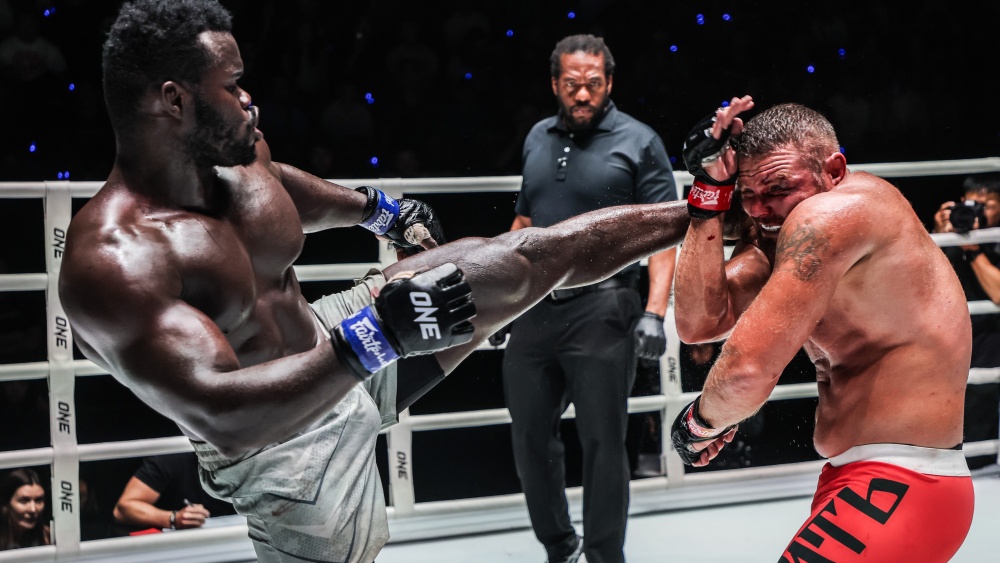
Similarly, feints can disguise heavy strikes. Fighters like Daniel Cormier have used fake level changes to land powerful uppercuts or overhands, knowing their opponents expected a shot to the legs.
How To Train Takedown Feints
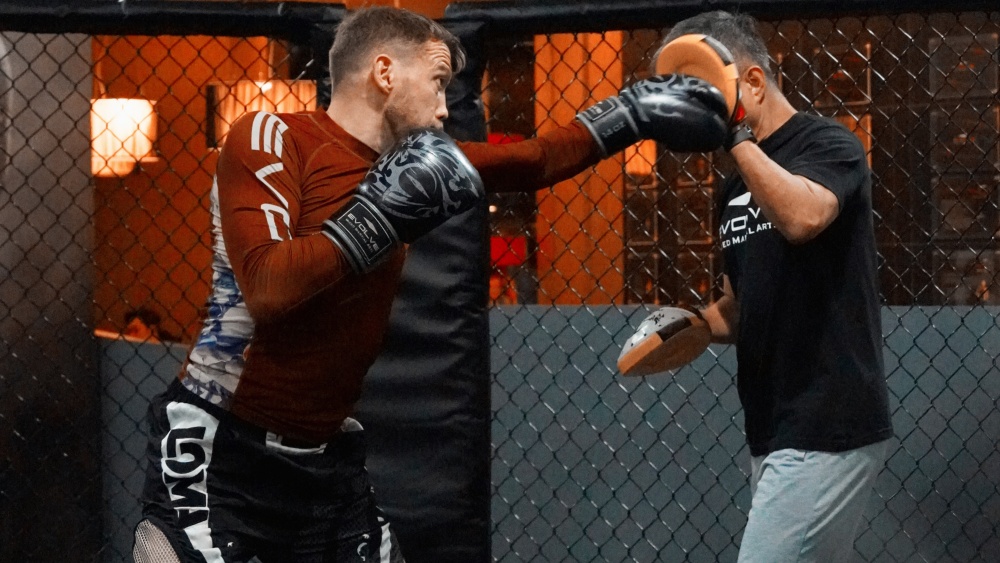
- Drill With Intent: Work on short, sharp level changes in front of a partner without committing. Focus on timing and realism.
- Mix Them With Combinations: Blend feints into striking drills, such as jab-cross-level change-hook.
- Live Sparring: Practice setting up feints during light sparring rounds to understand how opponents react.
- Watch Fight Replays: Study fighters known for blending wrestling and striking seamlessly, such as GSP, Demetrious Johnson, or Kamaru Usman.
The more a fighter builds confidence in their feints, the more they can dictate the rhythm of a match.
FAQs On Takedown Feints
Q: What Is A Takedown Feint?
A: It’s essentially a movement that imitates a takedown attempt to draw a defensive reaction, creating openings for strikes or real takedowns.
Q: Why Are Takedown Feints Effective?
A: They force opponents to hesitate or overreact, breaking their rhythm and opening striking/grappling opportunities.
Q: How Do Takedown Feints Help Strikers?
A: They make strikers more unpredictable. By faking a takedown threat, even pure strikers can open up safer angles for punches or kicks.
Conclusion
The takedown feint is a subtle but game-changing technique in modern MMA. It blurs the line between striking and grappling, turning combat into a psychological battle. Fighters who master this art can make opponents second-guess every move, opening endless possibilities for control and counterattack.
In the MMA, deception is often as powerful as force, and few techniques embody that truth better than the takedown feint.
You may also like:
Mark Kerr And The Cinematic Resurrection Of MMA’s Smashing Machine