Summary
While BJJ is often known for ground fighting, having a reliable takedown is essential for controlling where the match begins. The fireman’s carry is one of the most dynamic takedowns available because it uses timing and leverage rather than strength.
It allows you to load your opponent across your shoulders and bring them to the ground with control. When timed well, the fireman’s carry helps you counter aggressive pressure, take the fight to the mat, and transition directly into dominant positions. The technique blends elements of wrestling with BJJ strategy, making it useful in both grappling and competition settings.
This guide explains how the technique works, when to use it, and how to train it safely in both Gi and No-Gi BJJ.
Key Takeaways
- The fireman’s carry is a wrestling-based takedown that works well in BJJ when your opponent commits forward pressure or reaches aggressively for grips.
- Proper level changes, arm control, and shoulder positioning are the key elements that make the technique smooth and efficient.
- The fireman’s carry transitions naturally into top positions such as side control or directly into passing opportunities, making it a powerful tool for competitors and beginners alike.
What Is The Fireman’s Carry
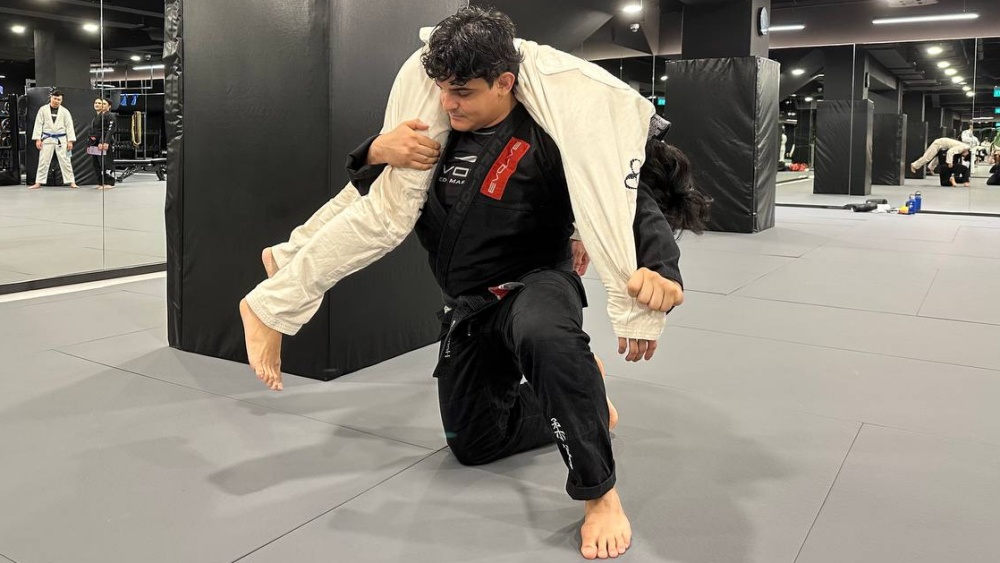
The fireman’s carry is a shoulder-based takedown where you drop under your opponent, load their weight onto your shoulders, and rotate them down to the mat. It usually begins with grabbing an arm and creating an angle as you lower your level.
The motion resembles scooping the opponent onto your back and guiding them to the ground with control.
When To Use The Fireman’s Carry
The fireman’s carry works best when:
- Your opponent grabs your arm or reaches for a collar grip.
- They push forward aggressively.
- Their weight is committed to one side.
- You want to counter from an upright tie-up or grip exchange.
Because the motion is fast and unexpected, the technique catches many opponents off guard.
Step By Step Breakdown Of The Fireman’s Carry
- Secure The Arm: Begin by gripping your opponent’s wrist, sleeve, or triceps. You need to control their arm so they cannot pull away during the entry.
- Level Change: Drop your hips by bending your knees and lowering your torso. Your head and shoulders should dip under the line of your opponent’s arm.
- Step In And Create An Angle: Step inside with your lead leg and turn slightly to create space. Your opponent should be pulled forward, making their weight easier to lift.
- Scoop With Your Shoulder: Slide your shoulder under their armpit while pulling their arm across your body. This helps load their weight onto your back.
- Lift And Rotate: Use your legs to lift slightly as you rotate to the side. The rotation is what sends your opponent over your shoulders and down to the mat.
- Follow To Control The Landing: Finish by maintaining grip control and landing in a dominant position, such as side control, north south, or directly into guard passing.
Common Mistakes
- Dropping Straight Down: Going directly downward without stepping in makes the technique heavy and awkward.
- Trying To Muscle The Lift: The power comes from leg drive and rotation, not the upper body strength.
- Not Controlling The Arm: If the opponent frees their arm, they can escape or counter easily.
- Poor Timing: Waiting too long to enter gives your opponent time to react.
- Letting Go Too Early: Maintaining grip helps you land in a strong position instead of scrambling.
Fireman’s Carry In Gi vs No-Gi
In Gi
- Sleeve and collar grips make entries cleaner.
- The sleeve grip helps pull the opponent forward.
- Slower pace allows for more controlled setups.
In No-Gi
- Arm drags and wrist control create openings.
- Level changes must be faster.
- Timing becomes more important because grips can slip.
Both variations work effectively as long as the fundamentals are consistent.
How To Train The Fireman’s Carry
1) Entry Repetition Drills
Practice the level change and step in repeatedly without finishing the throw. This builds muscle memory.
2) Training Partner Resistance Drills
Start slow and increase resistance as you improve. This helps with timing and sensitivity.
3) Dummy Drills
Throwing a grappling dummy helps you build confidence in the lifting motion.
4) Light Sparring
Use the technique at reduced speed to refine setups and angles.
Variations Of The Fireman’s Carry
- Arm Drag To Fireman’s Carry for quick entries
- Collar Grip Fireman’s Carry in Gi Situations
- Single Leg Fireman’s Carry Hybrid used in wrestling transitions
- Snap Down To Fireman’s Carry to punish forward pressure
These variations keep the technique versatile across different opponents and scenarios.
FAQs On The Fireman Carry
Q: Can Smaller Grapplers Use The Fireman’s Carry?
A: Absolutely. The technique relies on timing and leverage, not size.
Q: Is The Fireman’s Carry Allowed In All BJJ Competitions?
A: Yes, it is legal in both Gi and No-Gi for adults. However, some youth divisions may restrict certain throws.
Q: What Position Do I Land In After The Takedown?
A: Most commonly side control, north-south, or a passing transition.
Q: Does The Fireman’s Carry Work In MMA?
A: Yes. Wrestlers use it in MMA, although fighters must finish safely to avoid exposing their neck in scrambles.
Final Thoughts
The fireman’s carry is one of the most effective takedowns you can add to your BJJ arsenal. It blends timing, leverage, and smooth body mechanics to bring your opponent to the ground with control. Whether you train Gi, No-Gi, or compete in grappling events, mastering this technique gives you a reliable way to counter pressure and transition instantly into dominant positions. With consistent drilling and proper timing, the fireman’s carry becomes a powerful tool for grapplers of all levels.
You may also like:
The Art Of BJJ Trips And How They Help You Control Opponents