Summary
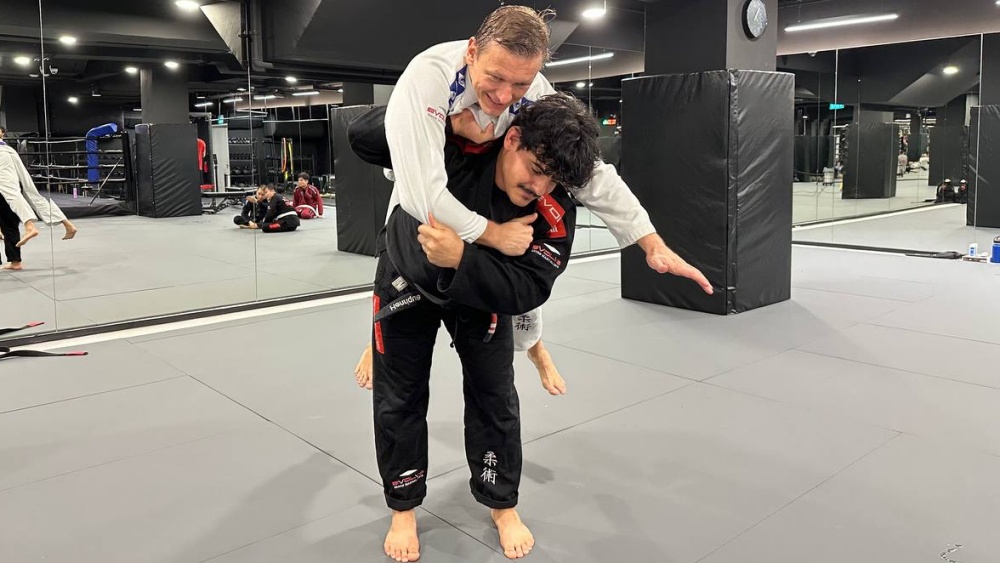
The Seoi Nage, also known as the shoulder throw, is one of Judo’s most iconic and widely practiced techniques. The name literally translates to “shoulder throw” (Seoi meaning “to carry on the back,” and Nage meaning “throw”).
It’s a move that embodies the art of Judo: using leverage, timing, and balance instead of brute strength. Though born in Judo, the Seoi Nage has found its place in modern grappling arts like Brazilian Jiu-Jitsu (BJJ) and even MMA, proving its effectiveness in both sport and self-defense.
The Origins Of The Seoi Nage
The Seoi Nage has roots tracing back to Jujutsu techniques refined during the late 19th century by Judo founder Jigoro Kano. It was designed to show how a smaller practitioner could overcome a larger opponent using leverage and momentum.
This throw quickly became one of Judo’s cornerstone techniques because it perfectly captures the principle of “maximum efficiency with minimum effort.” Over time, variations of the Seoi Nage have emerged across grappling systems, making it one of the most universally recognized throws in martial arts.
How The Seoi Nage Works
At its core, the Seoi Nage relies on three key principles: grip, entry, and rotation.
- The Grip: The throw typically begins with a collar-and-sleeve or overhook grip. The hands are used to control your opponent’s balance and upper body.
- The Entry (Tsukuri): You step in and rotate your body under your opponent’s arm, aligning your hips beneath their center of gravity.
- The Throw (Kake): You pull your opponent forward and lift with your legs and back, using your shoulder and hip rotation to project them over you and onto the mat.
When done correctly, the throw looks effortless, and your opponent’s weight moves naturally over your body in one smooth motion.
Different Variations Of Seoi Nage
While the classic version remains popular, several variations allow practitioners to adapt the throw to different situations and grips:
- Ippon Seoi Nage: The one-arm shoulder throw; the most common form in Judo and MMA.
- Morote Seoi Nage: The two-arm version, which offers more control and is often taught to beginners.
- Drop Seoi Nage (Seoi Otoshi): A lower, faster variation where the thrower drops to their knees to gain leverage.
- Reverse Seoi Nage: A modern, spinning adaptation often seen in competition.
Each version has unique applications depending on your opponent’s stance and your preferred style.
Utilizing The Seoi Nage For Brazilian Jiu-Jitsu
In BJJ, the Seoi Nage is not as common as in Judo, mainly because most BJJ matches start with seated guard pulls or grip-fighting instead of extended standing exchanges. However, it still plays a valuable role in certain scenarios:
- Gi Competitions: The Seoi Nage can be used effectively when opponents engage in upright gripping exchanges.
- Self-Defense Scenarios: It provides a fast, controlled way to take someone to the ground while maintaining dominant top position.
- Takedown Training: BJJ practitioners use the Seoi Nage to diversify their stand-up game, improving their understanding of leverage and control.
Many BJJ athletes cross-train in Judo precisely because throws like the Seoi Nage teach how to blend timing, balance, and body mechanics, ultimately skills that translate directly into sweeps and guard passes.
Common Mistakes And How To Fix Them
Even though the Seoi Nage appears simple, it requires precision. That being said, here are a few common errors practitioners make:
- Bending at the waist instead of the knees which reduces power and stability.
- Failing to break posture before entry allows your opponent to resist or counter.
- Misaligned hips, leading to poor leverage and incomplete throws.
- Pulling with the arms instead of using body rotation which breaks flow and control.
Drilling the movement slowly and paying attention to body positioning ensures a smoother, more efficient throw.
Frequently Asked Questions (FAQ) About The Seoi Nage
Q: What Does “Seoi Nage” Mean In English?
A: It translates to “shoulder throw,” referring to how the opponent is lifted and projected over the shoulder.
Q: Is Seoi Nage Legal In Brazilian Jiu-Jitsu Competitions?
A: Yes, it is legal in Gi divisions as long as grips and execution meet safety guidelines. However, practitioners should adapt their technique to the rules of their competition.
Q: Can The Seoi Nage Be Used In No-Gi BJJ Or MMA?
A: Absolutely. In No-Gi, fighters often modify grips, using underhooks, overhooks, or wrist control instead of the collar and sleeve. The same mechanics still apply.
Q: What Is The Difference Between Ippon Seoi Nage And Morote Seoi Nage?
A: The Ippon Seoi Nage uses one arm to control the opponent’s sleeve, while the Morote Seoi Nage uses both hands for greater leverage and control.
Q: How Can Beginners Safely Practice Seoi Nage?
A: Start slowly with a compliant training partner, focus on footwork and hip placement, and practice proper breakfalls to prevent any setbacks during the throw.
Final Thoughts
The Seoi Nage is a timeless technique that bridges the worlds of Judo and Brazilian Jiu-Jitsu. Its beauty lies in efficiency, the ability to use perfect timing and leverage to overcome raw strength.
For Judo practitioners, it’s a cornerstone of throwing technique. For BJJ athletes, it offers a valuable lesson in movement, control, and transitions from standing to ground.
Mastering the Seoi Nage reminds every martial artist of a universal truth: that skill and precision will always outlast brute force.
You may also like:
Mastering The Penetration Step For Better Takedowns In MMA And BJJ