Summary
In Muay Thai, a powerful kick means nothing if it never lands. Speed is the factor that turns a technically sound roundhouse into a fight-ending weapon, it reduces the opponent’s reaction time, increases the force of impact through acceleration, and allows you to string together combinations that overwhelm even the most prepared defenders. This article breaks down five proven methods for improving your kicking speed: drilling technique at slow speed to build clean mechanics, strengthening your core to support explosive rotation, using resistance training to condition your legs, developing fast-twitch muscle fibers through targeted exercises, and testing your progress with timed high-volume kick sets. Each method includes specific drills and training approaches you can apply immediately. As Muay Thai World Champion and Evolve MMA instructor Chaowalit Jocky Gym explains, “Speed does not come from trying to kick faster. It comes from removing everything that slows you down, bad mechanics, tight hips, weak core, poor balance. Fix those and the speed is already there.”
Key Takeaways
- Perfect technique is the foundation of kicking speed. Practicing kicks in slow motion refines your mechanics so that when you increase speed, your form holds together and power transfers efficiently.
- Core strength directly affects how fast and explosively you can rotate your hips. Without a strong core, your balance breaks down and your kicks lose both speed and accuracy.
- Resistance training conditions your legs to move faster under load. Ankle weights and band work build the endurance and strength that translate to quicker, sharper kicks once the resistance is removed.
- Fast-twitch muscle fiber development is essential for explosive speed. Plyometrics, sprints, and agility drills train the specific muscle fibers responsible for rapid, powerful movements.
- Timed high-volume kick sets are the ultimate speed test. Regularly pushing your kick count within a fixed time window builds both speed and the conditioning to maintain it.
Why Kicking Speed Matters In Muay Thai
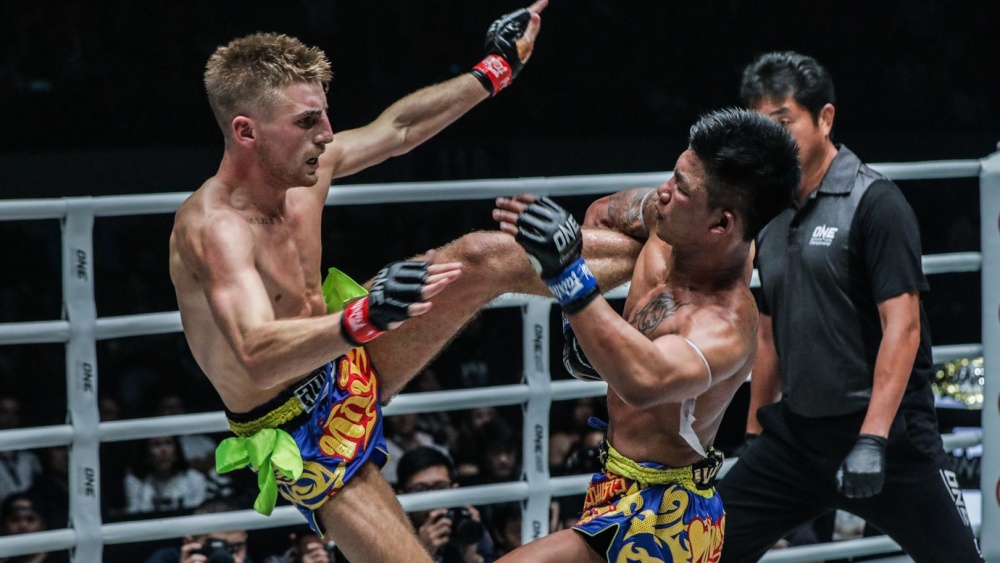
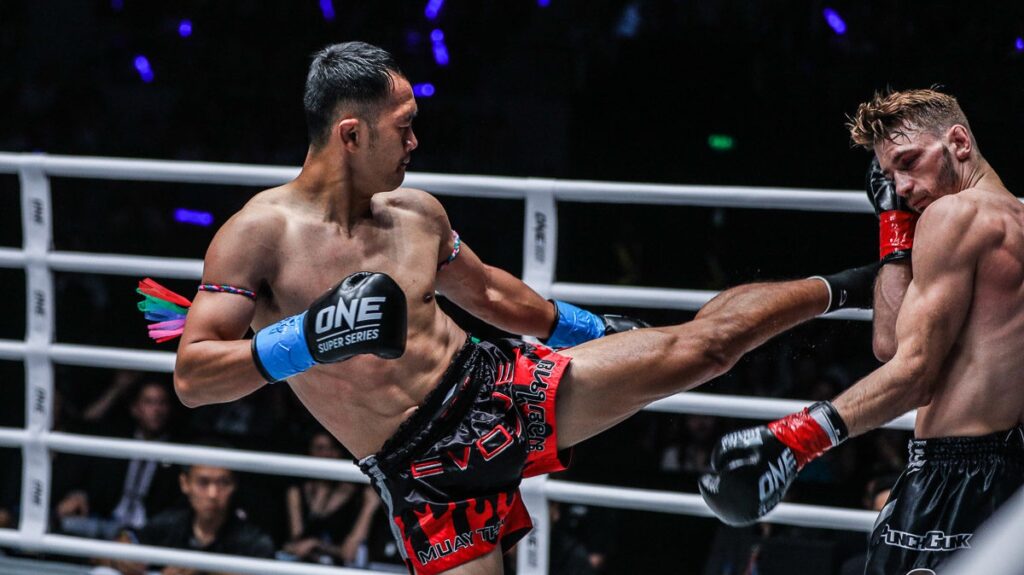
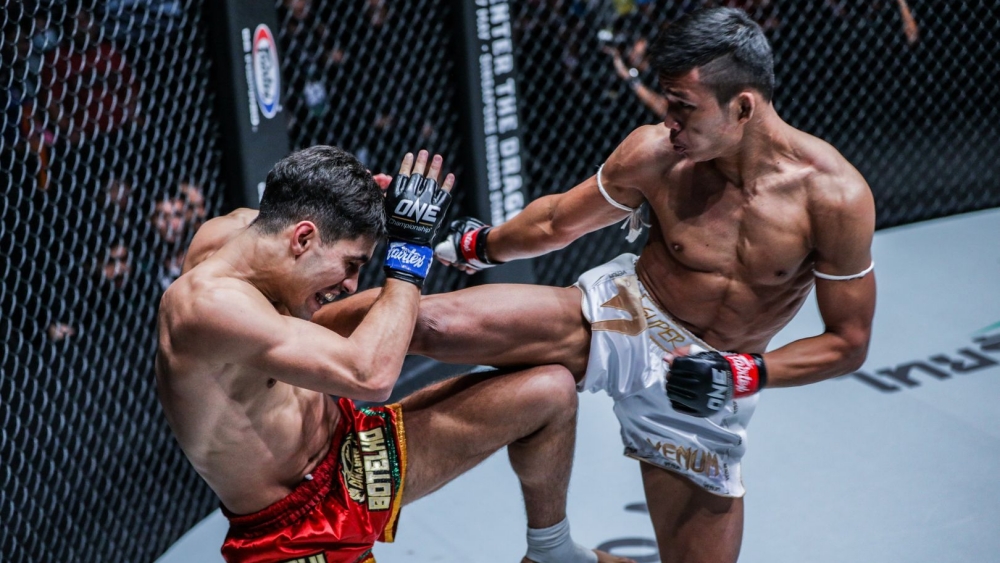
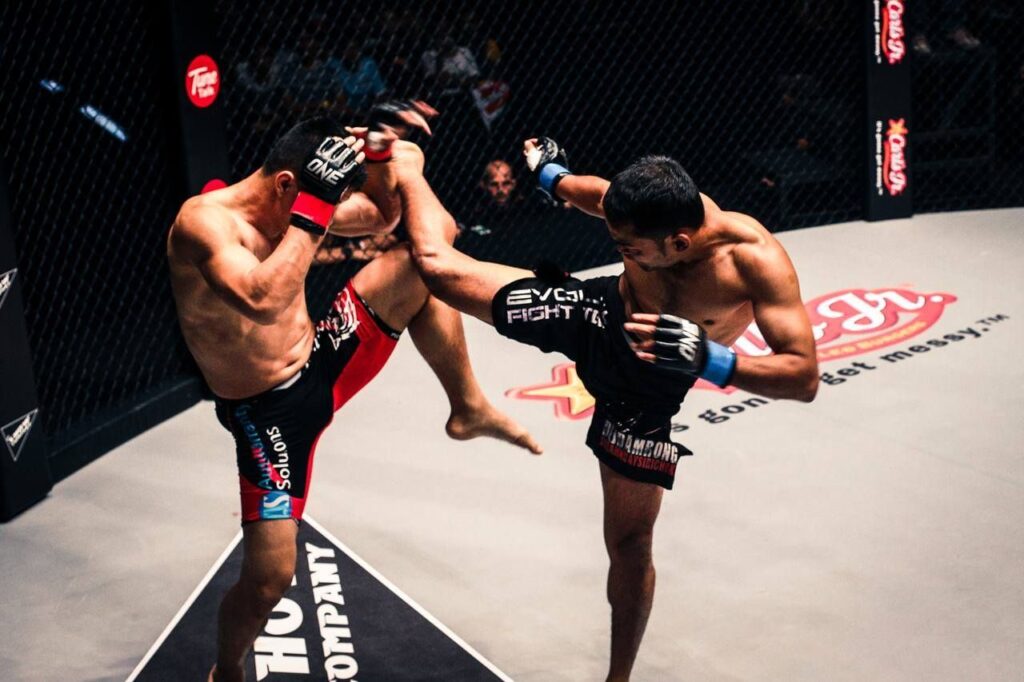
In Muay Thai, the roundhouse kick is one of the most devastating techniques available. It can end a fight at any moment — cracking ribs, dropping opponents with a shot to the head, or systematically destroying the legs over the course of a bout. But even the most powerful kick is useless if the opponent sees it coming early enough to check, evade, or counter.
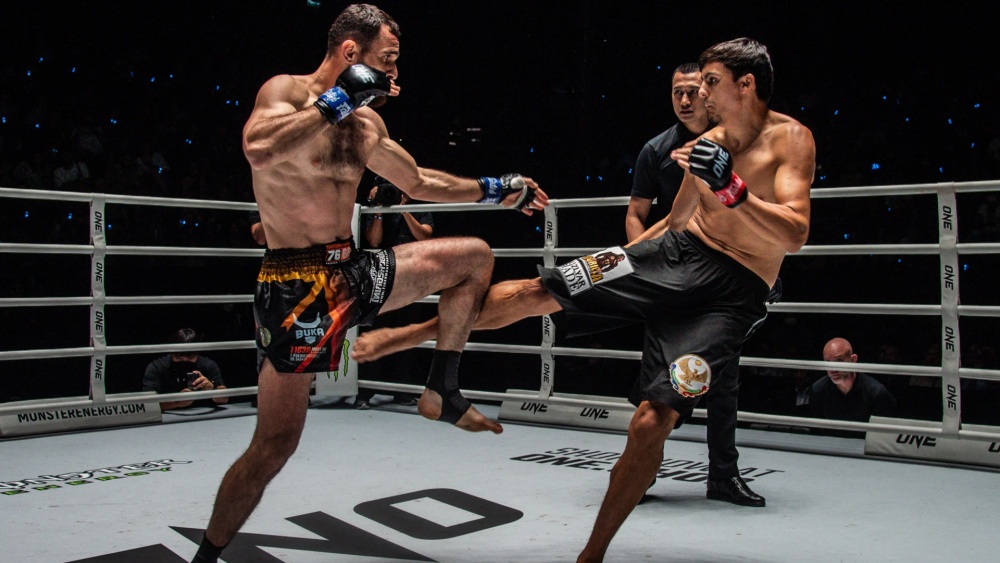
Speed is what closes that gap. A fast kick reduces the window your opponent has to react, which means it lands more cleanly, scores more reliably, and carries greater effective impact because the opponent is not braced for it. Speed also allows you to throw multiple kicks in rapid succession — the kind of high-volume kicking sets that are a hallmark of Muay Thai training and competition.
Improving your kicking speed is not about swinging your leg harder or faster through brute effort. It is about building the technical foundation, physical conditioning, and neuromuscular development that allow your body to produce fast, clean kicks without wasted movement or energy.
1) Practice Slow To Kick Fast

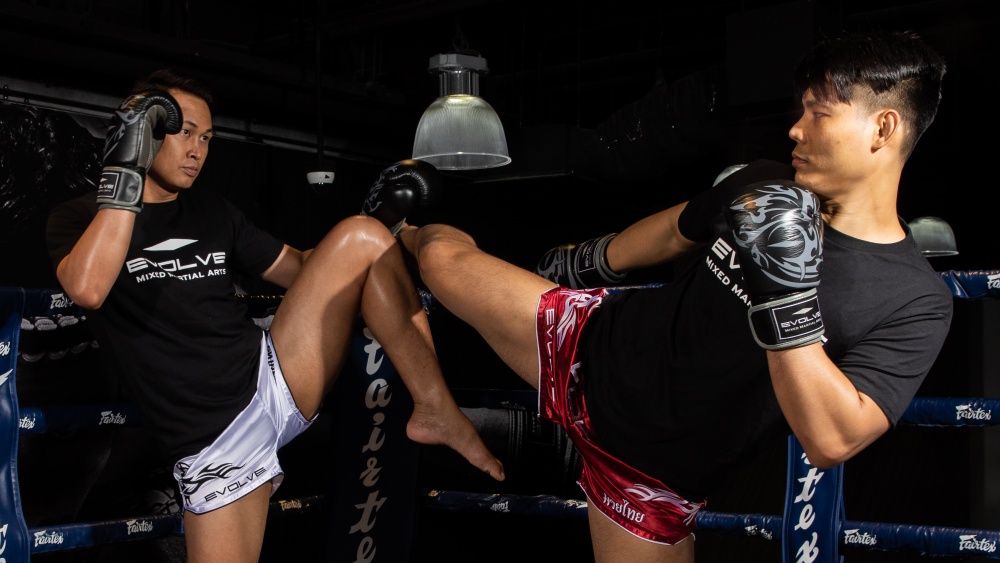
The single most important factor in kicking speed is technique. A mechanically clean kick, with proper hip rotation, correct pivot on the standing foot, and a relaxed chambering motion, travels faster than a forced, muscled kick because it eliminates unnecessary movement and tension.
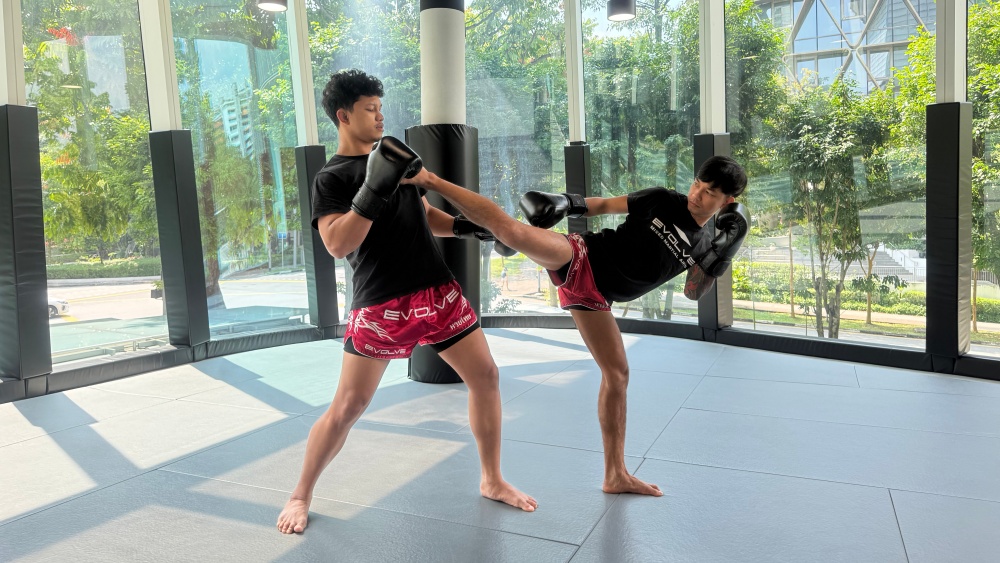
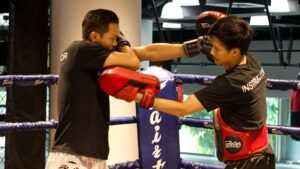
The best way to refine this mechanics is to practice your kicks in slow motion. Shadow your roundhouse kick at quarter speed, paying attention to every phase of the movement: the initial weight shift to your lead leg, the pivot of your standing foot, the rotation of your hips, the whip of your shin through the target, and the recovery back to your stance. At slow speed, you can identify and correct flaws, a standing foot that does not pivot far enough, hips that stop rotating before the kick is complete, or a shin that angles incorrectly.
Slow-motion kicking also develops your slow-twitch muscle fibers, which are responsible for endurance and sustained effort. This builds the muscular stamina you need to maintain good kicking form across long rounds and multiple sets of speed kicks. Aim for dedicated slow-kick rounds in your shadowboxing, two to three minutes of nothing but slow, deliberate kicks on each side. The patience required feels counterintuitive when your goal is speed, but the payoff in technique quality is significant.
2) Strengthen Your Core For Explosive Rotation

Every powerful, fast kick in Muay Thai starts with the hips, and the hips are controlled by the core. Without a strong core, you cannot maintain balance during the rotational movement a kick demands, and you cannot transfer force efficiently from your lower body through your torso and into the target.
A weak core also causes compensations, fighters lean too far back, drop their guard during kicks, or fail to snap back to their stance after the kick lands. All of these slow the kick down and leave you vulnerable to counters.
Core training for kicking speed should focus on rotational strength and stability rather than just flexion (sit-ups). Exercises that directly support kicking mechanics include medicine ball rotational throws, Russian twists, hanging leg raises, plank variations with rotation, and cable woodchops. These movements train the obliques and deep stabilizers that govern hip rotation, the same muscles that drive your roundhouse kick.
Incorporate core work into every training session, even if it is just ten minutes at the end. Consistency matters more than intensity here. Over weeks of regular core training, you will notice that your kicks feel more connected, the rotation is smoother, the balance is more stable, and the speed improves as a direct result.
3) Train With Resistance To Build Leg Speed

Adding resistance to your kicking training conditions your legs to work harder, and when the resistance is removed, the result is faster, lighter movement. Ankle weights and resistance bands are the most practical tools for this purpose.
With ankle weights, the key rule is to never kick at full speed or power while wearing them. The added weight places stress on the knee and ankle joints, and explosive movements under load can cause injury. Instead, wear ankle weights during slow technical kicking, light shadowboxing, and general movement throughout your day. Practice your kicks at half speed with the weights on, focusing on clean mechanics under the added resistance. After several weeks of training with weights, remove them and perform the same kicks, the difference in speed and lightness is immediately noticeable.
Resistance bands offer a different training stimulus. Attach a band around your kicking ankle and anchor it behind you, then practice driving your kick through the band’s resistance. This specifically targets the hip flexors and quads in the exact movement pattern of a roundhouse kick, building functional strength that transfers directly to speed. Perform sets of 10–15 slow, controlled kicks against the band on each side, focusing on full hip rotation.
4) Develop Your Fast Twitch Muscle Fibers

Your fast-twitch muscle fibers are responsible for quick, explosive movements — the exact type of muscular effort required for fast kicks. Developing these fibers increases the rate at which your muscles contract, which directly improves the speed at which your leg moves through the kicking motion.
The most effective exercises for fast-twitch development involve rapid, powerful movements that demand maximum effort in short bursts. For Muay Thai kicking speed, choose exercises that involve lower-body explosiveness and coordinate movement rather than isolating single muscles.
Sprints are one of the best options, 20- to 40-meter bursts at maximum effort with full recovery between sets. Plyometric exercises like box jumps, jump squats, and bounding drills train the explosive hip and leg extension that mirrors kicking mechanics. Agility ladder drills develop foot speed, coordination, and the fast ground-contact patterns that support quick pivoting, the same pivoting your standing foot must perform during a fast kick.
Circuit training that combines these exercises with short rest periods builds both the explosive power and the conditioning to maintain it under fatigue. Training at Evolve MMA in Singapore, where World Champion Muay Thai instructors integrate conditioning and technical work into the same sessions, is one way to develop these attributes in a fight-specific context rather than in isolation.
5) Test Your Speed With Timed High-Volume Kicks

Once you have built the technical foundation and physical conditioning, timed high-volume kick sets are the ultimate test and training method for kicking speed.
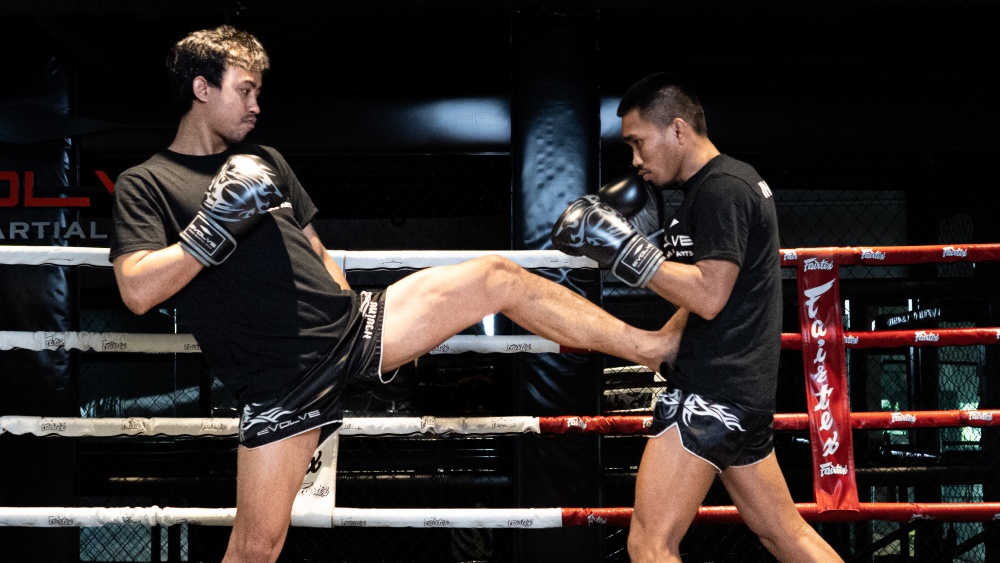
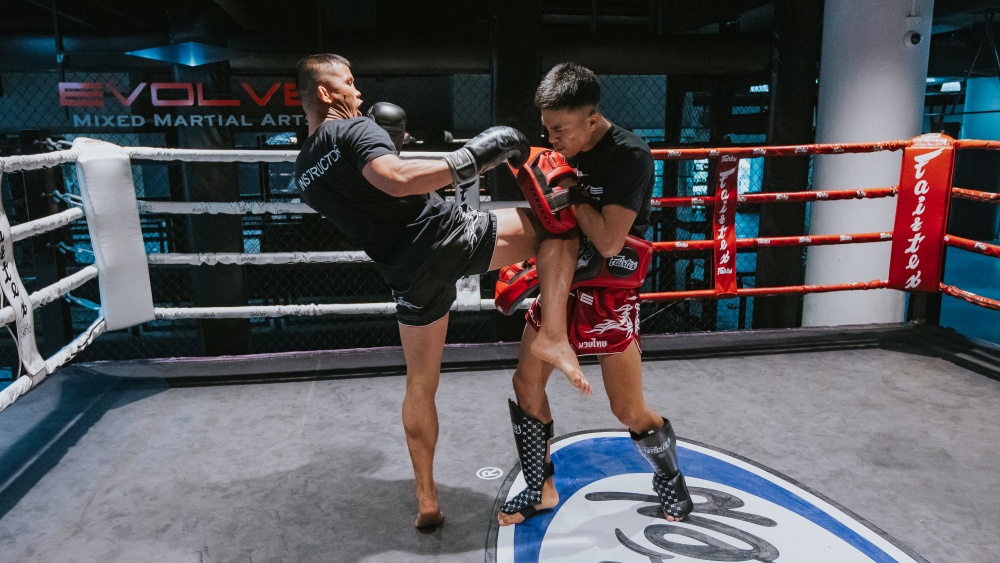
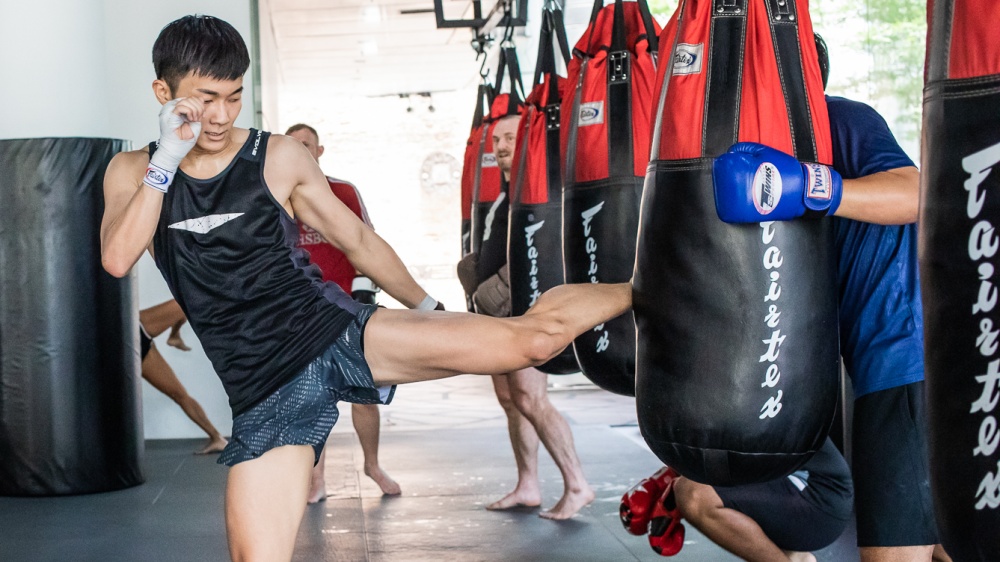
The drill is straightforward: set a timer for 20 to 30 seconds and throw as many clean roundhouse kicks as you can within that window, either on pads or the heavy bag. Count your kicks on the first attempt to establish a baseline. The next session, aim to beat that number. This process of incremental improvement, adding one or two more kicks per set over time — is one of the most effective ways to develop sustainable kicking speed.
The emphasis must be on clean kicks. Speed without technique is just flailing, the goal is fast kicks that maintain proper form, hip rotation, and balance. If your technique deteriorates as you speed up, slow down slightly and rebuild. Quality always comes before quantity.
As you improve, extend the time window to 45 seconds or one minute, or add sets with shorter rest periods between them. This not only builds speed but also the conditioning to maintain that speed in later rounds when fatigue is setting in, exactly the scenario you face in competition.
Conclusion
Improving your kicking speed in Muay Thai is a process that touches every aspect of your training — technique, strength, conditioning, and neuromuscular development. There are no shortcuts. Slow, deliberate practice builds the clean mechanics that eliminate wasted movement. Core strength and resistance training give your body the physical capacity to rotate faster and recover quicker. Fast-twitch fiber development trains your muscles to fire explosively. And timed high-volume sets put it all together under pressure. Be patient with the process, stay consistent, and the results will come.
“The fastest kickers in Muay Thai are not the ones who try to rush. They are the ones who have practiced so many thousands of kicks that their body knows the path perfectly. When the technique is automatic, the speed takes care of itself.” — Chaowalit Jocky Gym, Muay Thai World Champion & Instructor at Evolve MMA
Frequently Asked Questions About Improving Kicking Speed In Muay Thai
Q: How long does it take to noticeably improve kicking speed?
A: With consistent, focused training three to four times per week, most practitioners begin to notice meaningful improvements in kicking speed within four to six weeks. Technique refinement often produces the fastest early gains, while conditioning and fast-twitch development deliver results over a longer period.
Q: Should I focus on speed or power first?
A: Technique first, then speed, then power. Clean mechanics are the foundation for both, a technically sound kick delivered at speed will naturally carry significant power because the force transfers efficiently. Trying to kick hard before you can kick properly leads to slow, telegraphed strikes.
Q: Can stretching improve my kicking speed?
A: Yes. Flexibility, particularly in the hips, hamstrings, and hip flexors, allows a greater range of motion during kicks, which reduces resistance and allows the leg to travel faster. Dynamic stretching before training and static stretching after training both contribute to improved kicking flexibility over time.
Q: How many kicks should I throw per training session?
A: There is no single number, but many Thai fighters throw several hundred kicks per session across pad work, bag work, and sparring. For speed-specific training, start with three to five timed sets of 20 to 30 seconds and build from there. Quality is always more important than volume.
Q: Is the heavy bag or pads better for speed kick training?
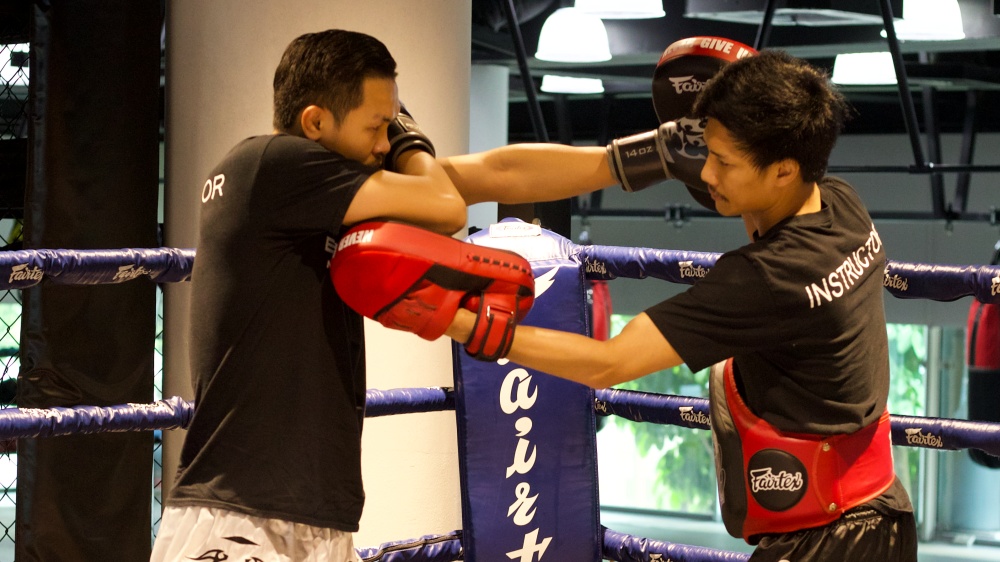
A: Both serve different purposes. The heavy bag allows you to train at your own pace and build conditioning. Pads are better for developing timing, accuracy, and speed under the guidance of a coach who can adjust angles and call combinations. Ideally, you train speed kicks on both.
Q: Do ankle weights really help with kicking speed?
A: Yes, when used correctly. Ankle weights build leg endurance and strength through added resistance during slow technical work. The key is to never kick at full speed or power with weights on, doing so risks joint injury. Use them for slow kicks and general movement, then remove them to feel the speed benefits.
Q: Will sprinting improve my Muay Thai kicks?
A: Yes. Sprints develop the fast-twitch muscle fibers responsible for explosive movements, including kicks. Short bursts of maximum effort sprinting — 20 to 40 meters — train the same type of rapid muscle contraction your legs need during fast kicks.
Q: How do I maintain kicking speed when I am tired?
A: Conditioning is the answer. Timed high-volume kick sets with short rest periods specifically train your ability to maintain speed under fatigue. Core strength also plays a role, when your core is strong, your technique holds together longer even as your legs tire, which preserves speed.