Summary
The double leg takedown is one of the most fundamental and effective techniques in not just grappling disciplines like BJJ and wrestling but also mixed martial arts. By driving forward and controlling both legs, a fighter can bring their opponent to the ground while maintaining a strong position. Although it may look straightforward, executing a successful double leg takedown requires proper timing, level changes, and body positioning. This guide explains how the double leg takedown works, why it is so effective, and how beginners can start learning this essential grappling technique.
Key Takeaways
- The double leg takedown involves attacking both of an opponent’s legs to bring them to the ground. It is widely used in wrestling and MMA because of its effectiveness and reliability.
- Proper technique is essential for a successful takedown. Fighters must focus on level changes, penetration steps, and driving through the opponent while maintaining balance and control.
- Timing and setup play a major role in executing the double leg. Fighters often use feints, strikes, or hand fighting to create openings before shooting for the takedown.
- The double leg takedown can lead to dominant positions on the ground. Securing top control after the takedown allows fighters to maintain pressure and transition into further attacks.
What Is The Double Leg Takedown?
The double leg, also known as morote gari in Judo, is one of the most utilized takedown techniques in grappling. It can be traced back to ancient times. In any form of grappling, the match almost always starts standing up. It is critical for every grappler to know at least one takedown and become proficient with it, giving them the tools to bring the fight to the ground effectively.
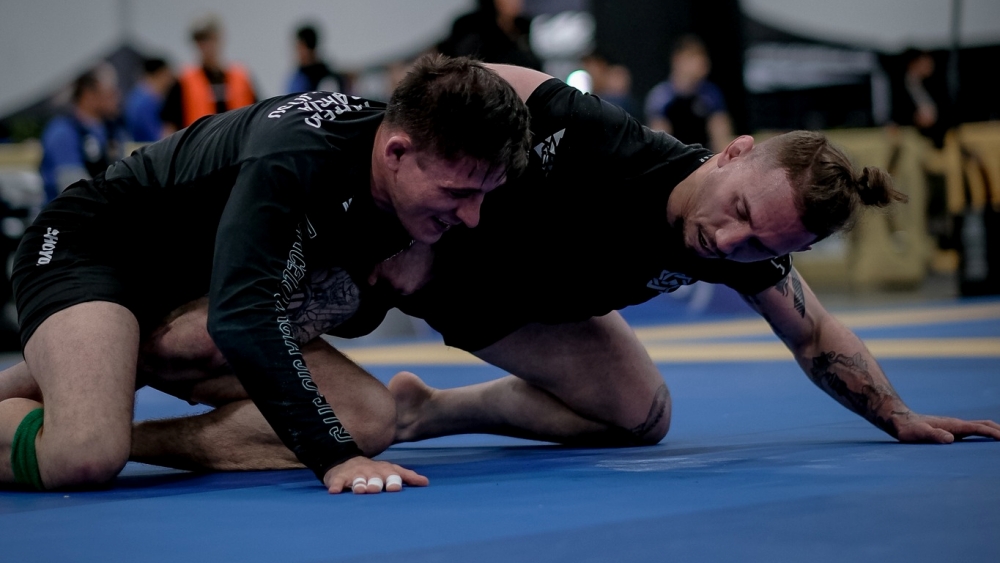
The double leg is a takedown where you grab the opponent’s legs while pushing their upper body forward, forcing them to fall back. Easier said than done – proper mechanics must be performed to become efficient with this takedown.
How To Perform The Double Leg Takedown
The double leg takedown can be applied in different ways. Although using power with lousy technique can sometimes be enough to finish the double leg, it is critical, especially for inexperienced grapplers, to rely on actual technique rather than athleticism. Remember that technique is essential, especially when matched against an experienced opponent. Below are different ways to perform the double leg takedown.
Basic Double Leg
To perform the basic double leg, start with a staggered stance. This means to have one leg forward, and your lead hand grabs behind the back of the opponent’s neck (collar tie). Your other hand holds the opponent’s tricep while blocking their bicep. The first move is to pull the opponent’s head down. Their natural reaction is to posture up.
When this happens, shoot in by changing your level and stepping your lead leg forward (penetration step) while your rear leg follows through to cover the distance, landing outside and over the opponent’s leg. Place your hands behind their knees, and once in this position, keep your posture up and head high. Drag the opponent to the side while your head pushes them toward the direction.
Blast Double Leg
The blast double leg starts with a low-level stance where you’re lower or equivalent to the opponent’s head position. Standing high opens you up to potential shots from the opponent. Having a low stance enables you to get into offense and defense quickly. Your lead hand posts on the opponent’s shoulder, and your rear hand stays low, ready to defend. Posting knocks the opponent back, keeping them uncomfortable and off-balance.
The second step is to club the opponent’s head. Use your lead hand as you club the opponent’s head, and utilize your heavy hands to keep the opponent out of position. It is difficult to hit a clean double leg against an opponent with a staggered stance. Therefore you have to force the opponent to square their stance or keep their feet close together.
Next is to circle to get the opponent out of position. As you pull the opponent’s head down and circle, release your lead hand (collar tie) from grabbing their head. The opponent’s posture will come up as you remove the heavy pull while squaring their stance. Quickly lower your level and prepare for the penetration step by driving forward using the explosiveness from your back foot to get high on the opponent’s hips.
Keep in mind to keep your chest up, hips under, and your rear foot posted outside the opponent’s leg. Lock your hands behind the opponent’s knee and use your arms to pull it while your head drives across their body as your legs step up to drive to the side.
Double Leg To Back Control
From the stand up, drop your lead knee to the mat and shoot for the double leg. After landing your knee on the mat, keep your head beside the opponent’s stomach. This is an important principle to follow, as where the head goes, the body follows. Keeping your head up prevents you from getting guillotined. Use your hands to grab near the opponent’s hamstrings. Instead of finishing the double leg typically, apply the body lock on the opponent’s waist. After setting the body lock, stand up and spin behind the opponent.
Double Leg With Ankle Trip
Starting from the staggered wrestling stance, change levels and step with your rear leg forward outside. As your back leg lands on the mat, drive forward and grab behind the opponent’s knee using your hands while your lead leg steps ahead to apply the inside ankle trip.
Common Takedown Mistakes
While the double leg is uncomplicated to perform, here are the common mistakes beginners make when doing the takedown.
1) Shooting Too Far
Always assume the opponent knows how to defend and sprawl when shooting for a takedown. This way, you will learn to rely on your technique rather than brute strength. A common practice when shooting for takedowns is to use your hands to measure the distance between you and the opponent. Similar to how boxers use the jab in boxing, grapplers use their hands to post on the opponent’s shoulder to measure if the distance is close enough to be covered by the takedown.
2) Bad Posture
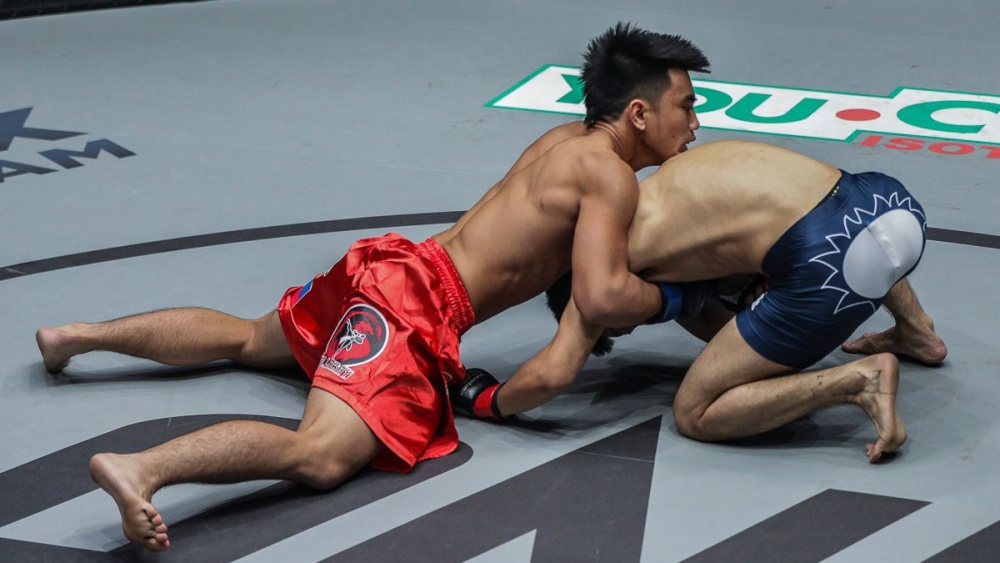
Performing takedowns with a lousy posture increases your chances of getting stuffed, reversed, and submitted in grappling. Remember that takedowns must be performed with an athletic stance, with your back straight and head up, which you can utilize to drive the opponent toward the direction you are aiming.
3) Dropping The Lead Knee
While you may have successfully taken down some of your training partners, a common mistake when shooting for a takedown is dropping the lead knee on the mat. Ideally, the motion you must be doing is to slide down diagonally as your rear leg steps forward to cover the distance and use the force to spring back up rather than your lead knee crashing down on the mat. This causes a loss in momentum.
4) Not Giving Your One Hundred Percent
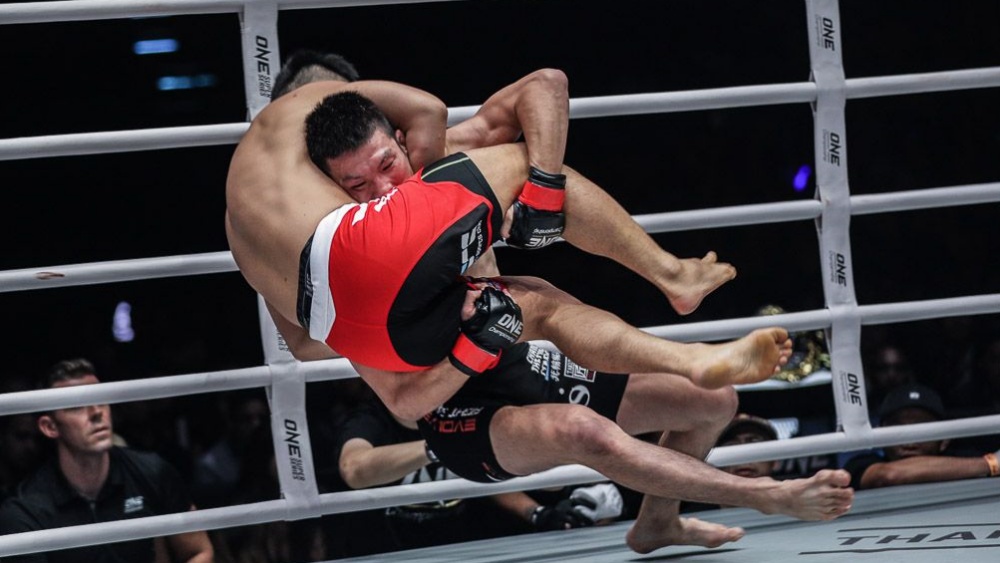
When going for the takedown, you must go one hundred percent with no signs of hesitation and intention of stopping midway through. A slight uncertainty will likely result in a failed takedown. Together with technical proficiency, think of running through your opponent, and you will be unstoppable on the mats.
FAQs On The Double Leg Takedown
Q: What Is A Double Leg Takedown?
A: A double leg takedown is a wrestling technique where a fighter grabs both of an opponent’s legs and drives forward to bring them to the ground. It is one of the most commonly used takedowns in grappling and MMA.
Q: Is The Double Leg Takedown Effective In MMA?
A: Yes. The double leg takedown is widely used in MMA because it allows fighters to control where the fight takes place. Many fighters use it to bring opponents to the ground and establish dominant positions.
Q: What Are The Key Steps To Performing A Double Leg Takedown?
A: The key steps include lowering your level, stepping in with proper positioning, securing both legs, and driving forward while maintaining balance and control.
Final Thoughts
The double leg takedown remains one of the most important techniques in wrestling and mixed martial arts. Its effectiveness comes from a combination of proper technique, timing, and control. For beginners, learning the fundamentals of the double leg provides a strong foundation for developing grappling skills. With consistent practice and attention to detail, this technique can become a reliable tool for controlling opponents and dictating the pace of a fight.
You may also like: