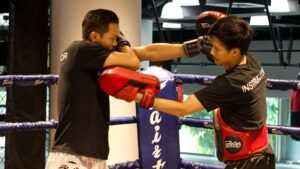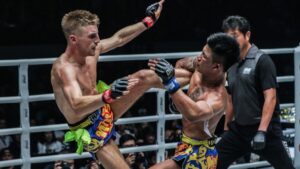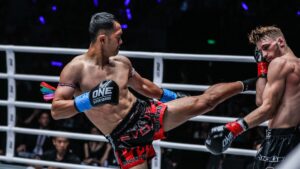
Summary
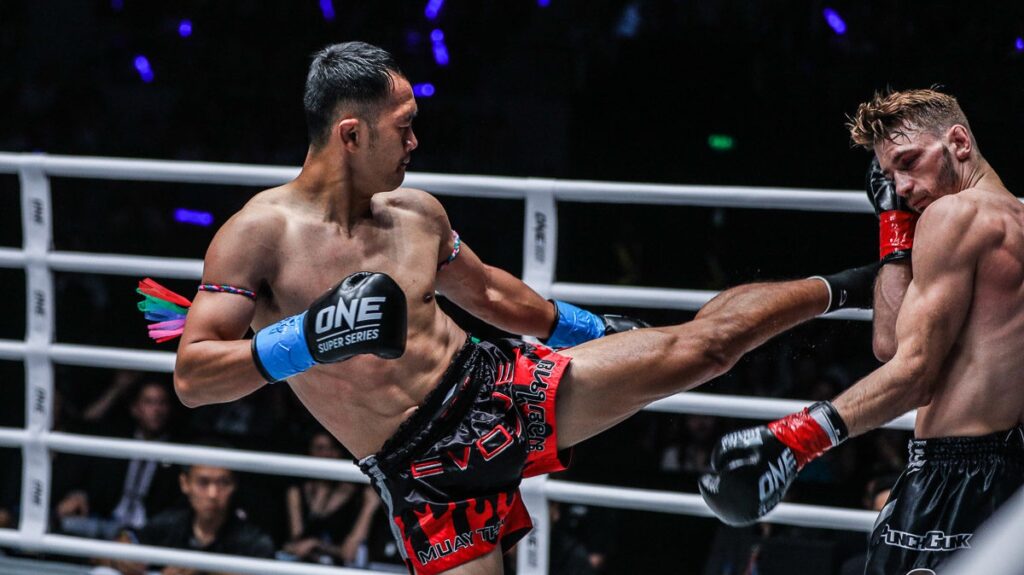
Every Muay Thai fighter eventually gravitates toward a style that suits their physical attributes and temperament, and for those who thrive on relentless aggression, the Muay Bouk style is the natural fit. Often called “the pressure fighter,” a Muay Bouk practitioner moves forward constantly, overwhelming opponents with a high-volume barrage of punches, kicks, elbows, and knees. This article breaks down what defines the Muay Bouk style, the characteristics that set it apart from other major Muay Thai styles, real-world examples of fighters who embody the approach, the vulnerabilities that come with it, and a practical training roadmap for developing the style yourself. As Muay Thai World Champion and Evolve MMA instructor Chaowalit Jocky Gym puts it, “Muay Bouk is not about being reckless — it is about having the conditioning and the will to make your opponent feel like there is no escape. Pressure only works when it never stops.”
Key Takeaways
- Muay Bouk is the pressure-fighting style of Muay Thai. It is defined by relentless forward movement, high output, and the willingness to absorb shots in order to deliver more in return.
- Unlike Muay Mat, Muay Bouk uses all eight weapons. The style does not favor one striking tool — punches, kicks, elbows, and knees are all deployed to keep opponents guessing.
- Conditioning is the foundation of the style. Without elite-level endurance, the aggressive pace of Muay Bouk cannot be sustained, making cardio and stamina training non-negotiable.
- The style carries real vulnerabilities. Defensive gaps, overcommitment, and energy management are constant challenges that Muay Bouk fighters must actively train to address.
- Fighters like Buakaw, Liam Harrison, and Saeksan exemplify the style. Each brings a different interpretation of Muay Bouk, proving that forward pressure can be applied in multiple ways.
Muay Bouk: The Pressure Fighter
Muay Bouk is commonly referred to as “the pressure fighter” due to their aggressive and unyielding approach in the ring. However, this style can also be understood through various other descriptions:
- Aggressive Striker: This term encapsulates the fighter’s continuous forward momentum, highlighting their commitment to aggressive striking techniques.
- Relentless Attacker: This phrase emphasizes the fighter’s unwavering dedication to advancing and consistently launching attacks against their opponent.
- Forward Aggressor: This term effectively conveys the fighter’s persistent movement forward and their proactive, forceful tactics.
- High-Intensity Fighter: This expression alludes to the fighter’s substantial energy output, showcasing their ability to sustain a rapid pace throughout the entire match.
- In-Fighter: Often used to depict fighters skilled in close-range combat, this term signifies the fighter’s comfort in engaging in clinches and exchanging short-range strikes.
These alternative descriptions shed light on the multifaceted nature of Muay Bouk, capturing their essence from different angles. Whether referred to as “the pressure fighter” or by these other terms, the style’s core remains rooted in their determined, aggressive, and unrelenting approach to the fight.
Basic 101 Muay Bouk
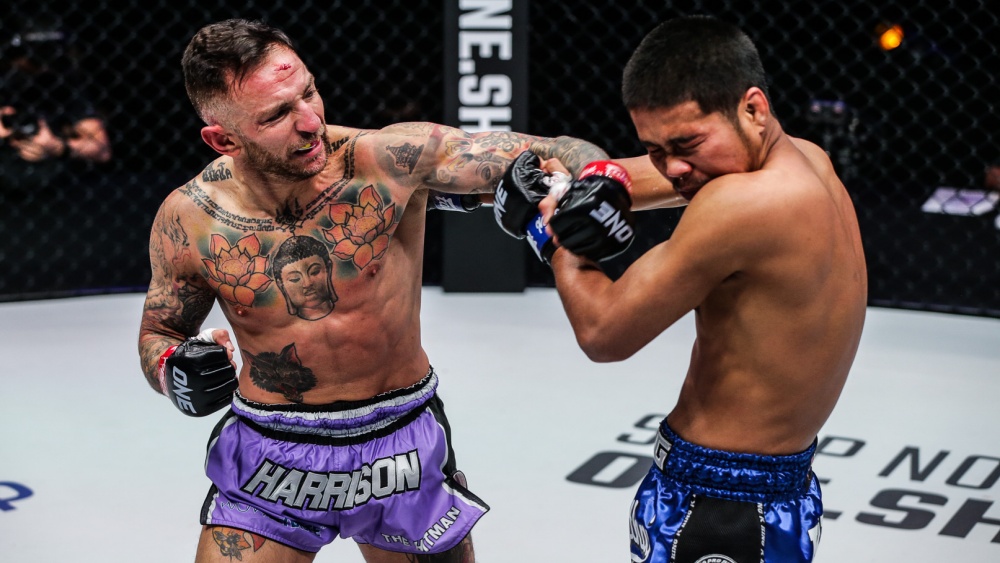
Muay Bouk fighters are known for their aggressive and fearless demeanor. They are willing to absorb shots in order to deliver powerful strikes with all available Muay Thai techniques. This is the basic description of a Muay Bouk, but what are some of their other characteristics?
- Combat Mindset: Muay Bouk practitioners possess a focused and determined mindset. They aim to move in close and break down their opponents with an overwhelming barrage of strikes.
- Versatile Arsenal: Unlike the Muay Mat style, which emphasizes boxing, Muay Bouk fighters use a diverse range of Muay Thai techniques – punches, kicks, elbows, and knees – to maximize their offensive capabilities.
- Endurance And Toughness: High-level endurance is crucial for Muay Bouk practitioners, as their relentless pressure and willingness to engage in exchanges require sustained energy and mental resilience.
- Strengths: Relentless forward pressure, a wide array of striking techniques, the ability to absorb shots, and a relentless mindset that aims to overwhelm opponents.
3 Examples Of Muay Bouk Fighters
When looking to the ring to find some prime examples of Muay Bouk fighters, these three champions come to mind;
- Buakaw Banchamek: While Buakaw is primarily known for his well-rounded skills, he has incorporated elements of the Muay Bouk style into his fighting approach. His aggressive fighting style, powerful strikes, and entertaining performances have garnered him a massive following both in Thailand and internationally.
- Liam Harrison: Liam Harrison, a foreign fighter from the UK, has adopted the Muay Bouk style and become a well-known figure in the Muay Thai world. His appearances in the prestigious Thai stadiums, Rajadamnern and Lumpinee have showcased the appeal of the Muay Bouk style to audiences worldwide.
- Saeksan Or. Kwanmuang: Saeksan’s fighting style is characterized by unyielding advancement and a focus on aggressive striking combinations, particularly with punches and elbow strikes. This approach, which earned him the nickname “Kon Mai Yom Kon” (The Man Who Yields to No One), showcases his relentless determination in the ring.
Possible Weaknesses Of Muay Bouk Fighters
While the Muay Bouk style in Muay Thai offers a formidable and aggressive approach, it’s important to recognize that every fighting style has its strengths and weaknesses. Here are some potential weaknesses associated with the Muay Bouk style:
- Stamina And Endurance: Muay Bouk fighters are known for their high-energy, relentless attacks. However, this aggressive style can lead to faster fatigue, particularly if a match goes into later rounds. Maintaining the same level of intensity throughout the fight requires exceptional conditioning.
- Defensive Vulnerability: Focusing heavily on offense might leave openings in the fighter’s defense. Muay Bouk practitioners need to strike a balance between pressuring their opponents and protecting themselves from counters.
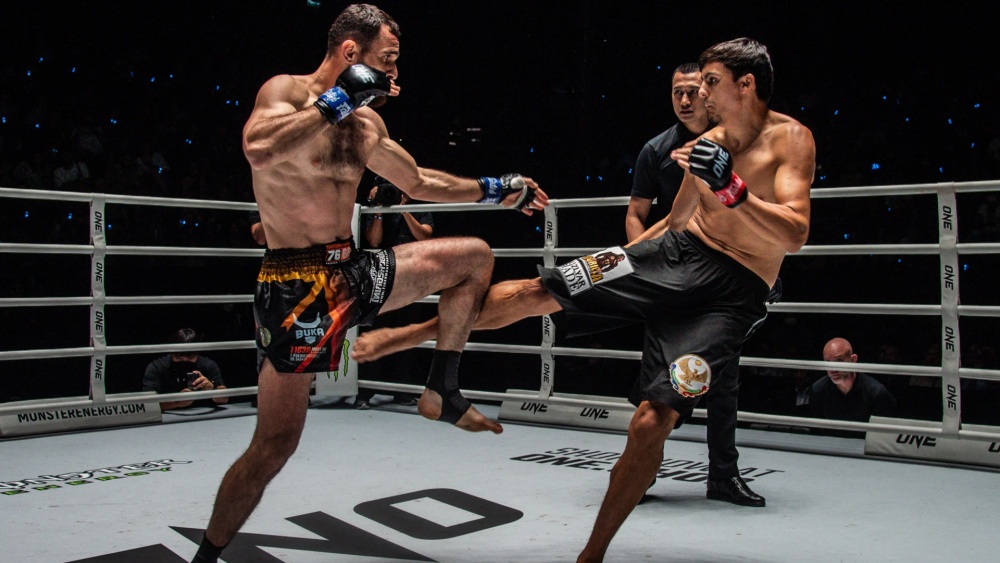
- Risk Of Overcommitment: The aggressive nature of Muay Bouk can sometimes result in fighters overcommitting to strikes, leaving them off-balance and susceptible to counterattacks from skilled opponents.
- Clinch And Grappling: While Muay Bouk fighters excel in striking exchanges, they might be less skilled in the clinch and grappling aspects of the sport. This could pose a challenge against opponents who are skilled clinch fighters.
- Adaptation To Counterstyles: Fighters with strong counterattacking techniques or those who excel in keeping the fight at a distance might find ways to exploit the forward-moving nature of Muay Bouk.
- Energy Management: Balancing a high-pressure offense with efficient energy management can be challenging. Muay Bouk practitioners must learn when to push forward and when to conserve energy to avoid gassing out.
- Strategic Predictability: Opponents who study and understand the Muay Bouk style might anticipate the forward pressure and devise strategies to counter it effectively.
It’s important to note that these weaknesses don’t diminish the effectiveness of the Muay Bouk style but rather provide areas for improvement and tactical consideration. Skilled fighters recognize their weaknesses and work to mitigate them through training, strategy, and adaptation.
Crafting Your Muay Bouk Journey
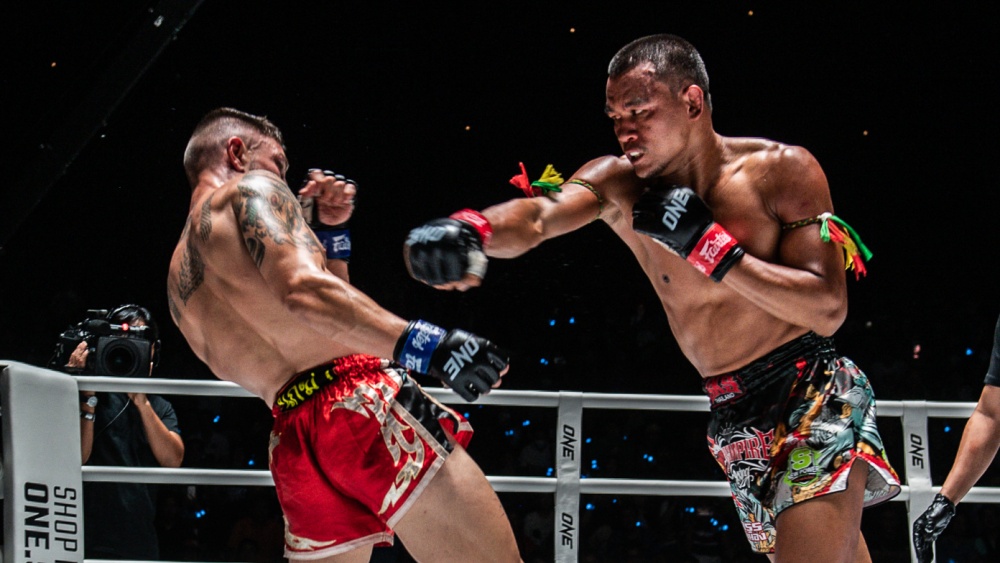
This section provides guidance on how individuals interested in adopting the Muay Bouk style can approach their training and development within this aggressive fighting style.
Embracing the Muay Bouk style requires dedication, discipline, and a strategic approach to training. Here’s how you can craft your journey into becoming a proficient Muay Bouk fighter:
- Physical Conditioning And Stamina
- Develop high-level endurance through rigorous cardiovascular training, such as running, cycling, and jump rope exercises.
- Incorporate interval training to simulate the bursts of intense energy needed during fights.
- Focus on strength and conditioning exercises that build explosive power and functional strength.
- Technique Mastery
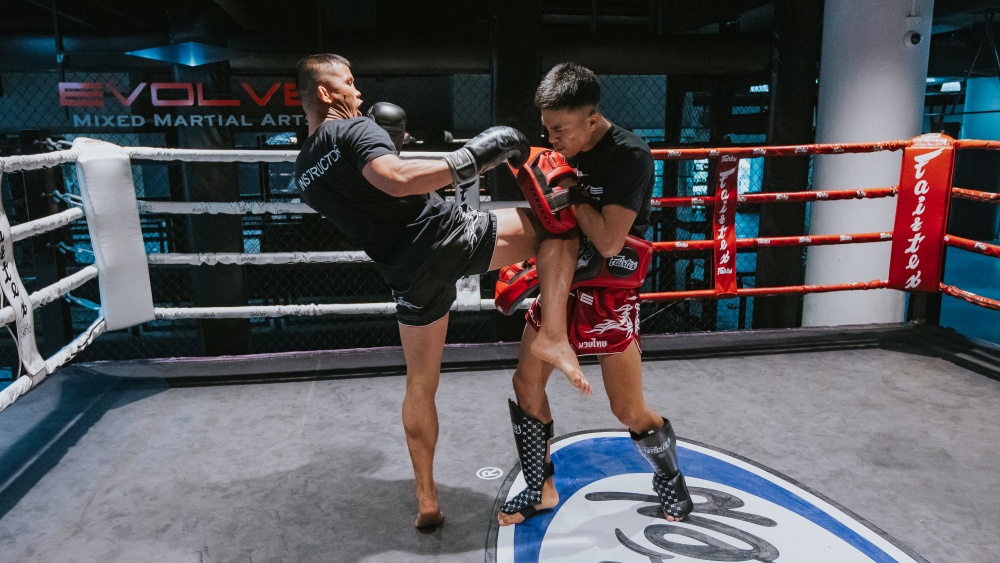
- Work closely with experienced trainers to refine your striking techniques, including punches, kicks, elbows, and knees.
- Pay special attention to maintaining balance and power while moving forward aggressively.
- Develop a diverse arsenal of combinations to keep opponents guessing and to effectively break their defense.
- Defensive Skills
- Clinch And Close Combat
- While Muay Bouk is known for striking, don’t neglect training in the clinch and close-range techniques.
- Develop skills in clinching, knee strikes, and elbow techniques to become well-rounded in various ranges of combat.
- Fight Strategy
- Study opponents and understand their strengths and weaknesses to formulate effective game plans.
- Develop a strategy that optimizes your forward-moving aggression while minimizing risks.
- Learn to adapt your approach based on the opponent’s response and the progression of the fight.
- Sparring And Live Practice
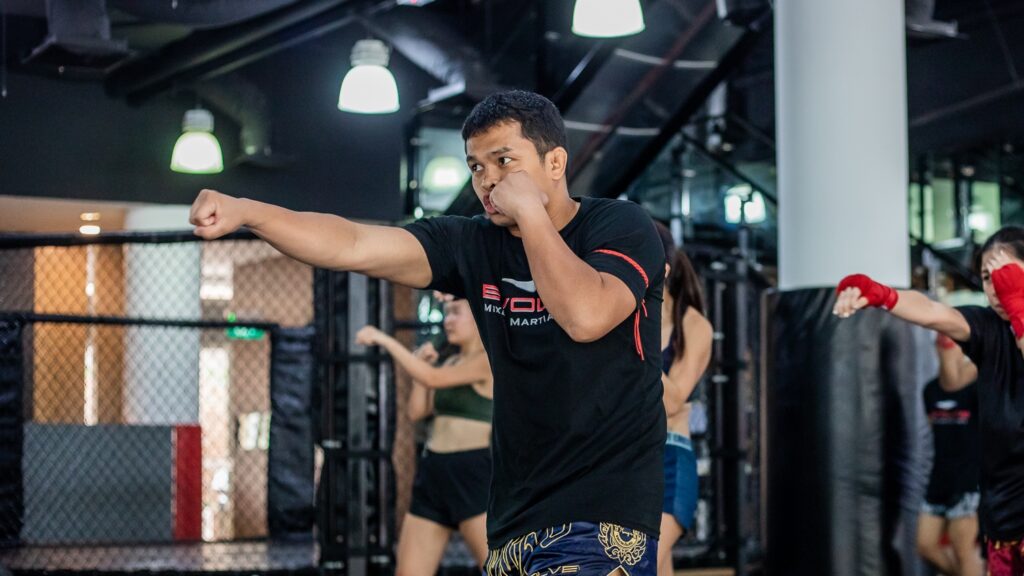
- Regularly engage in sparring sessions to apply your techniques in a dynamic and unpredictable environment.
- Spar with different partners to gain experience against various styles and skill levels.
- Mental Resilience
- Develop mental toughness to withstand the physical and mental challenges of an aggressive fighting style.
- Cultivate a strong mindset that embraces the relentless nature of Muay Bouk while staying composed under pressure.
- Ring Awareness
- Practice controlling the pace of the fight by strategically applying pressure and changing the tempo when needed.
- Learn to gauge your opponent’s reactions and capitalize on openings that arise from your pressure.
Conclusion
The Muay Bouk style is not for everyone, but for fighters with the conditioning, durability, and mental fortitude to sustain relentless forward pressure, it is one of the most effective and entertaining approaches in Muay Thai. What makes the style work is not aggression alone — it is the combination of structured technique, strategic pressure, and the physical ability to maintain intensity when your opponent is hoping you will slow down. Whether you are a natural pressure fighter or an orthodox stylist looking to add forward aggression to your game, training the Muay Bouk approach will sharpen your conditioning, expand your offensive toolkit, and teach you what it means to impose your will on an opponent from the opening bell to the final round.
“In Muay Thai, there are fighters who wait and fighters who take. The Muay Bouk fighter takes, he takes the center of the ring, he takes his opponent’s space, and he takes their confidence. That is what pressure does when it is trained correctly.” — Chaowalit Jocky Gym, Muay Thai World Champion & Instructor at Evolve MMA
Frequently Asked Questions About The Muay Bouk Style
Q: What does Muay Bouk mean?
A: Muay Bouk translates roughly to “pressure fighting” in Muay Thai. It describes a style defined by constant forward movement, high striking volume, and relentless aggression designed to overwhelm opponents.
Q: How is Muay Bouk different from Muay Mat?
A: Muay Mat emphasizes punching power and heavy hands, often favoring boxing-style attacks. Muay Bouk uses all eight weapons — punches, kicks, elbows, and knees — and is defined more by the pace and pressure than by any single striking tool.
Q: Do you need to be naturally aggressive to fight Muay Bouk?
A: Not necessarily. While an aggressive temperament helps, the style can be trained and developed through conditioning, technique work, and sparring. Many fighters adopt Muay Bouk strategically because their physical attributes — endurance, durability, cardio — suit the style’s demands.
Q: What is the biggest weakness of the Muay Bouk style?
A: Energy management and defensive vulnerability are the most common weaknesses. The constant forward pressure demands elite conditioning, and the offensive focus can leave gaps that skilled counter-fighters exploit.
Q: Can Muay Bouk work against taller opponents?
A: Yes. Muay Bouk is actually well-suited for shorter fighters facing taller opponents because the style closes distance quickly and takes away the reach advantage. Once inside, the Muay Bouk fighter can use their full arsenal at close range where the taller fighter is less comfortable.
Q: What kind of conditioning does Muay Bouk require?
A: Exceptional cardiovascular endurance is the baseline requirement. This means regular long-distance running, high-intensity interval training, and fight-pace sparring rounds. Without the gas tank to sustain pressure for a full fight, the style breaks down.
Q: Is Muay Bouk considered a major or minor style in Muay Thai?
A: Muay Bouk is traditionally classified as a minor style. The five major recognized styles are Muay Femur, Muay Mat, Muay Khao, Muay Tae, and Muay Sok. However, Muay Bouk has gained significant recognition and popularity, particularly among international fighters and fans.
Q: Who are the best Muay Bouk fighters to study?
A: Buakaw Banchamek, Liam Harrison, and Saeksan Or. Kwanmuang are excellent examples. Each brings a different interpretation of the style — Buakaw with his well-rounded pressure, Harrison with his walk-forward durability, and Saeksan with his punch-and-elbow forward aggression.
You may also like: