
Summary
Muay Thai and Boxing are two of the most effective, most popular, and most widely practised striking arts in the world, and the question of which is better is one that martial artists, fitness enthusiasts, and combat sports fans have debated for decades. The honest answer is that neither is objectively superior: both are highly effective systems built on proven techniques, intense physical conditioning, and a no-nonsense approach to striking that produces genuine real-world capability. What separates them is the breadth of their toolkits, the stances and movement patterns they develop, and the time investment each requires to reach a functional level. This article covers the key similarities between Muay Thai and Boxing, the cardiovascular conditioning, the self-defence effectiveness, and the shared lower-body power generation principles, before breaking down the meaningful differences: Muay Thai’s broader weapon system and clinch game, Boxing’s more fluid stance and superior angle creation, and the time each takes to master. Whether you are choosing between the two for the first time or looking to understand how they compare in depth, this guide gives you the framework to make an informed decision. As Muay Thai World Champion and Evolve MMA instructor Chaowalit Jocky Gym puts it, “Boxing and Muay Thai come from different places, but they share the same foundation, footwork, timing, and the ability to hit without being hit. A Muay Thai fighter who ignores the lessons of Boxing is missing something important. A boxer who has never felt a leg kick or an elbow doesn’t know what they don’t know. Both arts make you better, and the best strikers have learned from both.”
Key Takeaways
- Muay Thai and Boxing share three foundational qualities that make both arts genuinely effective: intense cardiovascular conditioning, proven self-defence techniques, and the same lower-body power generation principles. A practitioner of either art develops real striking capability; the differences are in scope and application, not in fundamental effectiveness.
- Muay Thai is the more versatile art by a significant margin. Eight striking surfaces, clinch work, sweeps, and the Muay Thai plum give practitioners a weapon for every range and situation. Boxing’s focused toolkit of punches is more limited in breadth but develops exceptional depth within that narrower range.
- Boxing develops superior punching, more fluid footwork, better head movement, and more refined punch mechanics than most Muay Thai training does. Because boxing specialises entirely in the hands, boxers typically defend against punches more effectively and punch with more technical precision than practitioners of broader arts who divide their training time across more weapons.
- The stance differences between the two arts reflect different tactical priorities. Boxing’s wider, more bladed stance optimises for lateral movement, slip angles, and punch generation. Muay Thai’s taller, more upright stance optimises for kick defence, rear leg power, and the balance needed for the full eight-weapon system.
- Muay Thai takes longer to reach functional competence because the technical scope is significantly broader. Learning to execute eight weapons with correct mechanics across multiple ranges, plus clinch work, requires more training hours than mastering the punch-focused toolkit of boxing. This is not a weakness of Muay Thai; it is a reflection of how much more it contains.
- The right choice between the two arts depends entirely on your goals, your natural tendencies, and what you enjoy training. Neither is objectively superior, and cross-training in both is a genuinely viable and rewarding path for practitioners who want the most complete striking education available.
Figuring Out Whether Muay Thai Or Boxing Is Best For You
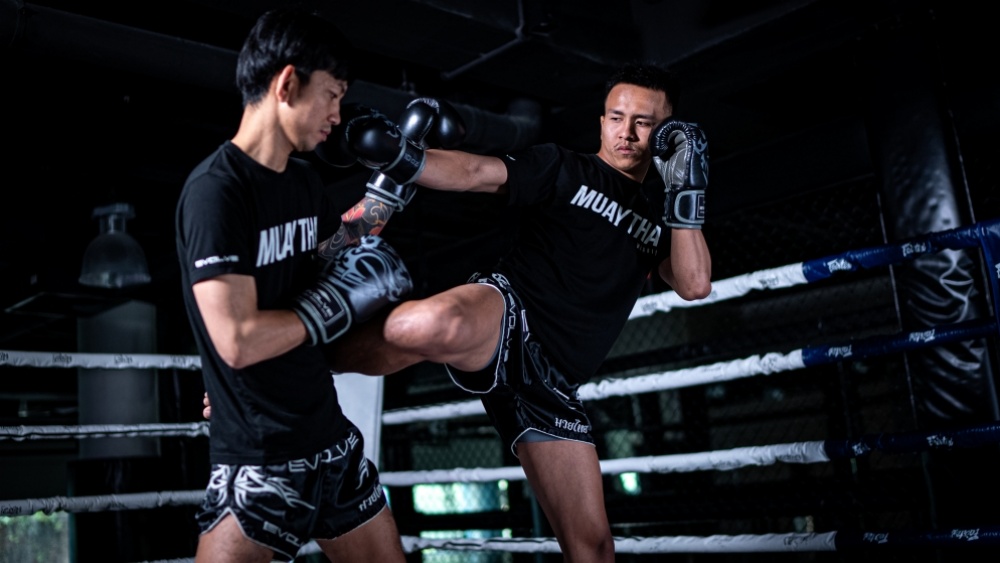
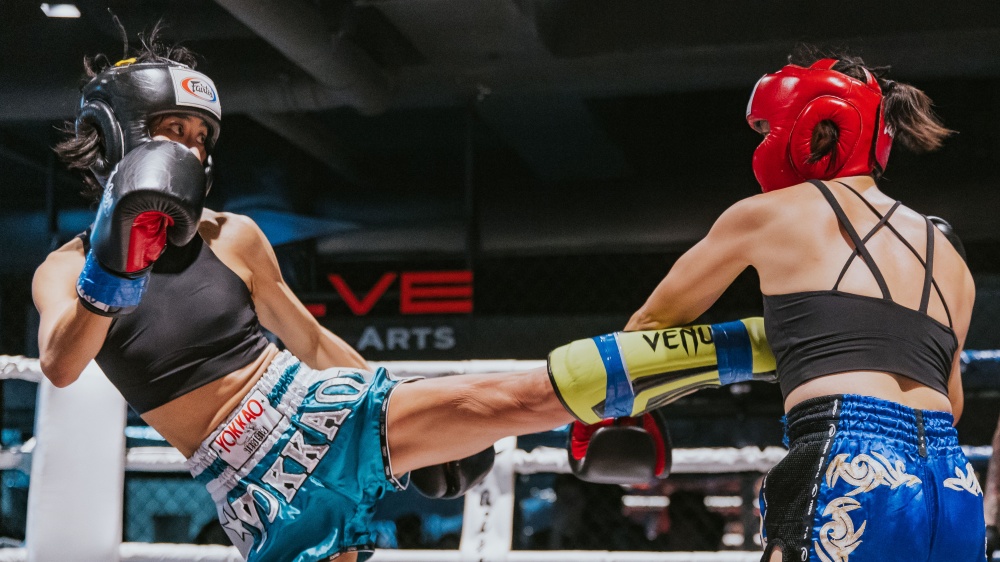
Muay Thai is one of the most versatile striking arts on the planet. It involves using your fists, shins, elbows, and knees as offensive and defensive tools. It also includes more grappling than many of the other striking arts, like boxing, Karate, and Kung Fu. Clinch work is often frowned upon in these arts, while it’s one of Muay Thai’s staples.
Boxing is the most popular striking art around. People love it, and some of the biggest boxing matches in history virtually shut the world down for a day. It’s an entertaining sport to watch, given the incredible level of skill top boxers display.
You don’t have to be a boxing expert to enjoy boxing greats like Muhammed Ali gracefully moving around the cage. As a result, boxers remain the highest-paid combat sports athletes despite the increasing popularity of other striking arts like Muay Thai and mixed martial arts.
Some of the key similarities Muay Thai and Boxing share include:
- Intense Cardiovascular And Endurance Training: Nothing gets your blood pumping like training in either Boxing or Muay Thai. An hour spent training in either sport can burn up to 1000 calories. The best part is that you’ll be having so much more fun while training that you won’t even realize how much energy you’re using. Muay Thai or boxing training combined with a low-carb diet is a guaranteed way to burn off excess weight and increase your muscle definition.
- Effective Self-Defense Techniques: All fights start in a standing position, so it’s always nice to know how to handle yourself in the striking department. Muay Thai and Boxing both have a no-nonsense approach to combat. These martial arts don’t have a huge variety of flashy techniques, as is the case with striking styles like Taekwondo or Capoeira. Boxing and Muay Thai are about getting right down to business. These combat styles focus on tested and proven techniques that will be effective in a real fighting scenario. A competent boxer or Muay Thai fighter has more than enough tools to defend themselves in a real-life scenario successfully. Don’t be fooled by the boxer being limited to only using their hands. That’s more than enough to defend yourself.
- Power In Strikes Is Generated With The Lower Body: Boxing and Muay Thai both teach you how to generate power in your strikes using your lower body to generate momentum. You rotate your feet and hips when throwing strikes, adding more power to them. It’s a subtle detail that allows skilled fighters to throw powerful strikes. As a result, a Muay Thai fighter will have an easier time than most people if they decide to give boxing a try and vice versa. Both arts share similar fundamentals when it comes to throwing striking techniques.
Exploring The Differences Between Muay Thai And Boxing
Now that we’ve gone over some of the similarities these two arts share, let’s take a look at some of the key differences between the two combat styles:
1) Muay Thai Is The More Versatile Art

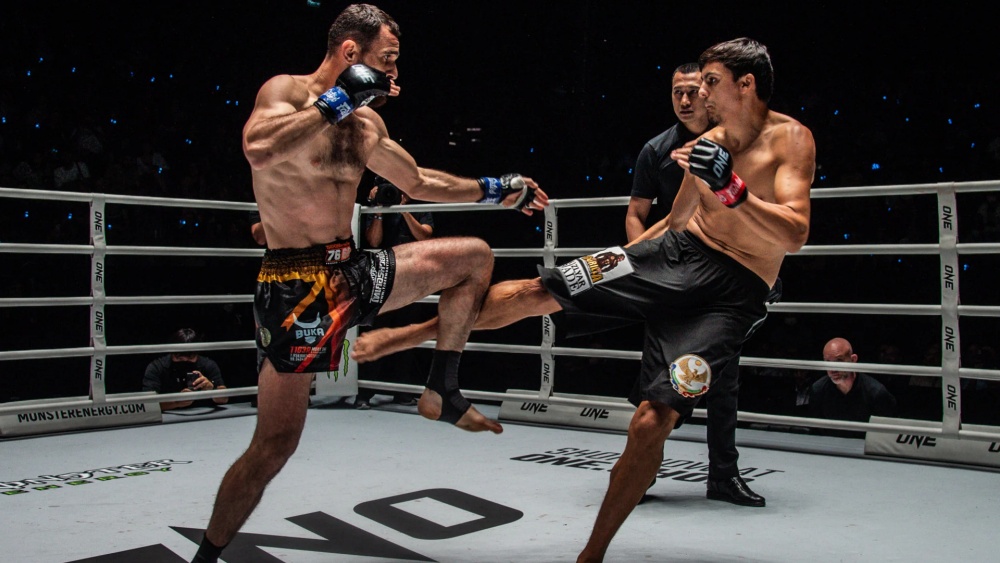
Muay Thai fighters have significantly more tools in their arsenal than boxers. Boxers only use their fists as weapons, while Muay Thai fighters use their fists, elbows, knees, and shins. As a result, there are many more techniques to learn when training Muay Thai.
Muay Thai also includes clinch work, which is frowned upon in boxing. Referees usually run to separate both fighters when they get clinched up in a boxing match. Clinch work is one aspect of fighting that separates Muay Thai from other striking arts.
The Muay Thai plum allows fighters to land devasting attacks and throws. You can easily end up clinched with an opponent in a self-defense scenario, so learning how to fight in the clinch is a must if self-defense is one of your training goals.
2) Boxing Stances Create Better Angles

Another difference you should consider when choosing between Muay Thai and boxing is the different stances used. Boxers keep their feet about shoulder-width apart, which allows them to create wider angles that put them in advantageous positions to land and evade precise punches. Muay Thai fighters use a taller stance and keep their feet closer together. This makes it easier for them to check kicks and throw strikes with their back leg.
Both stances have their advantages and disadvantages, but boxers are typically more fluid with their movements. Their stance allows them to slip, bob, and weave much more easily than you can from the Muay Thai stance.
3) Muay Thai Takes Longer To Master
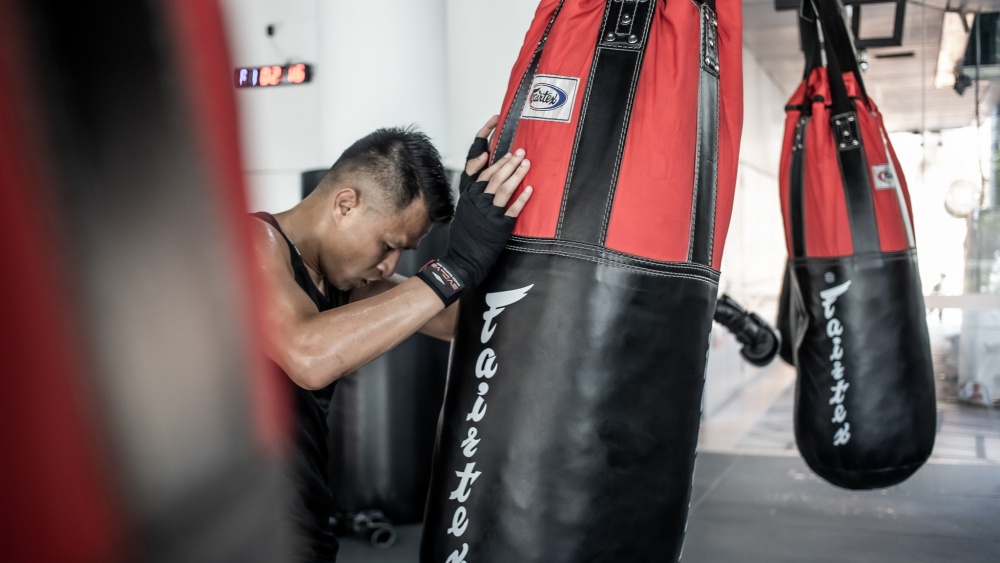
Boxers specialize in using their hands as weapons, so it takes less time to get the fundamentals down. Muay Thai fighters have to learn how to execute techniques with their fists, elbows, knees, and shins, which take longer.
Muay Thai fighters having a broader set of tools makes it arguably the better self-defense system, but the reality is a bit more complicated. Most self-defense scenarios do not involve people throwing techniques like spinning kicks. It’s typically two people swinging wild punches at each other until someone goes down or grabs hold of the other.
That’s the type of fighting boxing prepares you for. Boxers are better at defending against punches than Muay Thai fighters. They usually have better footwork and throw more powerful punches.
Frequently Asked Questions About Muay Thai vs Boxing
Q: Which Is Better For A Complete Beginner — Muay Thai Or Boxing?
A: Both are excellent starting points, and neither requires prior experience or a specific fitness level to begin. Boxing’s narrower technical scope means a beginner can develop a functional level of competence in punching combinations, footwork, and defensive head movement relatively quickly, which some beginners find motivating. Muay Thai’s broader scope means there is more to learn, which takes longer but keeps training engaging for years, as new techniques and ranges are constantly being developed. If you are drawn to a complete striking system and enjoy the idea of learning kicks, elbows, knees, and clinch work, Muay Thai is the better choice. If you prefer to develop elite-level competence in a narrower set of techniques first, boxing is a strong foundation that transfers well into Muay Thai later.
Q: Can A Boxer Beat A Muay Thai Fighter In A Real Fight?
A: Yes, and the reverse is equally true. The outcome of any fight depends far more on the individual skill, experience, and physical attributes of the fighters involved than on which art they trained. A highly skilled boxer against an inexperienced Muay Thai practitioner will typically win. The more meaningful question is what happens at equivalent skill levels under different conditions. In a pure boxing context, no kicks, elbows, or clinch, a skilled boxer holds the advantage. In a self-defence scenario where everything is permitted, Muay Thai’s broader weapon system and clinch training provide more options across the full range of positions a street encounter might present. In an MMA context, Muay Thai’s tools are more comprehensively transferable.
Q: Which Art Is More Effective For MMA?
A: Muay Thai is the more strategically effective base for MMA, and this is reflected in the striking backgrounds of the majority of elite MMA fighters worldwide who list Muay Thai as their primary striking art. The reasons are structural: Muay Thai’s eight weapons, clinch work, and knee and elbow strikes all transfer directly to MMA’s close-range environment — where the cage wall and grappling exchanges frequently put fighters at the ranges where kicks and punches alone are not enough. Boxing contributes exceptional punching mechanics and footwork to an MMA game, but it does not prepare practitioners for the clinch, the ground-and-pound, or the full-body striking environment that MMA creates. Most elite MMA fighters train Muay Thai as their striking foundation and supplement it with boxing to sharpen their hand game.
Q: Is Cross-Training In Both Muay Thai And Boxing Worthwhile?
A: Strongly yes — and it is one of the most effective ways to develop a complete striking game. Boxing sharpens the elements of striking that Muay Thai training can leave underdeveloped: hand speed, defensive head movement, footwork fluidity, and punching precision. Muay Thai adds the kicks, elbows, knees, and clinch work that give a pure boxer a significantly more complete toolkit. Many elite Muay Thai fighters deliberately incorporate boxing training to improve their hand game, and many elite boxers have incorporated Muay Thai elements — particularly the teep and the low kick — to expand their offensive options. The two arts complement each other so naturally that cross-training is not just viable but genuinely accelerates development in each.
Q: Which Burns More Calories — Muay Thai Or Boxing?
A: Both arts burn significant calories, typically in the range of 700 to 1,000 calories per hour of active training, depending on body weight, session intensity, and format. Muay Thai tends to produce slightly higher caloric expenditure because it engages the large muscle groups of the legs through kicking alongside the upper body and core work that boxing also demands. A Muay Thai session that includes kicking rounds, clinch work, and full-body drilling is activating more total muscle mass simultaneously than a boxing session of the same duration, which generally translates to higher energy expenditure. That said, the difference between the two is not dramatic enough to be a decisive factor in choosing between them for weight loss purposes. Both are dramatically more effective than most conventional gym cardio.
Q: How Does The Self-Defence Effectiveness Of Each Art Compare?
A: Both arts prepare practitioners effectively for the most common real-world self-defence scenarios, which, as noted in the article, typically involve wild, untrained punches at close range rather than sophisticated martial arts techniques. Boxing’s specific preparation for that exact scenario, defending and countering wild punches with trained responses, is arguably more directly applicable to the most common street encounter. Muay Thai’s broader toolkit provides more options if the situation involves someone grabbing, closing to knee range, or using weapons beyond punches. Neither art prepares practitioners for ground fighting, which is where many self-defence situations end up, which is why practitioners who are serious about self-defence often supplement either art with a grappling discipline like Brazilian Jiu-Jitsu or wrestling.
Q: Which Art Develops Better Footwork?
A: Boxing develops more refined and fluid footwork than most Muay Thai training does, and this is a direct consequence of the stance each art uses and the tactical demands each creates. Boxing’s wider, more bladed stance is optimised for lateral movement, creating angles on opponents, and slipping punches — all of which require dynamic, continuous footwork. The art’s entire defensive game is built around not being where the punch is aimed, which makes exceptional footwork a survival skill in boxing rather than an optional enhancement. Muay Thai’s taller, more upright stance is optimised for different priorities — kick defence, rear leg power generation, and clinch positioning — which produces solid but generally less dynamic footwork than boxing does. Muay Thai practitioners who want to improve their footwork specifically often benefit significantly from incorporating boxing training.
Q: Which Art Should I Choose If Self-Confidence And Personal Transformation Are My Primary Goals?
A: Both arts are equally effective at building genuine confidence and personal transformation — the qualities that produce those outcomes are shared across both. The discipline of consistent training, the progressive development of physical competence, the experience of performing under pressure in sparring, and the community of a martial arts gym all apply equally to boxing and Muay Thai. The art that will produce the greatest personal transformation is the one you find more engaging and will therefore train more consistently. If the culture, tradition, and comprehensive weapon system of Muay Thai excite you more, that enthusiasm will drive better consistency and produce better results. If boxing’s focused, elegant game of punching appeals more strongly, the same applies. Choose the art that makes you want to keep coming back — the transformation follows from the consistency.
Final Thoughts
The question of whether Muay Thai or Boxing is better does not have a universal answer, and any article that claims otherwise is oversimplifying a genuinely complex comparison. Both arts are highly effective, deeply developed, and capable of producing exceptional fighters and dramatically improved practitioners at every level. The differences between them — in weapon breadth, stance, footwork, time to competence, and tactical application — are real and meaningful, but they do not make one art objectively superior to the other. They make different tools suited to different goals.
What the comparison does make clear is that the two arts complement each other more than they compete. The boxer who learns Muay Thai’s kicks and clinch becomes harder to deal with at every range. The Muay Thai practitioner who incorporates boxing’s head movement and footwork becomes harder to hit and more dangerous with their hands. The most complete strikers are almost always students of both.
Choose the one that excites you. Train it with consistency and seriousness. And stay curious about what the other art has to teach you — because the best version of your striking game almost certainly draws from both.
You may also like: