Summary
When it comes to real-world self-defense, few martial arts offer the practical effectiveness of Muay Thai. Known as the “Art of Eight Limbs,” Muay Thai trains you to strike with your fists, elbows, knees, and shins, giving you a complete set of close-range and mid-range weapons that can end a confrontation quickly. But self-defense effectiveness is not just about knowing how to throw strikes. It is about developing the awareness, timing, distance management, and composure needed to protect yourself under pressure. This article breaks down why Muay Thai is so well-suited for self-defense, covering the striking tools it provides, how it builds practical defensive instincts, the role of clinch work in real-world situations, and how consistent training develops the physical and mental attributes that keep you safe. As Muay Thai World Champion and Evolve MMA instructor Chaowalit Jocky Gym explains, “Muay Thai was built for real fighting. Every technique exists because it works when the situation is real, not just in the ring, but anywhere you need to protect yourself.”
Key Takeaways
- Muay Thai gives you eight striking weapons, not just two. Training with fists, elbows, knees, and shins means you have effective tools at every range, from full distance to close quarters where most real confrontations happen.
- The clinch is a critical self-defense skill most striking arts ignore. Muay Thai’s emphasis on clinch fighting teaches you to control an aggressor at close range, land devastating knees and elbows, and create space to disengage safely.
- Distance management is as important as striking power. Muay Thai trains you to read range, control spacing with teeps and footwork, and position yourself to either engage or escape, both essential in real-world situations.
- Training builds composure under pressure. Regular sparring and pad work condition you to stay calm and make effective decisions when someone is attacking you, which is the single most important self-defense attribute.
- Physical conditioning is a byproduct of the training itself. Muay Thai develops cardiovascular endurance, functional strength, and reflexes through the training process, meaning your self-defense fitness improves alongside your technique.
Muay Thai Uses Every Weapon On Your Body
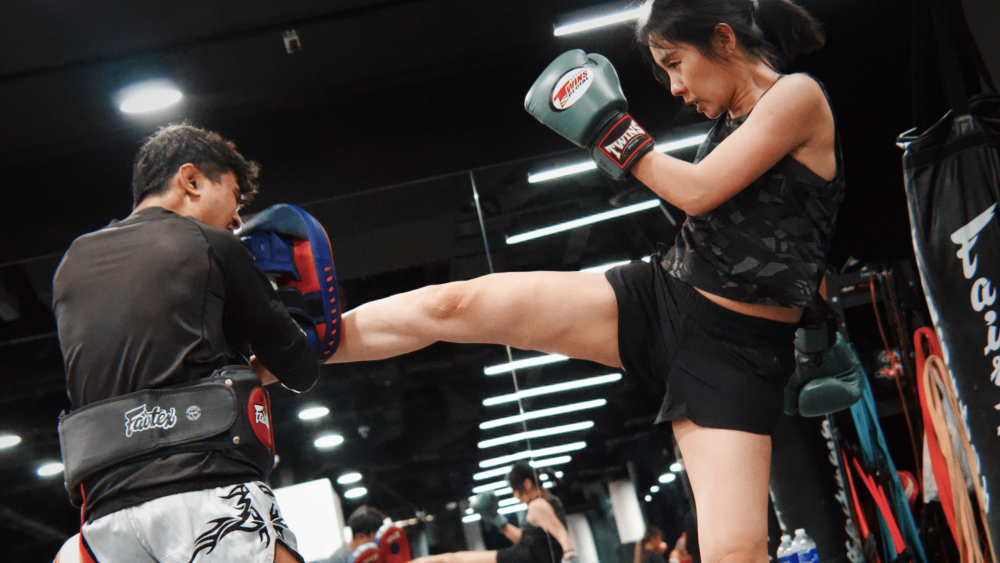
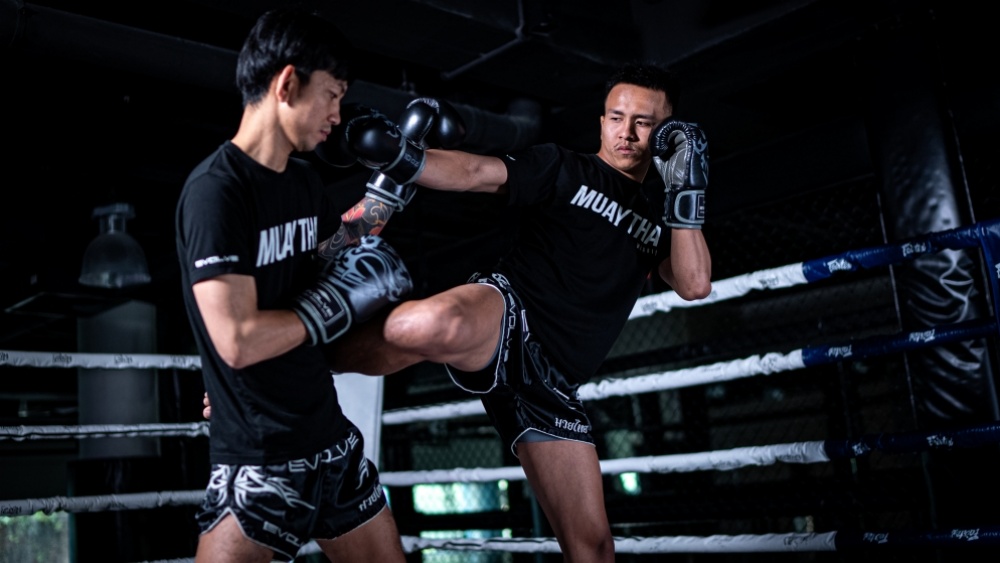
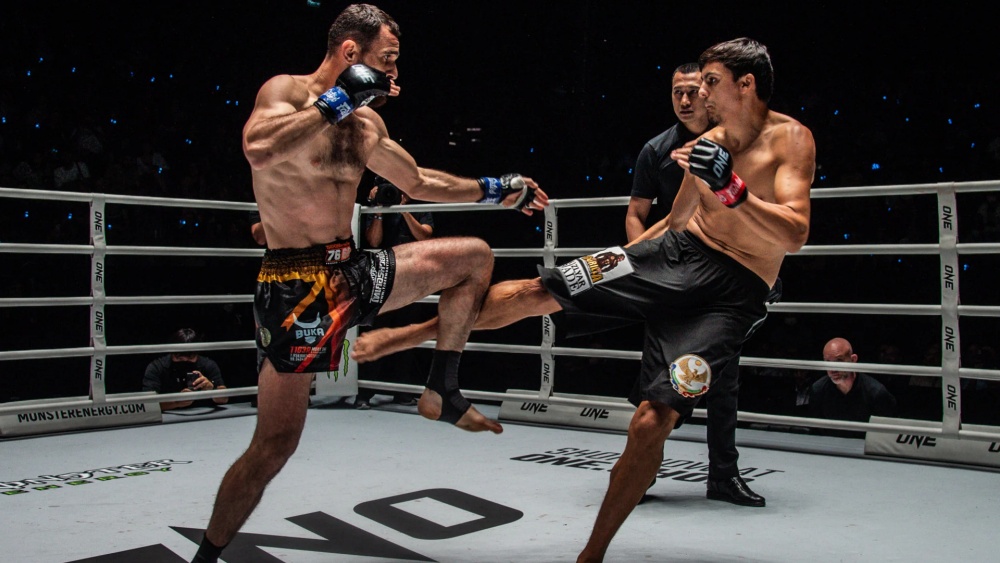
The defining feature of Muay Thai is its use of eight points of contact: fists, elbows, knees, and shins. Most striking martial arts limit you to punches and kicks, but Muay Thai trains you to be dangerous at every distance. A punch can stop someone at mid-range. An elbow can cut or knock out an aggressor who has closed the gap. A knee driven into the body at close quarters can take the fight out of someone instantly. And a shin kick to the legs or torso delivers a level of impact that most untrained people have never experienced and cannot absorb.
This matters for self-defense because real confrontations are unpredictable. You rarely get to choose the range at which a threat engages you. Someone may grab you, crowd you into a corner, or rush at you from a distance. Muay Thai prepares you for all of these scenarios because you have trained to generate power and defend yourself whether the aggressor is three feet away or pressed against you.
Gaining proficiency in Muay Thai’s striking techniques also means you can string together combinations that are extremely difficult for an untrained person to handle. A jab followed by a low kick, or a knee from the clinch followed by an elbow. These sequences overwhelm someone who has no experience defending against coordinated attacks from multiple angles.
The Clinch Is A Real-World Self-Defense Advantage
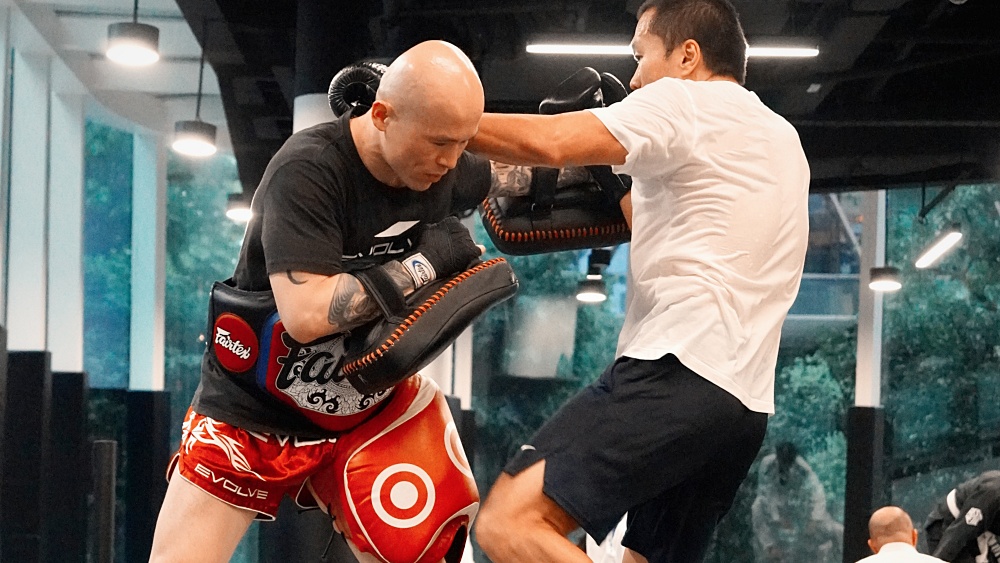
One of the most undervalued aspects of Muay Thai for self-defense is its clinch work. In many real-world confrontations, the fight quickly moves to close range; someone grabs your shirt, pushes you against a wall, or tries to tackle you. Most striking martial arts offer little preparation for this range. Muay Thai, however, dedicates significant training time to the clinch.
In the Muay Thai clinch, you learn to control an aggressor’s posture using collar ties, bicep control, and neck manipulation. From this position, you can land devastating knees to the body and head, throw short elbows, and use sweeps or off-balancing techniques to put the aggressor on the ground while you remain standing. You also learn how to create separation, framing, pushing, and pivoting to disengage from the clinch and create space to either continue defending yourself or escape the situation entirely.
This skill set is particularly relevant for self-defense because controlling someone at close range without going to the ground is often the safest option. Going to the ground in a real confrontation, especially if there are multiple threats or hard surfaces involved, carries serious risks. The Muay Thai clinch gives you the ability to dominate close-range encounters while staying on your feet.
Distance Management And Defensive Awareness

Effective self-defense is not just about what you can do when a fight starts; it is about controlling whether a fight starts at all. Muay Thai develops exceptional distance management skills that translate directly to real-world awareness and safety.
The teep, or push kick, is one of Muay Thai’s most practical self-defense tools. It is a long-range strike that pushes an aggressor away, creating space and buying you time. Unlike a punch, which requires you to be within arm’s reach, a teep keeps a threat at leg’s length and can stop a charge before it develops. In a self-defense context, the teep is often the first and most useful technique you will use; it controls distance without committing you to a full exchange.
Footwork is the other critical element. Muay Thai training teaches you to angle off, circle away from danger, and position yourself so that you always have an exit route. In sparring, this translates to avoiding being cornered. On the street, it translates to maintaining awareness of your surroundings and positioning yourself so that you can disengage and move to safety when necessary.
Defensive skills, checking kicks, catching strikes, parrying punches, and reading an aggressor’s intentions through their body language and movement, all develop naturally through Muay Thai training. These are not techniques you memorize from a book; they become instinctive responses built through thousands of repetitions on pads, in drills, and during sparring rounds.
Fast And Powerful Strikes End Confrontations Quickly
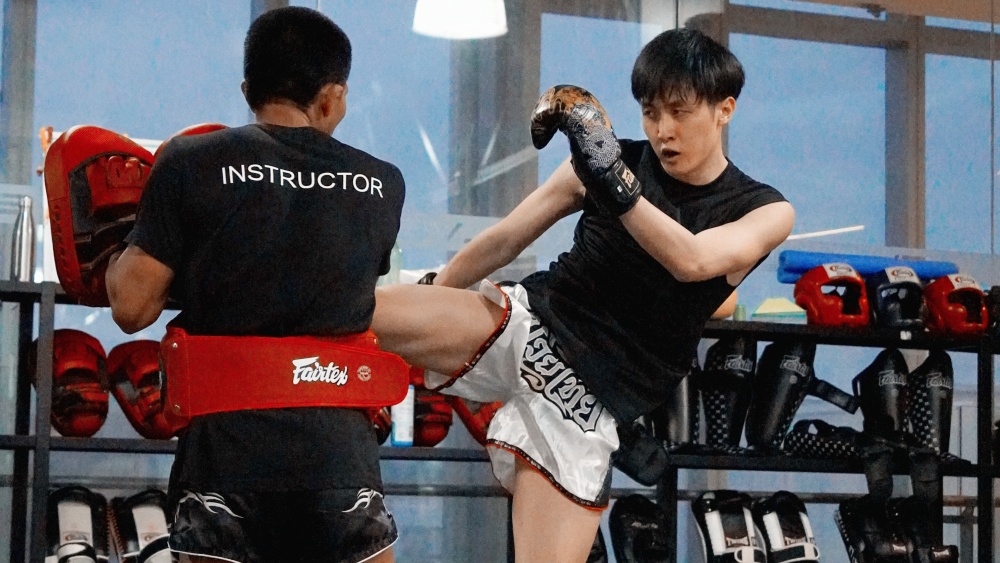
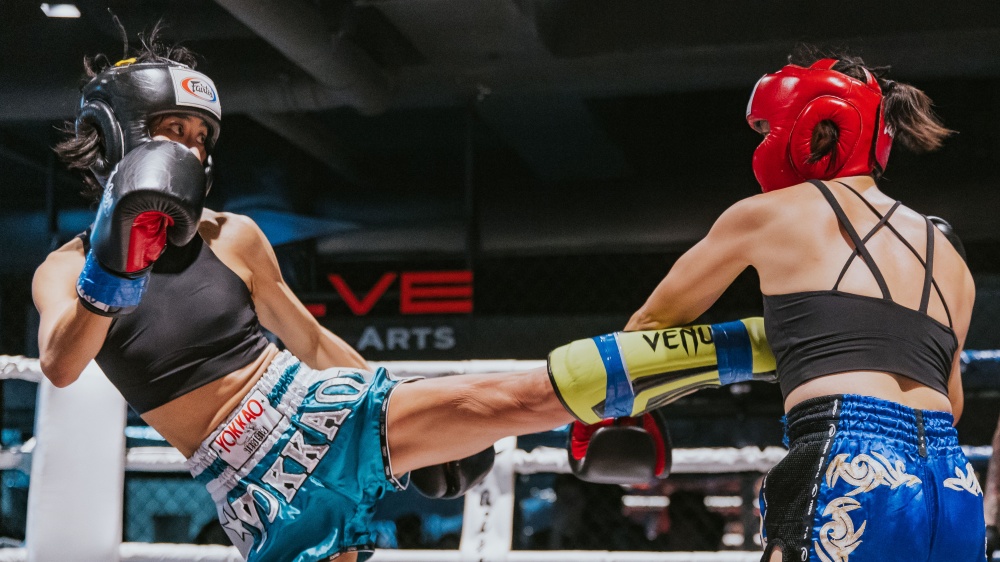
In a self-defense situation, the longer a confrontation lasts, the more dangerous it becomes. Muay Thai’s striking techniques are designed to deliver fight-ending impact. A well-placed roundhouse kick to the body can drop an aggressor. A sharp elbow can cut or stun. A knee to the midsection can take the wind and the will out of someone immediately.
What makes these strikes effective for self-defense is not just their power but the speed and efficiency with which they are delivered. Muay Thai training emphasizes clean mechanics, proper hip rotation, weight transfer, and timing that allow you to generate significant force without winding up or telegraphing your intentions. An untrained person will not see a well-thrown Muay Thai strike coming, and they will not be prepared for the level of impact it delivers.
This ability to end a confrontation quickly and decisively is one of the most important aspects of practical self-defense. The goal is never to engage in a prolonged fight; it is to neutralize the threat and remove yourself from the situation as fast as possible.
Building Composure Under Pressure
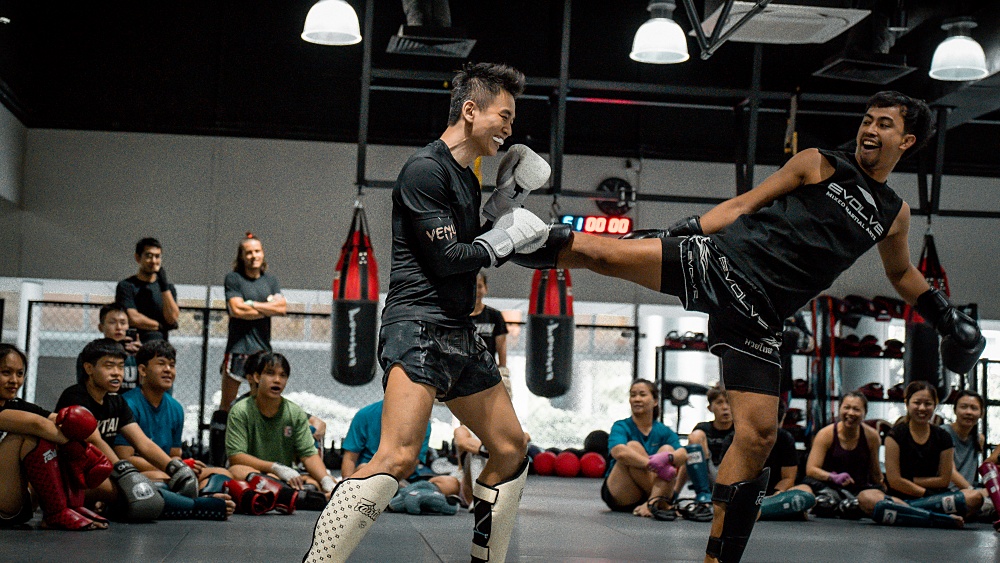
Perhaps the most important self-defense benefit of Muay Thai training is not any single technique; it is the composure you develop through regular sparring and live training. Most people who have never been in a physical confrontation freeze when they are threatened. The adrenaline surge, the confusion, and the fear of being hit shut down their ability to think and act effectively.
Muay Thai training systematically removes this freeze response. Through sparring, where you are hit, pressured, and forced to respond in real time — you learn to stay calm under physical stress. You learn that being hit is not the end of the fight. You learn to breathe, maintain your guard, and make decisions even when someone is actively trying to hurt you. This conditioned composure is what separates someone who has trained from someone who has not, and it is the single biggest advantage you carry into any real-world self-defense situation.
Training at a gym with experienced instructors ensures that this sparring exposure is controlled and progressive. At Evolve MMA in Singapore, where multiple World Champion Muay Thai instructors coach daily classes, beginners are introduced to controlled sparring at a pace that builds confidence and composure without unnecessary risk.
Physical Conditioning As A Self-Defense Foundation
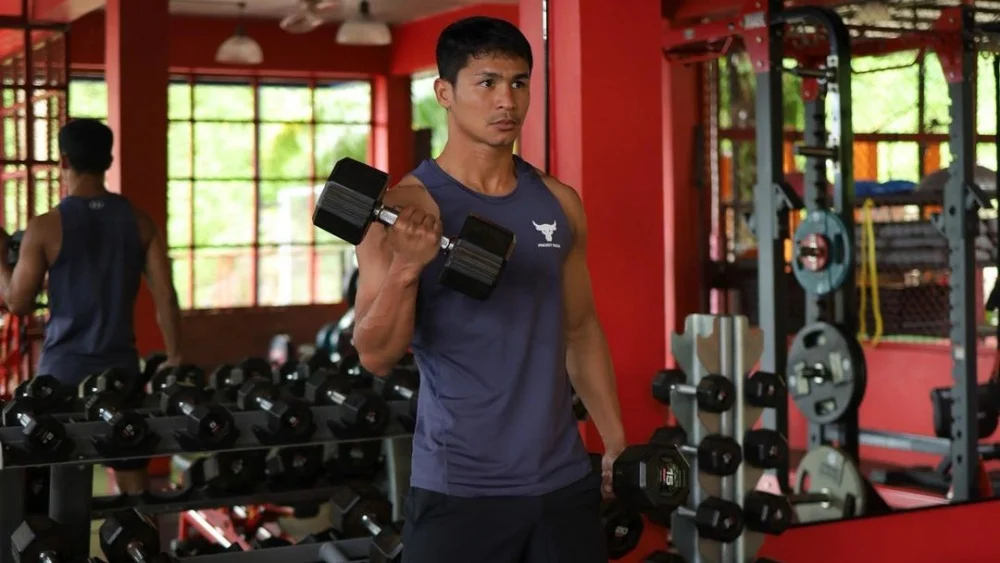
A self-defense skill set is only as good as the body supporting it. If you cannot sustain effort for more than thirty seconds, your technique becomes irrelevant the moment your cardio fails. Muay Thai training addresses this directly, not through separate conditioning programs, but through the training itself.
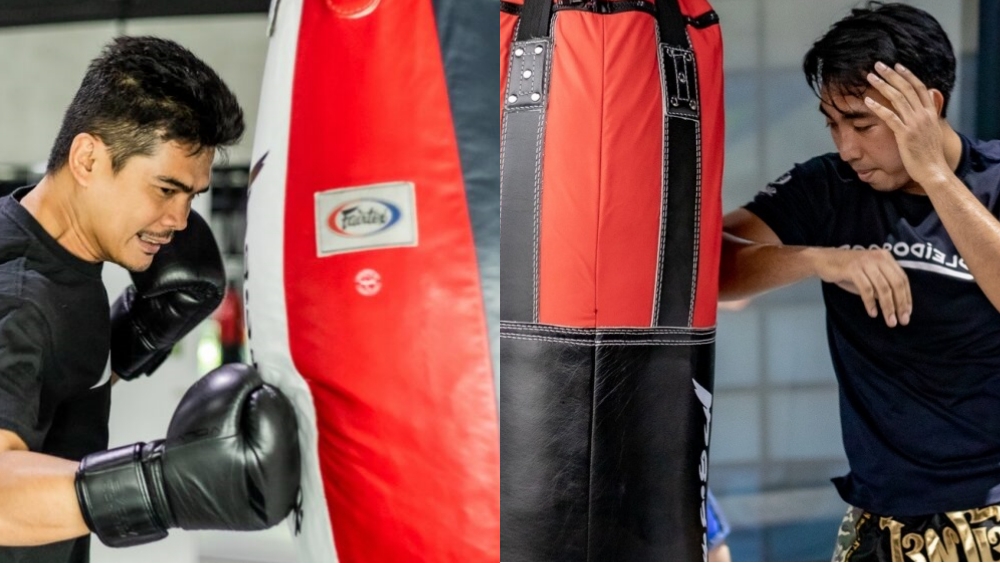
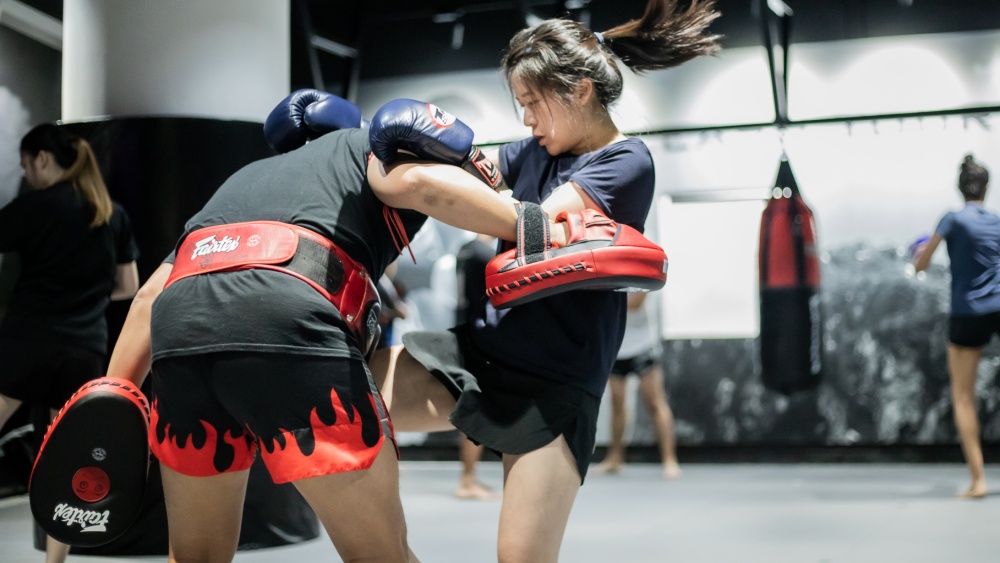
A typical Muay Thai session includes pad work, bag work, technical drilling, and sparring. Each of these builds cardiovascular endurance, functional strength, core stability, and fast-twitch reflexes simultaneously. After months of consistent training, you are not just a better striker; you are fitter, faster, harder to hurt, and capable of sustaining effort under stress for far longer than someone who does not train.
This physical foundation is a self-defense asset that extends beyond technique. Being able to absorb a hit without panicking, maintain your balance when pushed, or sprint away from a dangerous situation are all physical capacities that Muay Thai training develops as a natural byproduct.
Frequently Asked Questions About Muay Thai For Self-Defense
Q: Is Muay Thai Effective For Self-Defense?
A: Yes. Muay Thai is widely regarded as one of the most effective striking martial arts for self-defense. Its use of eight weapons (fists, elbows, knees, and shins), combined with clinch work and distance management, prepares you for the full range of scenarios you could face in a real confrontation.
Q: Is Muay Thai Better Than Boxing For Self-Defense?
A: Muay Thai offers a broader range of tools. While boxing develops excellent hand skills and head movement, Muay Thai adds kicks, knees, elbows, and clinch fighting, all of which are relevant in self-defense situations where threats can come from any range and angle.
Q: Can Muay Thai Help Against Multiple Attackers?
A: Muay Thai’s emphasis on footwork, distance management, and powerful strikes that can incapacitate quickly gives you the best chance of managing a situation with multiple threats. The training teaches you to position yourself so you face one attacker at a time and create space to disengage. That said, the safest option when outnumbered is always to escape if possible.
Q: How Long Does It Take To Learn Enough Muay Thai For Self-Defense?
A: Within three to six months of consistent training, most people develop a functional foundation, solid basic strikes, improved awareness, and the composure to respond under pressure. Proficiency continues to develop over years of training, but the self-defense benefits begin early.
Q: Do I Need To Be Fit Before Starting Muay Thai?
A: No. Muay Thai training builds fitness progressively. Beginners start at a manageable pace and develop cardiovascular endurance, strength, and coordination through the training itself. You do not need a baseline level of fitness to begin.
Q: Is Muay Thai Useful If The Fight Goes To The Ground?
A: Muay Thai is primarily a stand-up martial art, so it does not train ground fighting. However, its clinch work teaches you to stay on your feet and control close-range situations without going to the ground, which is often the safest approach in a real-world self-defense scenario. Many practitioners supplement their training with Brazilian Jiu-Jitsu for ground defense.
Q: What Is The Most Useful Muay Thai Technique For Self-Defense?
A: The teep (push kick) is often cited as the most practical single technique for self-defense. It creates distance, stops an aggressor’s forward movement, and buys you time to assess the situation, all without requiring you to close the gap or commit to a full exchange.
Q: Is Muay Thai Safe To Train As A Beginner?
A: Yes. Reputable gyms structure their classes so that beginners learn technique progressively and are introduced to sparring at a controlled pace. Pad work, bag work, and drilling make up the majority of training, and sparring is typically optional and closely supervised.
Final Thoughts
Muay Thai’s effectiveness for self-defense comes from the combination of a complete striking system, practical clinch skills, distance management, and the composure developed through consistent live training. It is not a theoretical martial art — every technique is pressure-tested in sparring and refined through generations of competitive use. Whether you are looking to build confidence, develop practical self-defense ability, or simply want training that prepares you for real-world situations, Muay Thai provides a proven foundation that very few other martial arts can match.
“The best self-defense is not about learning one hundred techniques. It is about training ten techniques until they are automatic — until your body moves before your mind has time to be afraid. That is what Muay Thai training gives you.” — Chaowalit Jocky Gym, Muay Thai World Champion & Instructor at Evolve MMA
You may also like: